
Yellowstone
National Park 🞼 🞰
National Park 🞼 🞰
Idaho
Montana
Wyoming
Montana
Wyoming
3/1/1872
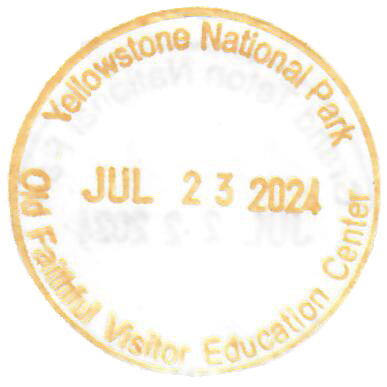

We spent five days in Yellowstone, and spent the first night in a cabin at Old Faithful Lodge. Being close to the Upper Geyser Basin for an extended period of time was great because we were able to see almost all the features in that area at their best (don't miss the Anemone Geyser). We also enjoyed West Thumb Geyser basin, Mammoth Hot Springs, the Norris Geyser Basin, the Paint Pots, The Grand Canyon of the Yellowstone, and the waterfalls.
Situated on the Yellowstone Caldera, the park has an expansive network of geothermal areas including boiling mud pots, vividly colored hot springs such as Grand Prismatic Spring, and regularly erupting geysers, the best-known being Old Faithful. The yellow-hued Grand Canyon of the Yellowstone River contains several high waterfalls, and four mountain ranges traverse the park. More than 60 mammal species including timber wolves, grizzly bears, black bears, lynxes, bison, and elk make this park one of the best wildlife viewing spots in the country.
Washington Monument
District of Columbia
2/21/1885


We visited Washington DC with Curtis' parents.
As commanding general of the Continental Army, George Washington was instrumental in securing victory in the Revolutionary War, leading him to serve as the first president of the United States. His presidency laid the foundations for the politics of the republic with policies on banking, taxes, the judiciary, and foreign affairs. The Monument, the centerpiece of the National Mall, is a 555 ft (169 m) tall obelisk of marble, granite, and gneiss topped with a small aluminum pyramid. A variety of interior memorial stones are visible from the elevator to the observation deck.

Chickamauga and Chattanooga
National Military Park
National Military Park
Georgia
Tennessee
Tennessee
8/19/1890


Civil War Chickamauga Chattanooga
Antietam
National Battlefield
National Battlefield
Maryland
8/30/1890


Civil War Antietam
Sequoia National Park 🞼
California
9/25/1890


This park protects the Giant Forest, which boasts some of the world's largest trees, the General Sherman being the largest measured tree in the park. Other features include over 240 caves, a long segment of the Sierra Nevada including the tallest mountain in the contiguous United States, and Moro Rock, a large granite dome.
Rock Creek Park
District of Columbia
9/27/1890


Rock Creek Park is a large urban park that bisects the Northwest quadrant of Washington, D.C. Created by Act of Congress in 1890, the park comprises 1,754 acres (2.74 mi2, 7.10 km2), generally along Rock Creek, a tributary of the Potomac River.
Yosemite National Park 🞰
California
10/1/1890


Yosemite features sheer granite cliffs, exceptionally tall waterfalls, and old-growth forests at a unique intersection of geology and hydrology. Half Dome and El Capitan rise from the park's centerpiece, the glacier-carved Yosemite Valley, and from its vertical walls drop Yosemite Falls, one of North America's tallest waterfalls at 2,425 feet (739 m) high. Three giant sequoia groves, along with a pristine wilderness in the heart of the Sierra Nevada, are home to a wide variety of rare plant and animal species.
Shiloh
National Military Park
National Military Park
Tennessee
Mississippi
Mississippi
12/27/1894


Civil War Shiloh
Gettysburg
National Military Park
National Military Park
Pennsylvania
2/11/1895


Civil War Gettysburg
Vicksburg
National Military Park
National Military Park
Mississippi
Louisiana
Louisiana
2/21/1899


We stopped with the kids on the way to Florida on our Disney vacation.
Civil War Vicksburg campaign
Mount Rainier
National Park
National Park
Washington
3/2/1899


Mount Rainier, an active stratovolcano, is the most prominent peak in the Cascades and is covered by 26 named glaciers including Carbon Glacier and Emmons Glacier, the longest and largest in the contiguous United States respectively. The mountain is popular for climbing, and more than half of the park is covered by subalpine and alpine forests and meadows seasonally in bloom with wildflowers. Paradise on the south slope is among the snowiest places on Earth. The Longmire visitor center is the start of the Wonderland Trail, which encircles the mountain.
Crater Lake National Park
Oregon
5/22/1902


Crater Lake lies in the caldera of an ancient volcano called Mount Mazama that collapsed 7,700 years ago. The lake is the deepest in the United States and is noted for its vivid blue color and water clarity. Wizard Island and the Phantom Ship are more recent volcanic formations within the caldera. As the lake has no inlets or outlets, it is replenished only by precipitation.
Wind Cave National Park
South Dakota
1/9/1903


Wind Cave is distinctive for its calcite fin formations called boxwork, a unique formation rarely found elsewhere, and needle-like growths called frostwork. It is one of the longest caves in the world and creates a wind as air pressure changes. Above ground is a mixed-grass prairie with animals such as bison, black-footed ferrets, and prairie dogs and ponderosa pine forests home to cougars and elk. The cave is culturally significant to the Lakota people as a creation site.
Clara Barton Parkway
District of Columbia
Maryland
Maryland
4/13/1905


Built as the Maryland portion of the George Washington Memorial Parkway. The Parkway is 6.8 miles long.
Colonial Parkway
Virginia
4/20/1905


Links the three points of Virginia's Historic Triangle: Jamestown, Williamsburg, and Yorktown; part of Colonial National Historical Park. The Parkway is 23 miles.
Skyline Drive
Virginia
4/22/1905


Part of the Shenandoah National Park, continues past southern terminus as Blue Ridge Parkway. This is a 105.5 mile drive.
Rock Creek and Potomac Parkway
District of Columbia
4/27/1905


Part of Rock Creek Park, this is a 2.9 mile drive.
Mesa Verde
National Park 🞰
National Park 🞰
Colorado
6/29/1906


This area constitutes over 4,000 archaeological sites of the Ancestral Puebloan people, who lived here and elsewhere in the Four Corners region for at least 700 years. Cliff dwellings built in the 12th and 13th centuries include Cliff Palace, which has 150 rooms and 23 kivas, and the Balcony House, with its many passages and tunnels.
Devils Tower
National Monument
National Monument
Wyoming
9/24/1906


The tower is a monolithic igneous intrusion of volcanic neck rising dramatically 1,267 feet (386 m) above the surrounding terrain. Proclaimed by Theodore Roosevelt, this was the first national monument.
El Morro
National Monument
National Monument
New Mexico
12/8/1906


On the site of an ancient east-west trail is a great sandstone promontory with a pool of water at its base. There are inscriptions from the 17th century as well as older petroglyphs made by the Ancestral Puebloans.
Montezuma Castle
National Monument
National Monument
Arizona
12/8/1906


Montezuma Castle features cliff dwellings built by the Pre-Columbian Sinagua people between 1100 and 1400 AD. The site's name is a misnomer as is it has no connection to Montezuma. However, some modern day native tribes that do have connections to the site include the Yavapai, Hopi, and Zuni. The monument also includes Montezuma Well, which has been used for irrigation since the 8th century.
Jean Lafitte
National Historical Park
National Historical Park
Louisiana
3/4/1907


Designated a National Historical Park and Preserve, this site highlights several facets of Louisiana culture, history, and nature. The Chalmette Battlefield was the site of the Battle of New Orleans, the final event of the War of 1812. The Barataria Preserve offers hiking and canoeing though swamps and bayous home to alligators. Three cultural centers interpret Acadian and Cajun societies. A visitor center in the French Quarter illustrates the traditions of the Mississippi River Delta.
Tonto National Monument
Arizona
10/21/1907
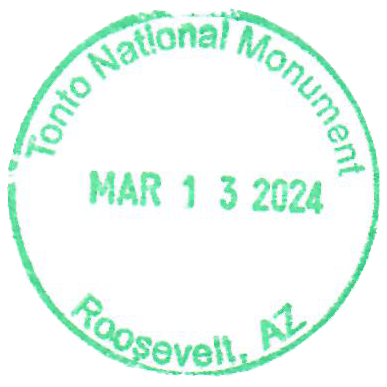

Lying on the northeastern edge of the Sonoran Desert along the Salt River, Tonto preserves two cliff dwellings that were occupied by the Salado culture during the 13th to 15th centuries. The monument is surrounded by Tonto National Forest.
Gila Cliff Dwellings
National Monument
National Monument
New Mexico
11/16/1907
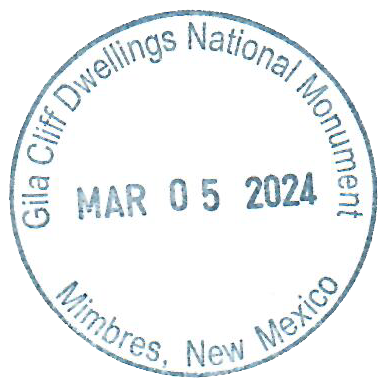

Located within the Gila Wilderness, the people of the Mogollon culture lived in these cliff dwellings 180 feet (55 m) above the canyon floor from the 1280s through the early 14th century. They lived in five caves with 46 rooms.
Muir Woods
National Monument
National Monument
California
1/9/1908


Part of the Golden Gate National Recreation Area, it protects one of the last old growth Coast redwood (Sequoia sempervirens) groves in the San Francisco Bay Area as well as one of the most easily accessed.
Jewel Cave
National Monument
National Monument
South Dakota
2/7/1908


Jewel Cave is the third longest cave in the world, with more than 215 miles (346 km) of mapped passageways beneath the Black Hills of South Dakota. The entrance was discovered by miners in 1900 and was named for its calcite crystals.
Natural Bridges
National Monument
National Monument
Utah
4/16/1908


Located at the junction of White Canyon and Armstrong Canyon, it is part of the Colorado River drainage. It features the second- and third-largest natural bridges in the western hemisphere, carved from the white Triassic sandstone of the Cedar Mesa Formation that gives White Canyon its name.
Navajo National Monument
Arizona
3/20/1909


This monument preserves three of the most intact cliff dwellings of the Ancestral Puebloan people. The monument is high on the Shonto plateau, overlooking the Tsegi Canyon system on the Navajo Nation in Northern Arizona.
Oregon Caves
National Monument
National Monument
Oregon
7/12/1909


The monument is known for its marble caves, as well as for the Pleistocene jaguar and grizzly bear fossils found in the deeper caves. There are four primary buildings: The Oregon Caves Chateau, The Ranger Residence, The Chalet, and the old Dormitory.
Salinas Pueblo Missions
National Monument
National Monument
New Mexico
11/1/1909


Formerly known as Gran Quivira National Monument, it is where Native American trade communities of Tiwa- and Tompiro-speaking Puebloans lived when Spanish Franciscan missionaries made contact in the 17th century. What remains are the ruins of four mission churches, at Quarai, Abó, and Gran Quivira, and the partially excavated pueblo of Las Humanas.
Glacier National Park 🞼 🞰
Montana
5/11/1910


We drove up to Glacier with Mike Still Adam and Staci. We made some great memories
The U.S. half of Waterton-Glacier International Peace Park, this park includes 26 rapidly receding glaciers and 130 named lakes surrounded by Rocky Mountain peaks. Historic hotels and the landmark Going-to-the-Sun Road accommodate visitors. The local mountains, formed by an overthrust, expose Paleozoic fossils including trilobites, mollusks, giant ferns and dinosaurs. The park is also home to Triple Divide Peak, which forms the boundary between the watersheds of the Atlantic, Pacific, and Arctic Oceans.
Rainbow Bridge
National Monument
National Monument
Utah
5/30/1910


Rainbow Bridge is one of the world's largest natural bridges. It stands 290 feet (88 m) tall and spans 275 feet (84 m) wide; the top of the bridge is 42 feet (13 m) thick and 33 feet (10 m) wide. It was made from sandstone formed during the Triassic and the Jurassic periods.
Big Hole
National Battlefield
National Battlefield
Montana
6/23/1910


Nez Perce War of the Indian Wars The Big Hole
Colorado
National Monument
National Monument
Colorado
5/24/1911
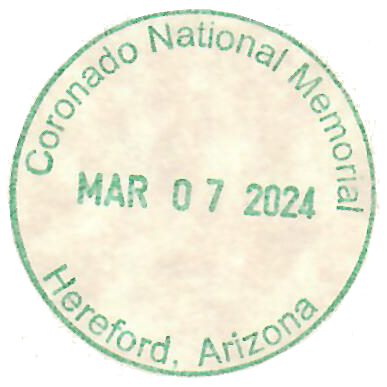

Monument Canyon runs the width of the park and includes rock formations formed by erosion. The monument covers semi-desert land high on the Colorado Plateau and has a wide range of wildlife including pinyon pines, juniper trees, ravens, jays, desert bighorn sheep, and coyotes as well as a range of recreational activities.
Devils Postpile
National Monument
National Monument
California
7/6/1911


Once part of Yosemite National Park, this monument is a dark cliff of columnar basalt created by a lava flow at least 100,000 years ago. It also has the 101-foot (31 m)-high Rainbow Falls.
Cabrillo
National Monument
National Monument
California
10/14/1913


This monument commemorates the landing of Juan Rodríguez Cabrillo at San Diego Bay on September 28, 1542, which was the first European expedition to what later became the West Coast of the U.S. The monument includes a statue of Cabrillo, a rocky intertidal zone, and 20th-century coastal artillery batteries built to protect the harbor of San Diego from enemy warships.
Rocky Mountain
National Park 🞼
National Park 🞼
Colorado
1/26/1915


Bisected north to south by the Continental Divide, this portion of the Rockies has ecosystems varying from over 150 riparian lakes to montane and subalpine forests to treeless alpine tundra. Wildlife including elk, moose, mule deer, bighorn sheep, black bears, and cougars inhabit its igneous mountains and glacial valleys. Longs Peak, a classic Colorado fourteener, and the scenic Bear Lake are popular destinations, as well as the historic Trail Ridge Road, which reaches an elevation of more than 12,000 feet (3,700 m).
Dinosaur
National Monument
National Monument
Colorado
Utah
Utah
10/4/1915
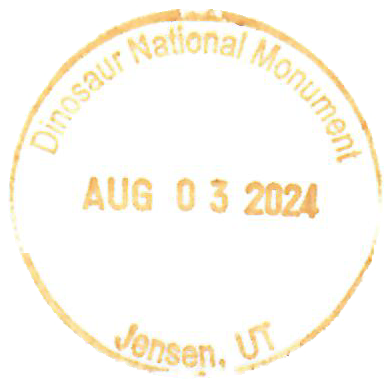

This sandstone and conglomerate bed at the confluence of the Green and Yampa Rivers was formed in the Jurassic Period and contains fossils of dinosaurs including Allosaurus and various long-neck and long-tail sauropods.
Walnut Canyon
National Monument
National Monument
Arizona
11/30/1915


Walnut Canyon protects dozens of cliff dwelling rooms constructed around the 12th century by the Sinagua people, who navigated the challenging cliffs to access sparse water. It lies on the Colorado Plateau and cuts through the Permian Kaibab Limestone, which exposes the Toroweap Formation and Coconino Sandstone.
Bandelier
National Monument
National Monument
New Mexico
2/11/1916


Bandelier National Monument is a 33,677-acre (136 km2) United States National Monument near Los Alamos in Sandoval and Los Alamos counties, New Mexico. The monument preserves the homes and territory of the Ancestral Puebloans of a later era in the Southwest. Most of the pueblo structures date to two eras, dating between AD 1150 and 1600.
Hawai'i Volcanoes
National Park 🞼 🞰
National Park 🞼 🞰
Hawaii
8/1/1916


This park on the Big Island protects the K?lauea and Mauna Loa volcanoes, two of the world's most active geological features. Diverse ecosystems range from tropical forests at sea level to barren lava beds at more than 13,000 feet (4,000 m).
Capulin Volcano
National Monument
National Monument
New Mexico
8/9/1916
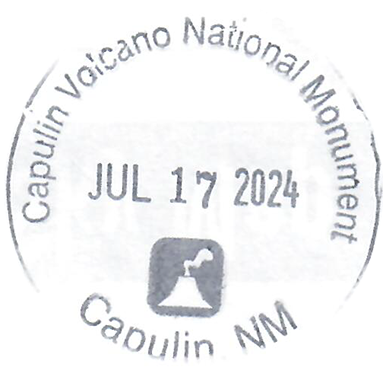

Capulin is an extinct cinder cone volcano that is approximately 59,000 years old and part of the Raton-Clayton Volcanic Field. The crater is 400 feet (120 m) deep and its rim is more than 1,500 feet (460 m) in diameter.
Lassen Volcanic
National Park
National Park
California
8/9/1916


Lassen Peak, the largest lava dome volcano in the world, is joined by all three other types of volcanoes in this park: shield, cinder cone, and composite. Though Lassen itself last erupted in 1915, most of the rest of the park is continuously active. Numerous hydrothermal features, including fumaroles, boiling pools, and bubbling mud pots, are heated by molten rock from beneath the peak.
Kennesaw Mountain
National Battlefield Park
National Battlefield Park
Georgia
2/18/1917


Civil War Kennesaw Mountain
Denali National Park 🞼
Alaska
2/26/1917


Centered on Denali, the tallest and most prominent mountain in North America, the park is serviced by a single road leading to Wonder Lake, most of which can only be accessed via scheduled tour buses. Denali and other peaks of the Alaska Range are covered with long glaciers and boreal forest. Wildlife includes grizzly bears, Dall sheep, moose, caribou, and wolves.
Guilford Courthouse
National Military Park
National Military Park
North Carolina
3/2/1917


Revolutionary War Guilford Court House
Casa Grande Ruins
National Monument
National Monument
Arizona
8/3/1918
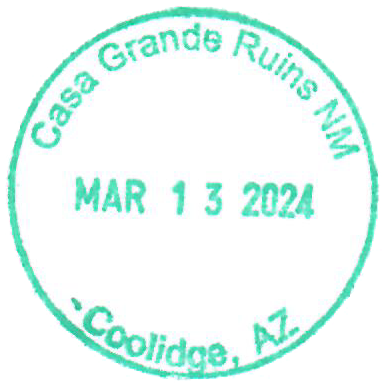

This monument preserves a group of structures surrounded by a compound wall in the Gila Valley that were built in the early 13th century. They were inhabited by the Hohokam people until they were abandoned in the mid-15th century.
Acadia National Park
Maine
2/26/1919


Covering most of Mount Desert Island and other coastal islands, Acadia features the tallest mountain on the Atlantic coast of the United States, granite peaks, ocean shoreline, woodlands, and lakes. There are freshwater, estuary, forest, and intertidal habitats.
Grand Canyon
National Park 🞰
National Park 🞰
Arizona
2/26/1919


The Grand Canyon, carved by the mighty Colorado River, is 277 miles (446 km) long, up to 1 mile (1.6 km) deep, and up to 15 miles (24 km) wide. Millions of years of erosion have resulted in a massive three-tiered canyon, exposing the multicolored layers of the Colorado Plateau in mesas and canyon walls, visible from trails that descend into the canyon from the north and south rims.
Zion National Park
Utah
11/19/1919


Located at the junction of the Colorado Plateau, Great Basin, and Mojave Desert, this park contains sandstone features such as mesas, rock towers, and canyons, including the Virgin River Narrows. The various sandstone formations and the forks of the Virgin River create a wilderness divided into four ecosystems: desert, riparian, woodland, and coniferous forest.
Scotts Bluff
National Monument
National Monument
Nebraska
12/12/1919


Scotts Bluff is an important 19th century geologic formation and landmark on the Oregon Trail and Mormon Trail. It contains multiple bluffs on the south side of the North Platte River, but it is named after a prominent bluff called Scotts Bluff which rises more than 830 feet (250 m) above the plains at its highest point. The monument is composed of five rock formations named Crown Rock, Dome Rock, Eagle Rock, Saddle Rock, and Sentinel Rock.
Yucca House
National Monument
National Monument
Colorado
12/19/1919


Designated a research national monument, it is a large unexcavated Ancestral Puebloan archeological site. The site is one of many Ancestral Puebloan village sites in the Montezuma Valley occupied between 900 and 1300 CE.
Hot Springs National Park
Arkansas
3/4/1921


Hot Springs was originally established by Congress as a federal reserve on April 20, 1832, making it the oldest area managed by the National Park Service. Natural thermal springs flow out of the Ouachita Mountains, providing opportunities for relaxation in a historic setting. Bathhouse Row preserves examples of 19th-century architecture. Hot Springs is the first national park within a city and was the smallest national park until 2018.
Lincoln Memorial
District of Columbia
5/30/1922


Abraham Lincoln led the Union during the Civil War, bringing back together a divided nation and abolishing slavery before being assassinated shortly after the end of the war. A 30 ft (9.1 m)-tall statue of a seated Lincoln sits in this grand temple overlooking the National Mall toward the Capitol. Inside walls are inscribed with the text of his second inaugural address and the Gettysburg Address. Thirty-six Doric columns that represent the states of the Union in 1865 support an entablature whose frieze is inscribed with the names of the 48 states at the time of construction in 1922.
Timpanogos Cave
National Monument
National Monument
Utah
10/14/1922


The Timpanogos cave system is in the Wasatch Range in the American Fork Canyon. Three main chambers are accessible: Hansen Cave, Middle Cave, and Timpanogos Cave. Many colorful cave features or speleothems can be seen, including helictites, cave bacon, cave columns, flowstone, cave popcorn, and cave drapery.
Aztec Ruins
National Monument
National Monument
New Mexico
1/24/1923


The Aztec Ruins National Monument in northwestern New Mexico, United States, consists of preserved structures constructed by the Pueblo Indians. The national monument lies on the western bank of the Animas River in Aztec, New Mexico, about 12 miles (19 km) northeast of Farmington. Additional Puebloan structures can be found in Salmon Ruins and Heritage Park, 9.5 miles (15.3 km) south. Archaeological evidence puts the construction of the ruins in the 12th and 13th centuries. The Puebloan-built ruins were dubbed the ""Aztec Ruins"" by 19th century American settlers who misattributed their construction to the Aztecs.
Hopewell Culture
National Historical Park
National Historical Park
Ohio
3/2/1923


Peoples of the Hopewell culture lived in Ohio from about 200 BC to 500 AD. They built several large ceremonial earthworks in geometric shapes up to hundreds of feet wide. Archaeological findings revealed the society's beliefs, practices, and trade.
Hovenweep
National Monument
National Monument
Colorado
Utah
Utah
3/2/1923


Hovenweep contains six clusters of Native American ruins. Holly Canyon, Hackberry Canyon, Cutthroat Castle and Goodman Point are in Colorado and Square Tower and Cajon are in Utah. Ancestral Puebloans lived in the Hovenweep area from 1150 to 1350.
Pipe Spring
National Monument
National Monument
Arizona
5/31/1923


Rich with Native American, early explorer, and Mormon pioneer history, this site shows Ancestral Puebloans and Kaibab Paiute Indian and pioneer life in the Old West, including the cabin where explorer John Wesley Powell's survey crew stayed in 1871. The water of Pipe Spring, discovered in 1858, made it possible for plants, animals, and people to live in this dry desert region.
Chiricahua
National Monument
National Monument
Arizona
4/18/1924
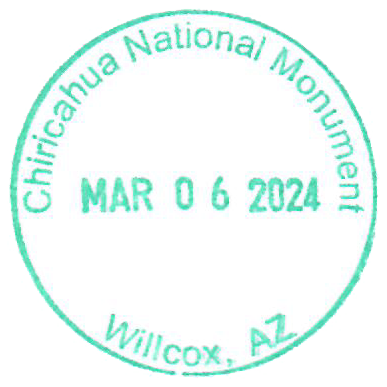

These pillars of rhyolite tuff are the eroded remains of an immense volcanic eruption that shook the region some 27 million years ago. It was called the Land of the Standing-Up Rocks by the Apache.
Craters of the Moon
National Monument
National Monument
Idaho
5/2/1924
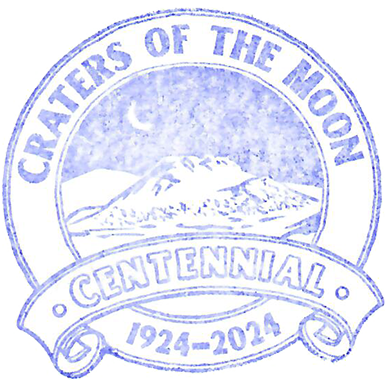

One of the best preserved flood basalt areas in the continental U.S. contains three lava fields along the Great Rift of Idaho. Among the volcanic cinder cones, lava tubes, and fissures created 15,000 to 2,000 years ago is the world's deepest open rift crack. The adjoining National Preserve protects an additional 410,000 acres.
Castillo de San Marcos
National Monument
National Monument
Florida
10/15/1924


This Spanish fort near St. Augustine, called Fort Marion when first protected, served for 205 years under four different flags. Built in 1672, it was involved in sieges with the British while under Spanish command, the American Revolution under Britain, the Civil War under the Confederacy, and the Seminole Wars and the Spanish-American War under the United States.
Fort Matanzas
National Monument
National Monument
Florida
10/15/1924


This 1740 Spanish fort guarded Matanzas Inlet, the southern mouth of the Matanzas River, which allowed access to St. Augustine. The monument is managed in conjunction with Castillo de San Marcos National Monument and also protects 100 acres (0.40 km2) of salt marsh and barrier islands.
Fort Pulaski
National Monument
National Monument
Georgia
10/15/1924


In 1862 during the American Civil War, the Union Army successfully tested a rifled cannon against the defending Confederates, rendering brick fortifications obsolete. Fort Pulaski was also used as a prisoner-of-war camp during the war. The national monument includes most of Cockspur Island (containing the fort) and all of adjacent McQueens Island.
Statue of Liberty
National Monument
National Monument
New York
New Jersey
New Jersey
10/15/1924


This iconic statue, built in 1886 on Liberty Island and 151 feet (46 m) tall, commemorates the centennial of the signing of the United States Declaration of Independence and is a gesture of friendship from France to the U.S. Liberty Enlightening the World is a symbol of welcoming immigrants to the U.S. and is listed as a World Heritage Site. Ellis Island, where 12 million immigrants entering the U.S. passed through, is included in the monument.
Wupatki National Monument
Arizona
12/9/1924


Several settlement sites built by the Sinagua, Cohonina, and Ancestral Puebloans are scattered throughout the monument, showing evidence of trade and agriculture from the 6th to 13th centuries. About 2,000 Ancient Pueblo People moved here to farm after an 11th century eruption of Sunset Crater spread ash forming fertile soil.
Fort McHenry
National Monument and
Historic Shrine
National Monument and
Historic Shrine
Maryland
3/3/1925


The only place designated a national monument and historic shrine, Fort McHenry is a star-shaped fort best known for its role in the War of 1812 when it successfully defended Baltimore Harbor from an attack by the British navy. The events inspired Francis Scott Key to write """"The Star-Spangled Banner"""".
Lava Beds
National Monument
National Monument
California
11/21/1925


This is the site of the largest concentration of lava tube caves in North America. It also includes Petroglyph Point, one of the largest panels of Native American rock art. The monument lies on the northeast flank of the Medicine Lake Volcano, the largest volcano in the Cascade Range.
Moores Creek
National Battlefield
National Battlefield
North Carolina
6/2/1926


Revolutionary War Moore's Creek Bridge
Petersburg
National Battlefield
National Battlefield
Virginia
7/3/1926


Civil War Petersburg campaign
Fredericksburg and Spotsylvania
National Military Park
National Military Park
Virginia
2/14/1927


Civil War Fredericksburg Chancellorsville The Wilderness Spotsylvania Court House
Stones River
National Battlefield
National Battlefield
Tennessee
3/3/1927


Civil War Stones River
Bryce Canyon
National Park
National Park
Utah
2/25/1928


Bryce Canyon is a geological amphitheater on southern Utah's Paunsaugunt Plateau with hundreds of tall, multicolored sandstone hoodoos formed by erosion. The region was originally settled by Native Americans and later by Mormon pioneers.
Brices Cross Roads
National Battlefield Site
National Battlefield Site
Mississippi
2/21/1929


Civil War Brice's Cross Roads
Grand Teton
National Park 🞼
National Park 🞼
Wyoming
2/26/1929

Bear
Grand Teton is the tallest mountain in the scenic Teton Range. The park's historic Jackson Hole and reflective piedmont lakes teem with endemic wildlife, with a backdrop of craggy mountains that rise abruptly from the sage-covered valley below.
Cowpens
National Battlefield
National Battlefield
South Carolina
3/4/1929


Revolutionary War Cowpens
George Washington Birthplace
National Monument
National Monument
Virginia
1/23/1930


Representative of 18th-century Virginia tobacco farms, this site is the birthplace and boyhood environment of George Washington. The entrance includes a Memorial Shaft obelisk of Vermont marble that is a one-tenth scale replica of the Washington Monument in Washington, D.C. Also within the monument are the historic birthplace home area, a kitchen house, and the Washington family burial ground.
Carlsbad Caverns
National Park 🞰
National Park 🞰
New Mexico
5/14/1930


Carlsbad Caverns has 117 caves, the longest of which is over 120 miles (190 km) long. The Big Room is almost 4,000 feet (1,200 m) long, and the caves are home to over 400,000 Mexican free-tailed bats and sixteen other species. Above ground are the Chihuahuan Desert and Rattlesnake Springs.
Sunset Crater Volcano
National Monument
National Monument
Arizona
5/30/1930


Sunset Crater is the youngest in a string of volcanoes in the San Francisco volcanic field that is related to the nearby San Francisco Peaks. Final volcanic activity in the 13th century painted the upper portion of the cone with bright red and orange rocks, giving the volcano its name. Hikers can walk through a black lava flow and on a second cinder crater.
Fort Necessity
National Battlefield
National Battlefield
Pennsylvania
3/4/1931


French and Indian War Fort Necessity
Canyon De Chelly
National Monument
National Monument
Arizona
4/1/1931


Located within the Navajo Nation, it preserves the valleys and rims of Canyon de Chelly, Canyon del Muerto, and Monument Canyon. Several Ancestral Puebloan cliff dwellings are built into the canyon walls.
Ford's Theatre
National Historic Site
National Historic Site
District of Columbia
1/1/1932


President Abraham Lincoln was assassinated on April 14, 1865, while watching a performance of Our American Cousin at Ford's Theatre. He was brought across the street to the Petersen House where he died the next morning. The theatre continues to produce live plays and has a museum of artifacts related to Lincoln, and the Petersen House, the first historic home purchased by the U.S. government, is furnished as it was the night Lincoln died.
Theodore Roosevelt Island
National Memorial
National Memorial
District of Columbia
5/21/1932


Theodore Roosevelt led the Rough Riders during the Spanish-American War and served as governor of New York before becoming vice president and then president when William McKinley was assassinated. His Square Deal promoted trustbusting, labor rights, and consumer protection, and he was a noted conservationist, establishing the Forest Service, the first national monuments, and wildlife refuges. This forested island in the Potomac features hiking trails and a memorial plaza with fountains, notable quotations, and a 17 ft (5.2 m) statue of Roosevelt.
National Capital Parks-East
District of Columbia
1/1/1933


National Capital Parks-East (NACE) is an administrative grouping of multiple National Park Service sites east of the United States Capitol in Washington, D.C., and in the state of Maryland.
Morristown
National Historical Park
National Historical Park
New Jersey
3/2/1933


The Ford Mansion in Morristown, New Jersey was General George Washington's Headquarters during the winter of 1779-1780, while the Continental Army was encamped at Jockey Hollow.
Fort Donelson
National Battlefield
National Battlefield
Tennessee
Kentucky
Kentucky
8/10/1933


Civil War Fort Donelson Fort Henry
Kings Mountain
National Military Park
National Military Park
South Carolina
8/10/1933


Revolutionary War Kings Mountain
Tupelo
National Battlefield
National Battlefield
Mississippi
8/11/1933


Civil War Tupelo
Cedar Breaks
National Monument
National Monument
Utah
8/22/1933


A natural amphitheater canyon similar to formations at Bryce Canyon National Park, it stretches over 3 miles (4.8 km) and is more than 2,000 feet (610 m) deep.
Everglades
National Park 🞼 🞰
National Park 🞼 🞰
Florida
5/30/1934


The Everglades are the largest tropical wilderness in the United States. This mangrove and tropical rainforest ecosystem and marine estuary is home to 36 protected species, including the Florida panther, American crocodile, and West Indian manatee. Some areas have been drained and developed; restoration projects aim to restore the ecology.
Great Smoky Mountains
National Park 🞼 🞰
National Park 🞼 🞰
North Carolina
Tennessee
Tennessee
6/15/1934


The Great Smoky Mountains, part of the Appalachian Mountains, span a wide range of elevations, making them home to over 400 vertebrate species, 100 tree species, and 5,000 plant species. Hiking is the park's main attraction, with over 800 miles (1,300 km) of trails, including 70 miles (110 km) of the Appalachian Trail. Other activities include fishing, horseback riding, and touring nearly 80 historic structures.
Monocacy
National Battlefield
National Battlefield
Maryland
6/21/1934


Civil War Monocacy
Fort Stanwix
National Monument
National Monument
New York
8/21/1935


Fort Stanwix guarded a strategic 18th century portage known as the Oneida Carrying Place. It was built during the French and Indian War (1754-1763). The fort successfully resisted the 1777 siege by a British invasion army during the Saratoga campaign of the American Revolutionary War. Erased by the development of Rome, New York, it was rebuilt as a national monument in the late 1970s.
Shenandoah National Park
Virginia
12/26/1935


Shenandoah's Blue Ridge Mountains are covered by hardwood forests that teem with a wide variety of wildlife. The Skyline Drive and Appalachian Trail run the entire length of this narrow park, along with more than 500 miles (800 km) of hiking trails passing scenic overlooks and cataracts of the Shenandoah River.
Richmond
National Battlefield Park
National Battlefield Park
Virginia
3/2/1936


Civil War Peninsula campaign and the Seven Days Battles Overland campaign Petersburg campaign
Fort Frederica
National Monument
National Monument
Georgia
5/26/1936


Built by James Oglethorpe between 1736 and 1748, these remnants of a fort and town protected the southern boundary of the British colony of Georgia from Spanish raids. It was a few miles from the site of the Battle of Bloody Marsh.
Colonial
National Historical Park
National Historical Park
Virginia
6/5/1936


Founded in 1607, Jamestown was the first permanent English settlement in North America and served as the colonial capital until 1699. Historic Jamestown preserves its archaeological ruins and is connected by the Colonial Parkway to the Yorktown Battlefield, where in 1781 George Washington's Continental Army defeated the British in the Siege of Yorktown, the last major battle of the Revolutionary War.
Blue Ridge Parkway
North Carolina
Virginia
Virginia
6/30/1936


America's longest linear park; runs mostly along the Blue Ridge, a major mountain chain that is part of the Appalachian Mountains. Continues past northern terminus as Skyline Drive. The drive is 469.1 miles long.
Manassas
National Battlefield Park
National Battlefield Park
Virginia
11/14/1936


Civil War First Manassas Second Manassas
Prince William Forest Park
Virginia
11/14/1936


Prince William Forest Park is a National Park Service (NPS) site in the U.S. state of Virginia within Prince William County (and very partially Stafford County), located adjacent to the Marine Corps Base Quantico near the town of Dumfries. Established as Chopawamsic Recreational Demonstration Area in 1936, the park is the largest protected natural area in the Washington, D.C. metropolitan region at over 13,000 acres (5,300 ha).
Ocmulgee Mounds
National Historical Park
National Historical Park
Georgia
12/23/1936


People of the Mississippian culture built several large earthworks along the Ocmulgee River around 900-1100 AD, including ceremonial temples, platform mounds, and earth lodges. In the 1930s, the largest archaeological dig in U.S. history excavated millions of artifacts dating to more than 14,000 years ago. The park also has trails through forests and wetlands rich with wildlife.
Organ Pipe Cactus
National Monument
National Monument
Arizona
4/13/1937


This monument is the only place in the United States where the organ pipe cactus grows wild. There are many other types of cacti and desert flora native to the Sonoran Desert. The Bates Well Ranch and Dos Lomitas Ranch are also within the monument.
Pipestone
National Monument
National Monument
Minnesota
8/25/1937


This monument preserves traditional catlinite quarries used to make ceremonial pipes, vitally important to traditional Plains Indian culture. The quarries are sacred to the Sioux and Lakota people and are historically neutral territory where enrolled citizens of all tribes can quarry the stone.
Salem Maritime
National Historic Site
National Historic Site
Massachusetts
3/17/1938


Salem, Massachusetts was one of the most significant seaports trading commodities in early American history. Before the American Revolution, the town benefitted greatly from the Triangle Trade; during the American Revolutionary War, Salem was an important port for privateers. After the war, Salem became a hub for Far East trading. The park contains several buildings and the Friendship of Salem, all of which preserve and interpret the maritime history of New England and the United States.
Natchez Trace Parkway
Alabama
Mississippi
Tennessee
Mississippi
Tennessee
5/8/1938


Commemorates the historic Old Natchez Trace and preserves sections of the original trail; also passes through Alabama. The Parkway is 444 miles in length.
Saratoga
National Historical Park
National Historical Park
New York
6/1/1938


The Battles of Saratoga were fought on September 19 and October 7 in 1777 as part of the American Revolutionary War. The climax of the Saratoga Campaign, it was a decisive victory for the Americans over Britain and prevented Britain from gaining control of the strategic Hudson River Valley. The park includes the site of surrender between British Army General John Burgoyne and American Army General Horatio Gates.
Olympic National Park 🞼 🞰
Washington
6/29/1938


This park on the Olympic Peninsula includes a wide range of ecosystems from Pacific shoreline to temperate rainforests to the glaciated alpine peaks of the Olympic Mountains, the tallest of which is Mount Olympus. The Hoh and Quinault Rainforests are the wettest areas in the contiguous United States, with the Hoh receiving an average of almost 12 ft (3.7 m) of rain every year.
Hopewell Furnace
National Historic Site
National Historic Site
Pennsylvania
8/3/1938


The Hopewell Furnace was an iron plantation from 1771 to 1883, producing pig iron and cast iron products as a self-sufficient community. The blast furnace was fed by huge quantities charcoal made from the surrounding forests, though anthracite coal was briefly used for smelting instead. A restored water wheel continues to pump air for the furnace. Community buildings include the Ironmaster's Mansion, office, barn, church, and workers' quarters.
Mount Rushmore
National Memorial
National Memorial
South Dakota
7/1/1939


Gutzon Borglum led the sculpting of Presidents George Washington, Thomas Jefferson, Theodore Roosevelt, and Abraham Lincoln into a mountain in the Black Hills. Limited funding resulted in carving only 60 ft (18 m) heads without their torsos. Mountain goats, mule deer, and yellow-bellied marmots are among the wildlife living in the hills near the visitor center and walking path.
Tuzigoot
National Monument
National Monument
Arizona
7/25/1939


Tuzigoot preserves a two- to three-story pueblo ruin on the summit of a limestone and sandstone ridge in the Verde Valley. It was built by the Sinagua people between 1125 and 1400.
Kings Canyon
National Park 🞼
National Park 🞼
California
3/4/1940


Home to several giant sequoia groves and the General Grant Tree, the world's second largest measured tree, this park also features part of the Kings River, sculptor of the dramatic granite canyon that is its namesake, and the San Joaquin River, as well as Boyden Cave. Although Kings Canyon National Park was designated as such in 1940, it subsumed General Grant National Park, which had been established on October 1, 1890, as the United States' fourth national park.
Isle Royale
National Park 🞼
National Park 🞼
Michigan
4/3/1940


The largest island in Lake Superior is a place of isolation and wilderness. Along with its many shipwrecks, waterways, and hiking trails, the park also includes over 400 smaller islands within 4.5 miles (7.2 km) of its shores. There are only 20 mammal species on the island, though the relationship between its wolf and moose populations is especially unique.
Cumberland Gap
National Historical Park
National Historical Park
Kentucky
Tennessee
Virginia
Tennessee
Virginia
6/11/1940


The Cumberland Gap of the Appalachian Mountains was a major passageway for Native Americans and later European settlers between the East Coast and the interior. Called the ""first doorway of the west"", the park includes the ridge of the Cumberland Mountains, the Gap Cave, and the Hensley Settlement.
Little Bighorn Battlefield
National Monument
National Monument
Montana
7/1/1940


The 1876 Battle of the Little Bighorn between George Armstrong Custer's 7th Cavalry and a combined Lakota Sioux, Northern Cheyenne and Arapaho force led by Sitting Bull and Crazy Horse took place here.
Jamestown
National Historical Site
National Historical Site
Virginia
12/18/1940


James Fort was established on Jamestown Island in 1607 as the first permanent English settlement in North America. The fort eventually evolved into the town of Jamestown, Virginia (also spelled Jamestowne). The site is owned and operated by the National Park Service and Preservation Virginia, also serving as a unit of Colonial National Historical Park.
Vanderbilt Mansion
National Historic Site
National Historic Site
New York
12/18/1940


New York Central Railroad director Frederick William Vanderbilt and other members of the Vanderbilt family lived in this house from 1899 until its acquisition by the National Park Service in 1940. Known as Hyde Park, the building is one of the oldest Hudson River estates and was located near the New York Central Railroad, providing Vanderbilt easy access to New York City on his own line. The 54-room mansion is the work of the architectural firm McKim, Mead & White.
Fort Raleigh
National Historic Site
National Historic Site
North Carolina
4/8/1941


This site preserves Roanoke Colony, the first English settlement in the present-day United States. Founded in 1587 by Sir Walter Raleigh, the colony was abandoned sometime between 1587 and 1590 and no survivors were discovered; many have dubbed it the ""Lost Colony"". During the American Civil War, the site became the Roanoke Island Freedmen's Colony, a contraband camp for slave refugees overseen by the Union Army.
Mammoth Cave
National Park 🞼 🞰
National Park 🞼 🞰
Kentucky
7/1/1941


With more than 400 miles (640 km) of passageways explored, Mammoth Cave is the world's longest known cave system. Subterranean wildlife includes eight bat species, Kentucky cave shrimp, Northern cavefish, and cave salamanders. Above ground, the park provides recreation on the Green River, 70 miles of hiking trails, and plenty of sinkholes and springs.
Gloria Dei (Old Swedes) Church
National Historic Site
National Historic Site
Pennsylvania
11/17/1942
churchnationalhistoricsite.png)
churchnationalhistoricsite.jpg)
Swedish immigrants were an important part of early Pennsylvanian history, with New Sweden existing in current-day Philadelphia from 1638 to 1655. This church, known locally as Old Swedes', is the oldest church in Pennsylvania and the second-oldest Swedish church in the United States. The site highlights the influence of Swedish culture and people on early America.
Thomas Jefferson Memorial
District of Columbia
4/13/1943


Thomas Jefferson was a Founding Father who wrote the Declaration of Independence, was the first secretary of state, and served as president from 1801 to 1809. He promoted democratic ideals, individual freedoms, and states' rights in his nationally formative writings, and as president he expanded the country's territory with the Louisiana Purchase. The memorial, based on the Pantheon and the Rotunda at the University of Virginia that Jefferson designed himself, sits on the Tidal Basin with a bronze statue facing toward the White House surrounded by notable quotations.
George Washington Carver
National Monument
National Monument
Missouri
7/14/1943


The site preserves Moses Carver's farm, which was the boyhood home of George Washington Carver, a scientist and educator who developed many uses for peanuts. It was the first national monument dedicated to an African American and first to a non-president.
Foothills Parkway
Tennessee
2/22/1944


The Foothills Parkway is a 26.8 mile national parkway which traverses the foothills of the northern Great Smoky Mountains in East Tennessee, located in the southeastern United States. The 72.1-mile (114 km) parkway will connect U.S. Route 129 (U.S. 129) along the Little Tennessee River in the west with Interstate 40 (I-40) along the Pigeon River in the east.
Big Bend National Park 🞼
Texas
6/12/1944

Named for the prominent bend in the Rio Grande along the U.S.-Mexico border, this park encompasses a large and remote part of the Chihuahuan Desert. Its main attraction is backcountry recreation in the arid Chisos Mountains and in canyons along the river. A wide variety of Cretaceous and Tertiary fossils as well as cultural artifacts of Native Americans also exist within its borders.
Suitland Parkway
District of Columbia
Maryland
Maryland
12/9/1944


Built to connect military facilities during World War II, this 9.1 mile parkway connects to Andrews Air Force Base, administered by National Capital Parks-East
Home of Franklin D. Roosevelt
National Historic Site
National Historic Site
New York
11/21/1945


Franklin D. Roosevelt, the 32nd and longest-serving President of the United States, was born and raised at Springwood, his family's estate on the banks of the Hudson River. Roosevelt essentially lived at Springwood his entire life, and frequently visited even during his presidency. It also served as one of Roosevelt's Summer White Houses, where he hosted foreign dignitaries such as King George VI and William Lyon Mackenzie King. Roosevelt, his wife, Eleanor, and their dog Fala are buried together at the site.
Touro Synagogue
National Historical Site
National Historical Site
Rhode Island
1/1/1946


Completed in 1763, the Touro Synagogue, also known as the Congregation Jeshuat Israel, is the oldest Jewish synagogue in the United States and the only one dated to the Colonial Era. Sephardic Jews from the West Indies were the first to occupy the synagogue, with Ashkenazi Jews and Orthodox Jews occupying it from the late 19th century onwards. The site is still an active synagogue.
Castle Clinton
National Monument
National Monument
New York
8/12/1946


A circular sandstone fort built in 1811 at the southern tip of Manhattan to protect New York City from the British, Castle Clinton is now located in Battery Park. It later became a beer garden, a theater, the first immigration station (predating Ellis Island), a public aquarium, and a ticket office for the Statue of Liberty National Monument.
Fort Sumter and Fort Moultrie
Historical Park
Historical Park
South Carolina
1/1/1948


In April 1861 the South Carolina militia bombarded Fort Sumter, build on an artificial island in Charleston Harbor, initiating the Civil War. During a second battle in 1863 Union forces largely destroyed the fort, which was later rebuilt. Nearby Fort Moultrie, first built in 1776, defended Charleston from the British in the Battle of Sullivan's Island, and its palmetto log construction is represented on the Flag of South Carolina.
De Soto National Memorial
Florida
3/11/1948


Hernando de Soto led the first European exploration of the Southeast, searching for gold while trading and fighting with various Native American tribes before his death along the Mississippi River in 1542. The memorial at the 1539 landing site on Tampa Bay has a reconstructed camp, reenactment events, historic artifacts, and waterfront trails.
Hampton
National Historic Site
National Historic Site
Maryland
6/22/1948


The 1790 Georgian style Hampton Mansion was once the largest residence in America and has several rooms with original furnishings and artworks; it is the only NPS site preserved for its architectural merit. Long owned by the aristocratic Ridgely family, the plantation estate had more than 300 enslaved people farming and maintaining the grounds, which include terraced gardens, a farm house, and original slave quarters.
Independence
National Historical Park
National Historical Park
Pennsylvania
6/28/1948


The Declaration of Independence was signed in 1776 and the Constitution was drafted in 1787 at Independence Hall, then the Pennsylvania capitol in Philadelphia. The Liberty Bell resides across the street, and other historic buildings include the First Bank of the United States, Carpenters' Hall, and Congress Hall.
Effigy Mounds
National Monument
National Monument
Iowa
10/25/1949


This monument preserves three prehistoric sites with 206 prehistoric mounds, notable for 31 unusual mounds in the shape of mammals, birds, or reptiles.
Baltimore-Washington Parkway
Maryland
12/1/1950


Original envisioned in Pierre Charles L'Enfant's original layout for Washington, DC, in the 18th century; this 30.5 mile parkway is part of Greenbelt Park.
Chicago Portage
National Historical Site
National Historical Site
Illinois
1/3/1952


The Chicago Portage served as one of the ""most important travel routes of the mid-continent."" In 1673, explorers Jacques Marquette and Louis Jolliet first crossed the Chicago Portage. The site marks the western end of the historic portage linking the Great Lakes to the Mississippi River with a statue of Marquette, Jolliet, and a Native American with a canoe. The statue was created by artist Ferdinand Rebechini.
Christiansted
National Historical Site
National Historical Site
U.S. Virgin Islands
3/4/1952


Christiansted, the capital of the former Danish West Indies on St. Croix Island, was an important part of the urban development of the Virgin Islands and the influence of the Dutch on the area. The site consists of six historical sites, including Fort Christianvaern, a Dutch fort that now serves as one of the best-preserved examples of Caribbean colonial fortification.
Coronado
National Memorial
National Memorial
Arizona
11/5/1952


The Coronado National Memorial commemorates the first organized expedition into the Southwest by conquistador Francisco Vásquez de Coronado in 1540. The memorial is located in a natural setting on the Mexico-United States border on the southeast flank of the Huachuca Mountains south of Sierra Vista, Arizona and is bordered to the north and west by Coronado National Forest. Within the memorial is an overlook at Montezuma Pass where the Coronado expedition entered modern Arizona. The memorial confirms the ties that bind the United States and Mexico.
Fort Caroline
National Memorial
National Memorial
Florida
1/16/1953


Around 200 French Huguenots founded Fort Caroline (named after King Charles IX) as a refuge in French Florida in 1685. A year later the Spanish founded St. Augustine nearby and attacked and massacred the settlers at Fort Caroline to take unified control of the region. The current site within the Timucuan Preserve has a reconstructed fort with hiking trails, a visitor center, and monument to the executed leader Jean Ribault.
Wright Brothers
National Memorial
National Memorial
North Carolina
12/4/1953


Wilbur and Orville Wright made the first powered flight with the Wright Flyer at Kill Devil Hills near Kitty Hawk in 1903, developing it into the first fixed-wing aircraft, the Wright Flyer III. A monument tower representing a wing commemorates their achievement and earlier aviation experimenters. Paths outline the routes of the first flights near a reproduction hangar.
Appomattox Court House Historical Park
Virginia
1/1/1954


The end of the Civil War was initiated on April 9, 1865, with the Union victory at the Battle of Appomattox Court House, after which Confederate General Robert E. Lee surrendered to Union General Ulysses S. Grant at the McLean House. Several hiking trails lead to historic cabins and other marked sites.
Catoctin Mountain Park
Maryland
7/12/1954


Catoctin Mountain Park, located in north-central Maryland, is part of the forested Catoctin Mountain ridge?range that forms the northeastern rampart of the Blue Ridge Mountains, in the Appalachian Mountains System.
United States Marine Corps War Memorial
Virginia
11/10/1954


This memorial is dedicated to the dead of the US Marine Corps since its founding in 1775. Located at George Washington Memorial Parkway it depicts the raising of the flag on Iwo Jima, a symbol of the Corps's dedication in amphibious warfare.
Arlington House,
The Robert E. Lee Memorial
The Robert E. Lee Memorial
Virginia
6/25/1955


This mansion was built by George Washington's adopted son George Washington Parke Custis, partially as a memorial to Washington. After Custis's death it was managed by his son-in-law Robert E. Lee, who became commander of the Confederate States Army. The US government seized it during the Civil War and established Arlington National Cemetery around it. The house and grounds have been restored with pre-war decor and artifacts of the Custis and Lee families.
Pu'uhonua O Honaunau Historical Park
Hawaii
7/26/1955


This ""place of refuge"" provided protection to defeated warriors and those who broke the kapu, or sacred laws of ancient Hawai?i. A long masonry wall separates the ceremonial site from the Royal Grounds, which includes the reconstructed Hale o Keawe, a heiau that was a mausoleum for local ali?i, or high chiefs. The Ala Kahakai National Historic Trail passes through the park, alongside cliffs and volcanic tide pools.
Federal Hall
National Memorial
National Memorial
New York
8/11/1955


This neoclassical building on Wall Street, originally the Port of New York Custom House, stands at the site of the first US Capitol building. The original Federal style building was the site of George Washington's inauguration, the 1st United States Congress, and previously the Congress of the Confederation.
Chimney Rock
National Historical Site
National Historical Site
Nebraska
1/1/1956


Chimney Rock is a prominent geological rock formation in western Nebraska that served as a landmark along the Oregon Trail, the California Trail, and the Mormon Trail during the mid-19th century.
Booker T. Washington
National Monument
National Monument
Virginia
4/2/1956


This preserves portions of the 207-acre (0.84 km2) tobacco farm on which educator and civil rights leader Booker T. Washington was born into slavery on April 5, 1856. The site contains replicas of the house Washington was born in, a smokehouse, a blacksmith shed, a tobacco barn, and a horse barn.
Fort Union
National Monument
National Monument
New Mexico
4/5/1956


A frontier military post and supply depot in the late 19th century, it sat at the intersection of the Mountain and Cimarron Branches of the old Santa Fe Trail.
Pea Ridge
National Military Park
National Military Park
Arkansas
7/20/1956


Civil War Pea Ridge
Horseshoe Bend
National Military Park
National Military Park
Alabama
7/25/1956


Creek War of the Indian Wars Horseshoe Bend
Virgin Islands
National Park
National Park
US Virgin Islands
8/2/1956


This island park on Saint John preserves pristine beaches surrounded by mangrove forests, seagrass beds, and coral reefs. It also has Taíno archaeological sites and the ruins of sugar plantations from Columbus's time.
Golden Spike
National Historical Park
National Historical Park
Utah
4/2/1957


The rirst transcontinental railroad was completed in 1869 when the Union Pacific Railroad from Iowa connected with the Central Pacific Railroad from California at Promontory Summit. Leland Stanford ceremoniously drove the golden spike to join the final rails. Replica Jupiter and No. 119 locomotives on rebuilt rails are used in reenactment events at the park. An auto tour and a hiking trail follow routes of tracklaying race of 1869.
General Grant
National Memorial
National Memorial
New York
5/1/1959


Ulysses S. Grant was general of the Union Army and led several victories in Civil War battles before forcing surrender of Lee's Confederacy. He served two terms as president of the United States, overseeing Reconstruction and civil rights, government reform, and relations with Native Americans. Grant's Tomb in Upper Manhattan is his and his wife's resting place, designed after the Mausoleum at Halicarnassus.
Minute Man
National Historical Park
National Historical Park
Massachusetts
9/21/1959


The American Revolutionary War began at the Old North Bridge in Concord, Massachusetts; colonial commanders ordered militia men to fire back at British troops for the first time at the bridge following the ""shot heard round the world"" earlier in the day in the neighboring town of Lexington. The park encompasses many sites in Concord and Lexington related to the start of the revolution, as well as The Wayside, the home of several authors including Louisa May Alcott and Nathaniel Hawthorne.
Fort Bowie
National Historic Site
National Historic Site
Arizona
1/1/1960

A United States Army outpost established in 1862 by the California Volunteers. The base was the focal point of military operations in the Apache Wars, including the surrender of Geronimo in 1886 and the banishment of the Chiricahuas to Florida and Alabama thereafter.
Grand Portage
National Monument
National Monument
Minnesota
1/27/1960


The Grand Portage itself is an 8.5-mile (13.7 km) footpath which bypasses a set of waterfalls on the Pigeon River near Lake Superior. The region was a vital trade route and center of fur trade activity as well as an Anishinaabeg Ojibwe heritage site.
Wilson's Creek
National Battlefield
National Battlefield
Missouri
4/22/1960


Civil War Wilson's Creek
Arkansas Post
National Memorial
National Memorial
Arkansas
7/6/1960


Henri de Tonti established the Arkansas Post in 1686 as the first European trading post in the Mississippi River Valley as part of French Louisiana. It grew into a small settlement and was the site of skirmishes with Native Americans before becoming part of New Spain in 1763 and the US in 1803 with the Louisiana Purchase. A Civil War battle was won by the Union there in 1863. Visitors can tour a reconstructed fort and archaeological remains of Native American, European, and American settlements.
Bent's Old Fort
National Historical Site
National Historical Site
Colorado
12/19/1960


Bent's Old Fort was built in 1833 in southeastern Colorado. Before it was destroyed in 1849, the fort was the only major white American permanent settlement on the Santa Fe Trail between Missouri and the Mexican settlements to support trade with trappers and Southern Cheyenne and Arapaho Plains Indians.
Mount Vernon
National Historical Landmark
National Historical Landmark
Virginia
12/19/1960


Mount Vernon is the former residence and plantation of George Washington, a Founding Father, commander of the Continental Army in the Revolutionary War, and the first president of the United States, and his wife, Martha. An American landmark, the estate lies on the banks of the Potomac River in Fairfax County, Virginia, approximately 15 miles south of Washington, D.C..
Russell Cave
National Monument
National Monument
Alabama
5/11/1961


Donated by the National Geographic Society, the cave's exceptionally large main entrance was used as a shelter by prehistoric Indians from the earliest known human settlement in the southeastern United States. The rock from which Russell Cave was formed originated in sediments deposited over 300 million years ago at the bottom of an inland sea that covered the region.
Fort Vancouver
National Historic Site
National Historic Site
Washington
Oregon
Oregon
6/30/1961


The Hudson's Bay Company had their northwest headquarters at Fort Vancouver, where they operated the fur trade and oversaw vast territory in the 1820s to 1840s. A reconstructed fort shows life in the Columbia District. It is adjacent to the Pearson Air Museum and the U.S. Army's former Vancouver Barracks, and the home of HBC superintendent John McLoughlin is in Oregon City.
Haleakala National Park 🞼
Hawaii
7/1/1961


The Haleakal? volcano on Maui features a very large crater with numerous cinder cones, a grove of non-native trees, the Kipahulu section's scenic pools of freshwater fish, and the endemic Hawaiian goose. The park protects the greatest number of endangered species within a U.S. national park.
Fort Union Trading Post
National Historic Site
National Historic Site
Montana
North Dakota
North Dakota
7/4/1961


Fort Union was regarded as the most important fur trading post on the upper Missouri River, as it is situated at the confluence of the Missouri and its tributary, the Yellowstone River. Much of the site is a modern reconstruction based on archaeological excavations and contemporary drawings.
Fort Davis
National Historic Site
National Historic Site
Texas
9/8/1961
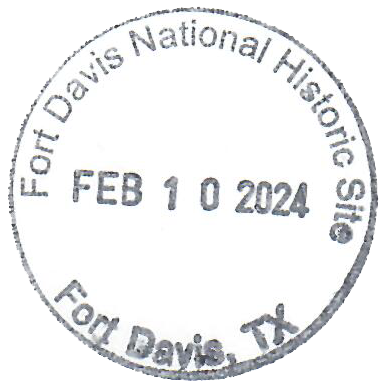

Originally established in 1854 to protect emigrants, mail coaches, and freight wagons on the trans-Pecos portion of the San Antonio-El Paso Road and the Chihuahua Trail, the fort saw very sparse use. Thus, it remains one of the best examples of a United States Army fort in the southwestern United States. The fort also holds particular importance in regards to African-Americans in the army, as the 9th and 10th Cavalry regiments (all-black regiments also known as ""The Buffalo Soldiers"") were stationed at Fort Davis after the Civil War, helping rebuild the site.
Fort Smith
National Historic Site
National Historic Site
Arkansas
Oklahoma
Oklahoma
9/13/1961


Established in 1871, Fort Smith contains the building which once housed the United States District Court for the Western District of Arkansas, which had jurisdiction over federal cases in Indian Territory. The fort was also a stop on the Trail of Tears for the Choctaw and Cherokee people. The site contains a walking tour detailing the forced relocation.
Piscataway Park
Maryland
10/4/1961


Piscataway Park is a National Park Service-protected area located 20 miles (32 km) southwest of downtown Washington, D.C. in and around Accokeek, Maryland. It protects the National Colonial Farm, Marshall Hall, and the Accokeek Creek Site. The park is located across the Potomac River from George Washington's Mount Vernon estate.
San Juan Island
National Historical Park
National Historical Park
Washington
11/5/1961


With the U.S. and Great Britain engaged in a boundary dispute over the San Juan Islands, the killing of a pig in 1859 led both sides to form military camps on opposite ends of San Juan Island. The bloodless Pig War ended 13 years later when the U.S. was decided the owner of the islands. Both the American and English camps have surviving buildings, developed trails, and shoreline.
Buck Island Reef
National Monument
National Monument
US Virgin Islands
12/28/1961


Most of this monument is underwater, containing a large elkhorn coral barrier reef that provides cover for a great variety of reef fish, sea turtles and least terns. It is based around Buck Island, an uninhabited 176-acre (0.71 km2) island.
Lincoln Boyhood
National Memorial
National Memorial
Indiana
2/19/1962


Abraham Lincoln moved with his family from Kentucky to forested Southern Indiana in 1816 and lived there from age 7 to 21. He worked on his family's farm and taught himself with little formal schooling during these formative years. His mother died and is buried here. A living museum reenacts a period farm at a reconstructed homestead near the original home's foundation and a sculpted limestone memorial building.
Sagamore Hill
National Historic Site
National Historic Site
New York
7/25/1962


Theodore Roosevelt, the 26th President of the United States, lived in this house from 1885 until his death in 1919. Roosevelt spent many summers around Oyster Bay as a child, but only properly owned property on there with the completion of this house. His ""Summer White House"", he hired the New York architectural firm of Lamb & Rich to design a shingle-style, Queen Anne home for the property. While living at Sagamore Hill, Roosevelt helped facilitate the end of the Russo-Japanese War and hosted several foreign dignitaries while serving as president.
Petrified Forest
National Park
National Park
Arizona
12/9/1962
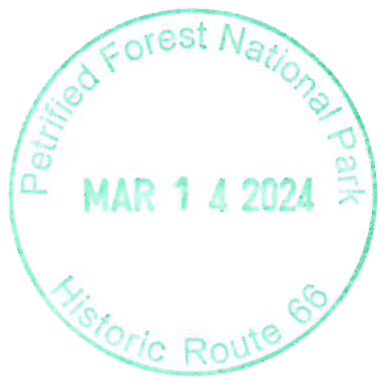

This portion of the Chinle Formation has a large concentration of 225-million-year-old petrified wood. The surrounding Painted Desert features eroded cliffs of red-hued volcanic rock called bentonite. Dinosaur fossils and over 350 Native American sites are also protected in this park.
Edgar Allan Poe
National Historic Site
National Historic Site
Pennsylvania
12/29/1962


Edgar Allan Poe, regarded as a major figure in the American Romanticism movement, lived in this house. He likely rented it for a year or less in 1843, but it remains Poe's only residence still standing in Philadelphia. The site details Poe's time in Philadelphia, where he wrote some of his most famous works including ""The Tell-Tale Heart"" and ""The Raven"".
Puukohola Heiau
National Historic Site
National Historic Site
Hawaii
12/29/1962


This stone temple was built by Kamehameha the Great in 1791 following a prophecy that would allow him to conquer all of the Hawaiian islands. At this site his cousin Ke?ua was slain, ending the civil war on Hawai?i. John Young governed the island from its first European-style house nearby while Kamehameha unified Hawaii.
Harpers Ferry
National Historical Park
National Historical Park
West Virginia
Virginia
Maryland
Virginia
Maryland
1/1/1963


In 1859 abolitionist John Brown conducted a raid on the arsenal at Harpers Ferry, a prelude to the Civil War; he was executed and became a martyr. John Brown's Fort remains in the historic lower town in West Virginia. Hiking trails in all three states have overlooks of the confluence of the Potomac and Shenandoah rivers. The park also has the remains of Storer College, industrial ruins, and Civil War batteries.
Whitman Mission
National Historic Site
National Historic Site
Washington
1/1/1963


In 1836, a small group of Presbyterian missionaries traveled with the annual fur trapper's caravan into Oregon Country on the Oregon Trail. Among the group were Marcus Whitman and his wife Narcissa Whitman. The Whitmans established the Whitman Mission west of Walla Walla, Washington, but were murdered alongside eleven others by Cayuse people in the 1847 Whitman massacre. The massacre was an important part of Pacific Northwest history, as it caused the United States Congress to take action in declaring territorial status to the Oregon Country to protect immigrant settlers.
Andrew Johnson
National Historical Site
National Historical Site
Tennessee
12/11/1963


Andrew Johnson was elected vice president in 1864 and was sworn in as 17th President of the United States after the assassination of President Lincoln on April 15, 1865. The historic site encompasses the homestead in Greeneville, Tennessee, that he and his family lived in.
Allegheny Portage Railroad
National Historical Site
National Historical Site
Pennsylvania
1/1/1964


The Allegheny Portage Railroad was the first railroad through the Allegheny Mountains in central Pennsylvania that connected the Midwestern United States to the Eastern seaboard, used as a portage railway to haul river boats and barges over the divide between the Ohio and the Susquehanna Rivers.
Roosevelt Campobello
International Park
International Park
Maine
7/7/1964


Roosevelt Campobello International Park preserves the house and surrounding landscape of the summer retreat of Franklin D. Roosevelt, Eleanor Roosevelt and their family. It is located on the southern tip of Campobello Island in the Canadian province of New Brunswick, and is connected to the mainland by the Franklin Delano Roosevelt Memorial Bridge, at Lubec, Maine in the United States.
Fort Larned
National Historic Site
National Historic Site
Kansas
8/31/1964


Established in 1859 as the Camp on Pawnee Fork, the site protected travelers on the Santa Fe Trail from hostile Native Americans. The fort saw occasional use during various Native American conflicts throughout the 1800s and was raided by Kiowa Indians in 1864. In 1867, the fort served as a meeting place for General Winfield Scott Hancock and chiefs from the Cheyenne tribe, indirectly beginning Hancock's War.
John Muir
National Historic Site
National Historic Site
California
8/31/1964


John Muir, an early advocate for the preservation of wilderness in the United States and the ""Father of the National Parks"", lived in this house from 1897 until his death in 1914. While here, Muir co-founded the Sierra Club and served as its first president. He also wrote hundreds of magazine and newspaper articles, essays, and books advocating for the preservation of American wilderness, such as preventing Yosemite National Park's Hetch Hetchy Valley from being dammed. Though he died before its founding, Muir is often credited as a major figure in the development of the National Park Service.
Johnstown Flood
National Memorial
National Memorial
Pennsylvania
8/31/1964


When the South Fork Dam catastrophically failed in 1889, the town of Johnstown, Pennsylvania, was flooded and more than 2,200 people died, making the flood now the third-deadliest event in the US. The memorial at the site of the dam remains features a visitor center, short hiking trails, and a historic clubhouse.
Canyonlands National Park
Utah
9/12/1964


This landscape was eroded into a maze of canyons, buttes, and mesas by the combined efforts of the Colorado River, Green River, and their tributaries, which divide the park into three districts. The park contains thousands of rock pinnacles and arches, as well as artifacts from Ancient Pueblo peoples.
National Mall and Memorial Parks
District of Columbia
1/1/1965


National Mall and Memorial Parks (formerly known as National Capital Parks-Central) is an administrative unit of the National Park Service (NPS) encompassing many national memorials and other areas in Washington, D.C. Federally owned and administered parks in the capital area date back to 1790, some of the oldest in the United States. In 1933, they were transferred to the control of the National Park Service. These parks were known as the National Capital Parks from their inception until 1965. The NPS now operates multiple park groupings in the D.C. area, including National Capital Parks-East, Rock Creek Park, President's Park, and George Washington Memorial Parkway. National Mall and Memorial Parks also provides technical assistance for the United States Navy Memorial.
Friendship Hill
National Historic Site
National Historic Site
Pennsylvania
1/12/1965


Albert Gallatin, a notable early American politician and the longest-serving Secretary of the Treasury, lived in this estate from 1788 to 1832. During this time, Gallatin was instrumental in reducing the national debt, purchasing the Louisiana Territory and funding the Lewis and Clark Expedition; an obscure figure in modern times, the Park Service dubs Gallatin the ""forgotten founding father"".
Nez Perce
National Historical Park
National Historical Park
Idaho
Montana
Oregon
Washington
Montana
Oregon
Washington
5/15/1965


The park preserves the traditional aboriginal lands of the Nez Perce people, specifically those related to the Nez Perce War, an 1877 conflict where Chief Joseph attempted to lead the Nez Perce to freedom in Canada, but were attacked by the U.S. Army Cavalry. The park is composed of 38 discontiguous sites which span three main ecoregions, covering a wide range of elevations and climates in the northwestern United States.
Herbert Hoover
National Historic Site
National Historic Site
Iowa
6/23/1965


31st President of the United States Herbert Hoover lived in West Branch, Iowa, for the first eleven years of his life, with the cottage he lived in from 1879 to 1884 serving as the Hoover's only remaining residence at the site. The site also includes several associated buildings related to the Hoover's life in West Branch, including a recreation of Hoover's father's blacksmith shop and the home of Hoover's uncle Laban Miles, an Indian Agent for Rutherford B. Hayes. Hoover and his wife, Lou, are both buried within the site's grounds.
Alibates Flint Quarries
National Monument
National Monument
Texas
8/21/1965


Alibates was the quarry site for high-quality, rainbow-hued flint that was distributed throughout the Great Plains in pre-Columbian times. It is jointly operated with the Lake Meredith National Recreation Area and includes the ruins of several Plains Village Indian dwellings.
Aniakchak
National Monument
National Monument
Alaska
8/21/1965


Aniakchak National Monument and Preserve is a U.S. National Monument and National Preserve, consisting of the region around the Aniakchak volcano on the Aleutian Range of south-western Alaska. It has erupted at least 40 times over the last 10,000 years. The 601,294-acre (243,335 ha) monument is one of the least-visited places in the National Park System due to its remote location and difficult weather. The area was proclaimed a National Monument on December 1, 1978, and established as a National Monument and Preserve on December 2, 1980. The National Monument encompasses 137,176 acres (55,513 ha) and the preserve 464,118 acres (187,822 ha). Visitation to Aniakchak is the lowest of all areas of the U.S. National Park System, according to the NPS, with only 100 documented recreational visits in 2017. Most visitors fly into Surprise Lake inside Aniakchak Crater, but the frequent fog and other adverse weather conditions make landing in the lake difficult. It is also possible to fly into the nearby village of Port Heiden and proceed overland to the Aniakchak Crater.
Hubbell Trading Post
National Historic Site
National Historic Site
Arizona
8/28/1965


Following the Long Walk of the Navajo, many Navajo returned to the Ganado region of Arizona to restart their lives. Finding their homes and crops devastated, trade became an important means of economic growth for the Navajo. Established in 1878, J. Lorenzo Hubbell's trading post in Ganado, Arizona, serves as the oldest operating trading post on the Navajo Nation.
Pennsylvania Avenue
National Historic Site
National Historic Site
District of Columbia
9/30/1965


The neighborhood around Pennsylvania Avenue between the White House and the United States Capitol has many historically and architecturally significant buildings and sites, including the Old Post Office, Freedom Plaza, United States Navy Memorial, National World War I Memorial, Federal Triangle, John Marshall Park, and Judiciary Square.
Roger Williams
National Memorial
National Memorial
Rhode Island
10/22/1965


Roger Williams founded the colony of Rhode Island on the basis of religious freedom, having been exiled from the Massachusetts Bay Colony for separating from the Church of England. The memorial is a landscaped park in downtown Providence, with a visitor center in a historic home.
Experimental Breeder Reactor I
National Historic Landmark
National Historic Landmark
Idaho
12/21/1965


Experimental Breeder Reactor I (EBR-I) is a decommissioned research reactor and U.S. National Historic Landmark located in the desert about 18 miles (29 km) southeast of Arco, Idaho. It was the world's first breeder reactor. At 1:50 p.m. on December 20, 1951, it became one of the world's first electricity-generating nuclear power plants when it produced sufficient electricity to illuminate four 200-watt light bulbs. EBR-I subsequently generated sufficient electricity to power its building, and continued to be used for experimental purposes until it was decommissioned in 1964. The museum is open for visitors from late May until early September.
Eisenhower
National Historic Site
National Historic Site
Pennsylvania
5/23/1966


Dwight D. Eisenhower, the 34th President of the United States and Five-Star General, lived in this home from 1950 until two years before his death in 1969. While president and afterwards, Eisenhower hosted many important dignitaries, politicians, and foreign leaders at the house.
George Rogers Clark
National Historical Park
National Historical Park
Indiana
7/23/1966


George Rogers Clark sacked the British Fort Sackville on the Wabash River in 1779 during the Illinois campaign of the Revolutionary War. President Franklin D. Roosevelt dedicated a memorial to this victory in 1936. The circular domed Classical-style memorial has a bronze statue of Clark and seven murals depicting the events and their aftermath.
Abraham Lincoln Birthplace
National Historical Park
National Historical Park
Kentucky
10/15/1966


President Abraham Lincoln was born in 1809 in a one-room log cabin, which was reconstructed in a neoclassical memorial building. He lived until age seven on another farm nearby before moving to Indiana.
Fort Laramie
National Historical Site
National Historical Site
Wyoming
10/15/1966


Founded as a private trading-post in the 1830s to service the overland fur trade, the site became an important trading post due to its location near the South Pass of the Rocky Mountains. The fort was purchased by the United States Army in 1849 to protect the many wagon trains of migrant travelers on the Oregon Trail. Fort Laramie was also a notable stop on the Mormon Trail.
Fort Washington Park
Maryland
10/15/1966


Fort Washington, located near the community of Fort Washington, Maryland, was for many decades the only defensive fort protecting Washington, D.C. The original fort, overlooking the Potomac River, was completed in 1809, and was begun as Fort Warburton, but renamed in 1808. During the War of 1812, the fort was destroyed by its own garrison during a British advance.
San Juan
National Historic Site
National Historic Site
Puerto Rico
10/15/1966


Located in the Old San Juan section of San Juan, Puerto Rico, the park contains Castillo San Felipe del Morro, an important fortress during Puerto Rico's colonial period. The fort has been occupied by several generations of soldiers, and the site highlights the lives and conflicts of those stationed there. The site is also a World Heritage Site.
Theodore Roosevelt Birthplace
National Historic Site
National Historic Site
New York
10/15/1966


Theodore Roosevelt, the 25th President of the United States, was born in New York City in 1858. He and his family lived in a brownstone in Manhattan until 1872. The Roosevelt's house was demolished in 1916, but the site was purchased in 1919 by the Theodore Roosevelt Association, who hired Theodate Pope Riddle to rebuild the house as a replica of how it appeared in 1865. The house was opened as a museum and eventually donated to the Park Service.
Wolf Trap
National Park for the Performing Arts
National Park for the Performing Arts
Virginia
10/15/1966


Wolf Trap National Park for the Performing Arts (originally known as the Wolf Trap Farm Park for the Performing Arts and simply known as Wolf Trap) is a performing arts center located on 117 acres (47 ha) of national park land in unincorporated Fairfax County, Virginia, near the town of Vienna. Through a partnership and collaboration of the National Park Service and the non-profit Wolf Trap Foundation for the Performing Arts, the park offers both natural and cultural resources.
Theodore Roosevelt Inaugural
National Historical Site
National Historical Site
New York
11/2/1966


Following the assassination of William McKinley in Buffalo, New York, Vice President Theodore Roosevelt assumed office. At the time of McKinley's assassination, Roosevelt was in Vermont. He traveled to Buffalo to visit McKinley, who was still alive, and left afterwards to visit the Adirondack Mountains. While there, McKinley died, and Roosevelt returned to Buffalo to take the Oath of Office at the house of scholar Ansley Wilcox. In modern times, the site preserves not only the room of Roosevelt's swearing in, but also artifacts related to the Pan-American Expo, where McKinley was shot.
John Fitzgerald Kennedy
National Historic Site
National Historic Site
Massachusetts
5/26/1967


John F. Kennedy was a part of the Kennedy political family and served as the 35th President of the United States. Purchased in 1914, John and his sisters Rosemary and Kathleen were the only Kennedys born in the house, as the Kennedy family moved in 1920. Rose Kennedy purchased the property again in 1966 to restore it to its 1914 appearance, donating it to the National Park Service the following year.
Appalachian
National Scenic Trail
National Scenic Trail
GA
NC
TN
VA
WV
MD
PA
NJ
NY
CT
MA
VT
NH
ME
NC
TN
VA
WV
MD
PA
NJ
NY
CT
MA
VT
NH
ME
1/1/1968


Spanning the Appalachian Mountains from Springer Mountain in Georgia and Mount Katahdin in Maine, this trail dating to the 1920s sees around a thousand thru-hikers each year, along with millions of short-term visitors. Major parks on the route include Great Smoky Mountains National Park, Shenandoah National Park, Delaware Water Gap National Recreation Area (pictured), and White Mountain National Forest. It's 2,189 miles (3,520 km) long

Pacific Crest Trail
California
Oregon
Washington
Oregon
Washington
1/1/1968


The PCT follows the passes and crests of the San Bernardino Mountains, Sierra Nevada, Cascades, and several other ranges from the Mexican to Canadian borders. It passes through 7 national parks, including Yosemite, Crater Lake, and North Cascades, and 25 national forests, for a route crossing deserts, glaciated mountains, pristine forests and lakes, and volcanic peaks. More than half is in federal wilderness areas (Alpine Lakes Wilderness pictured). The trail is 2,650 miles (4,260 km) long
Saugus Iron Works
National Historic Site
National Historic Site
Massachusetts
4/5/1968


Saugus, Massachusetts, was home to the first integrated ironworks in North America due to John Winthrop the Younger establishing the ironworks sometime in the 1640s. Since iron goods were often imported to the colonies, Winthrop believed he could profit from producing iron goods in New England, since he had an abundance of raw materials and access to the New England and Chesapeake Colonies. A string of financial difficulties and mismanagement led to the ironworks closing in 1670.
North Cascades
National Park
National Park
Washington
10/2/1968


The highly glaciated mountains of the North Cascades Range exhibit a spectacular and complex geologic history. Between the river valleys and high peaks there are eight diverse life zones with 75 mammal and 1,600 vascular plant species. Popular hiking and climbing areas of the Stephen Mather Wilderness include Cascade Pass, Mount Shuksan, Mount Triumph, and Eldorado Peak. Ross Lake and Lake Chelan National Recreation Areas adjoin the two segments of the park and are all administered together.
Redwood National Park 🞰
California
10/2/1968


This park and the co-managed state parks protect almost half of all remaining coastal redwoods, the tallest trees on earth. There are three large river systems in this very seismically active area, and 37 miles (60 km) of protected coastline reveal tide pools and seastacks. The prairie, estuary, coast, river, and forest ecosystems contain a wide variety of animal and plant species.
Carl Sandburg Home
National Historic Site
National Historic Site
North Carolina
10/17/1968


Carl Sandburg Home National Historic Site is located in the village of Flat Rock, North Carolina, and preserves Connemara, the home of Pulitzer Prize-winning poet and writer Carl Sandburg. Sandburg and his family moved here in 1945 for the peace and solitude needed for his writing and for the roughly 30 acres of pastureland for his wife, Lilian, to raise her champion dairy goats.
Florissant Fossil Beds
National Monument
National Monument
Colorado
8/20/1969
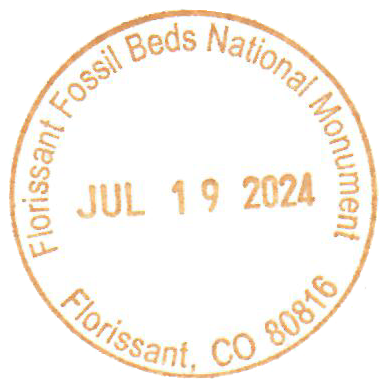

Huge petrified redwoods and incredibly detailed fossils of ancient insects and plants reveal a very different landscape in Colorado of almost 35 million years ago in the Eocene age.
William Howard Taft
National Historic Site
National Historic Site
Ohio
12/2/1969


William Howard Taft, the 27th President of the United States and 10th Chief Justice of the Supreme Court was born in this house in 1857 and lived here until leaving to attend Yale University in 1874. Taft's entire family lived in the house, including his six siblings. The Taft political dynasty began at the house with Taft's father, Alphonso Taft, an important diplomat and 34th Attorney General; Alphonso Taft hosted many important political leaders and dignitaries at the house.
Ninety Six
National Historic Site
National Historic Site
South Carolina
12/3/1969


Old Ninety Six and Star Fort, so named for being 96 miles from the Cherokee town of Keowee (though it is actually 78 miles away), as well as the town of Ninety Six, South Carolina, were strategic forts for both the Cherokee people and soldiers during the American Revolutionary War. The town of Ninety Six was a Loyalist stronghold during the Revolutionary War, and from May 22 to June 18, 1781, newly appointed Southern Department commander of the Continental Army, Major General Nathanael Greene led 1,000 troops in an unsuccessful siege against the 550 Loyalists defending the fort in the village.
Andersonville
National Historical Site
National Historical Site
Georgia
10/16/1970


The Andersonville National Historic Site, a former Confederate prisoner-of-war camp, is located near Andersonville, Georgia. The prison operated during the final fourteen months of the American Civil War, February 1864 - April 1865. It was overcrowded, with an inadequate water supply, inadequate food, and unsanitary conditions. Of the roughly 45,000 Union prisoners held there during the war, nearly 13,000 died.
Fort Point
National Historic Site
National Historic Site
California
10/16/1970


Originally established in 1794 by Spain, the fort was captured by the United States in the Mexican-American War and refortified in the 1840s during the gold rush. The modern Fort Point was completed in the 1850s, but saw little use. In 1937, the Golden Gate Bridge was built directly above the fort, though it is a part of the Golden Gate National Recreation Area and not the site itself.
Chesapeake and Ohio Canal
National Historical Park
National Historical Park
District of Columbia
Maryland
West Virginia
Maryland
West Virginia
1/8/1971


The 184 mi (296 km) Chesapeake and Ohio Canal shipped coal and other cargo down the Potomac River from Cumberland, Maryland, to Georgetown, Washington, D.C., from 1831 to 1924. Its towpath, alongside many preserved locks, is now a hiking and cycling trail, with more strenuous trails at Great Falls. It is also part of Potomac Heritage National Scenic Trail.
Lincoln Home
National Historic Site
National Historic Site
Illinois
8/18/1971


Abraham Lincoln, 16th President of the United States, lived in this house from 1844 to 1861 while practicing law and serving in the United States House of Representatives. Lincoln also lived in this house when he was elected president in 1860. In addition to Lincoln's house, several other structures within the four-block area are also preserved and have been restored to their appearance during the time Lincoln lived in the neighborhood.
Arches National Park
Utah
11/12/1971


This site features more than 2,000 natural sandstone arches, with some of the most popular arches in the park being Delicate Arch, Landscape Arch and Double Arch. Millions of years of erosion have created these structures in a desert climate where the arid ground has life-sustaining biological soil crusts and potholes that serve as natural water-collecting basins. Other geologic formations include stone pinnacles, fins, and balancing rocks.
Capitol Reef
National Park
National Park
Utah
12/18/1971


The park's Waterpocket Fold is a 100-mile (160 km) monocline that exhibits the earth's diverse geologic layers. Other natural features include monoliths, eroded buttes, and sandstone domes, including one shaped like the United States Capitol.
Grant-Kohrs Ranch
National Historic Site
National Historic Site
Montana
8/25/1972
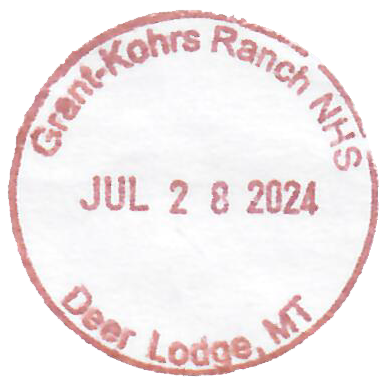

Originally established for fur trading in 1862, this ranch would eventually grow to cover over ten million acres of Powell County, Montana, under the ownership of cattle baron Conrad Kohrs. Though the current-day park is only 1,618 acres, it illustrates the role of cattlemen in American history.
John D. Rockefeller, Jr. Memorial Parkway
Wyoming
8/25/1972


The 270 mile scenic road that connects the two national parks and named for John D. Rockefeller Jr., a conservationist and philanthropist
Guadalupe Mountains
National Park
National Park
Texas
9/30/1972


This park contains Guadalupe Peak, the highest point in Texas, as well as the scenic McKittrick Canyon filled with bigtooth maples, a corner of the arid Chihuahuan Desert, and a fossilized coral reef from the Permian era.
Longfellow House
Washington's Headquarters
National Historic Site
Washington's Headquarters
National Historic Site
Massachusetts
10/9/1972


During the Siege of Boston, General (and later President of the United States) George Washington used this house as his headquarters and base of operations. Washington was based in the house for less than a year between 1775 and 1776; the house was later owned by popular fireside poet Henry Wadsworth Longfellow. The Longfellow family owned the house 1843 to 1972.
Sitka
National Historical Park
National Historical Park
Alaska
10/18/1972


The 1804 Battle of Sitka took place between Russian fur-trappers and the Tlingit people and resulted in Sitka later becoming the capital of Russian America. The Russian Bishop's House, a log structure from the 1840s, was the seat of the Russian Orthodox Church's proselytism efforts. The park also has a collection of totem poles.
Hohokam Pima
National Monument
National Monument
Arizona
10/21/1972


Hohokam Pima is part of the Gila River Indian Community and not open to the public. The monument includes the site of the Snaketown settlement, archeological remains of the Hohokam culture, which lived in the area until 1200. Excavations of pit houses, fields, and irrigation canals were refilled in the 1960s, leaving nothing above ground.
Thaddeus Kosciuszko
National Memorial
National Memorial
Pennsylvania
10/21/1972


Polish engineer Tadeusz Ko?ciuszko joined the Continental Army when the American Revolution broke out, overseeing various fort construction projects and later leading troops on the battlefield. After returning to Poland and leading a failed uprising against Russian occupation, he briefly lived at this house in Philadelphia before returning to Europe again. This is the smallest unit of the National Park System.
Fossil Butte
National Monument
National Monument
Wyoming
10/23/1972
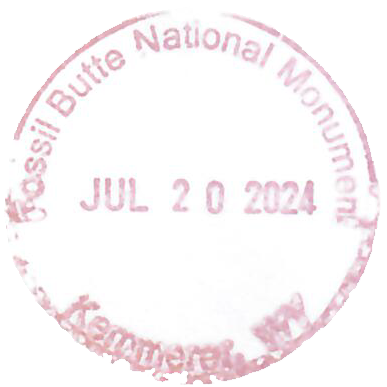

Fossil Butte preserves the 50-million-year-old Green River lake beds, the best paleontological record of tertiary aquatic communities in North America. Fossils including fish, alligators, bats, turtles, dog-sized horses, insects, and many other species of plants and animals suggest that the region was a low, subtropical, freshwater basin when the sediments accumulated, over about a 2-million-year period.
Benjamin Franklin Memorial
Pennsylvania
10/25/1972


Benjamin Franklin was a Founding Father who served in several political and diplomatic roles during the early republic, signing both the Declaration of Independence and the Constitution. He made a number of scientific inquiries and inventions including the lightning rod, bifocals, and the Franklin stove. The 20 ft (6.1 m) marble statue of a seated Franklin by James Earle Fraser sits in the Memorial Hall rotunda of the Franklin Institute in Philadelphia.
Perry's Victory and
International Peace Memorial
International Peace Memorial
Ohio
10/26/1972


Commodore Oliver Hazard Perry's naval fleet defeated the British at the Battle of Lake Erie during the War of 1812, securing control of the lake and later peace with Britain and Canada. The world's largest Doric column, with an observation deck on top, stands 352 ft (107 m) tall on South Bass Island to commemorate the battle and international cooperation.
Golden Gate
National Recreation Area
National Recreation Area
California
10/27/1972


The Golden Gate National Recreation Area (GGNRA) is a U.S. National Recreation Area protecting 82,116 acres (33,231 ha) of ecologically and historically significant landscapes surrounding the San Francisco Bay Area. Much of the park is land formerly used by the United States Army. GGNRA is managed by the National Park Service and is the second-most visited unit of the National Park system in the United States (ranking only under Blue Ridge Parkway), with more than 15.6 million visitors in 2022. It is also one of the largest urban parks in the world, with a size two-and-a-half times that of the consolidated city and county of San Francisco.
Chamizal
National Memorial
National Memorial
Texas
2/4/1973
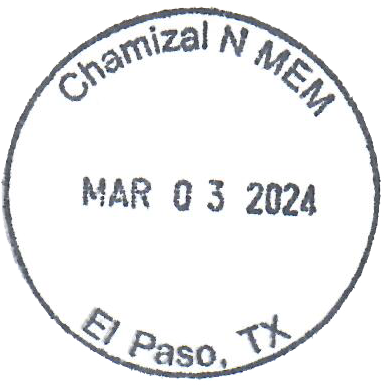

Chamizal National Memorial, located in El Paso, Texas, along the United States-Mexico international border, is a National Park Service site commemorating the peaceful settlement of the Chamizal boundary dispute.
Saint Paul's Church
National Historic Site
National Historic Site
New York
7/5/1973


Established in 1665, Saint Paul's Church is one of New York's oldest parishes. The church was the site of the infamous John Peter Zenger Trial of 1733, which set an early precedent for Freedom of Press in the United States, and served as a military hospital after the American Revolutionary War Battle of Pell's Point in 1776. The site was authorized in 1978 to protect Saint Paul's Church from increasing industrialization of the surrounding area of the Bronx and Mount Vernon, New York.
New Orleans Jazz
National Historical Park
National Historical Park
Louisiana
10/2/1973


Jazz music originated in New Orleans's diverse culture of Creoles, Afro-Caribbeans, African Americans, and European Americans. Brass bands, often led by charismatic bandleaders, played at community events and evolved ragtime and dance tunes with improvisation. Perseverance Hall in Louis Armstrong Park was a major social club for mixed-race dance events featuring early jazz.
Clara Barton
National Historic Site
National Historic Site
Maryland
1/1/1974


Clara Barton, humanitarian and founder of the American Red Cross, lived in this house from 1897 until her death in 1912. The house served as headquarters and a warehouse for the Red Cross. When it was established in 1974, the Clara Barton National Historic Site was the first national historic site dedicated to the accomplishments of a woman.
Springfield Armory
National Historic Site
National Historic Site
Massachusetts
1/1/1974


Formally known as the United States Armory and Arsenal at Springfield, this was the primary center for the manufacture of United States military firearms from 1777 until its closing in 1968. The armory's innovative use of Interchangeable parts and the assembly line process would prove essential to manufacturing firearms for conflicts like the Spanish-American War, American Civil War, and World War I. The armory was also the site of Shays' Rebellion in the 1780s.
Tuskegee Institute
National Historic Site
National Historic Site
Alabama
1/1/1974


Founded in 1881, Tuskegee Institute is a private, historically black land-grant university which is still active. That year, author Booker T. Washington was hired as a teacher (and eventually principal) at the school and helped expand the university's size and areas of study to lay the groundwork for its prominence in black education. The Institute has played many significant roles in African-American history, including the site of the Tuskegee Syphilis Study and the educating of the Tuskegee Airmen. Notable alumni include George Washington Carver (who is buried on the campus grounds), Ralph Ellison, and Lionel Richie.
Belmont-Paul Women's Equality
National Monument
National Monument
District of Columbia
5/30/1974


Home of the National Woman's Party since 1929, this Adam Federal style house near the US Capitol was the home where party leader Alice Paul and others lived and worked.
Lyndon Baines Johnson
Memorial Grove on the Potomac
Memorial Grove on the Potomac
District of Columbia
9/27/1974


Lyndon B. Johnson's presidency saw passage of Great Society legislation that expanded health care access through Medicare and Medicaid, established civil and voting rights prohibiting racial discrimination, addressed poverty and rural development, and promoted conservation and environmental protection. The grove of pine and dogwood trees surrounded by flowers sits on an island in the Potomac with trails, meadows, and a commemorative granite monolith.
Boston
National Historical Park
National Historical Park
Massachusetts
10/26/1974


The Freedom Trail links several sites that made Boston important during the American Revolution. These include the Old State House, where the Boston Massacre took place; the Old North Church; the Old South Meeting House, where the Boston Tea Party was organized; Charlestown Navy Yard, home to the USS Constitution, and the 221 ft (67 m) Bunker Hill Monument at the site of the Battle of Bunker Hill.
John Day Fossil Beds
National Monument
National Monument
Oregon
10/26/1974


Located within the John Day River Basin, the Fossil Beds have a well-preserved, complete record of fossil plants and animals from more than 40 of the 65 million years of the Cenozoic Era. The monument is divided into three units: Painted Hills, named for its delicately colored stratifications; Sheep Rock; and Clarno. Blue Basin near Sheep Rock is a volcanic ash bowl transformed into claystone by eons of erosion, colored pastel blue by minerals.
Knife River Indian Villages
National Historic Site
National Historic Site
North Dakota
10/26/1974


Preserves the historic and archaeological remnants of bands of Hidatsa, Northern Plains Indians, in Stanton, North Dakota. Knife River was a major trading and agricultural area and the area was home to the villages of Awatixa Xi'e, Awatixa, and Big Hidatsa Village.
Martin Van Buren
National Historic Site
National Historic Site
New York
10/26/1974


Martin Van Buren, the 8th President of the United States, purchased this house during his presidency in 1839 and lived here until his death in 1862. The property, called Lindenwald, served as the headquarters for Van Buren's unsuccessful 1844 and 1848 campaigns for a second-term as president. Located only a mile away from Van Buren's birthplace in Kinderhook, New York, the house was also owned by local author Washington Irving, who Van Buren later befriended.
Voyageurs National Park
Minnesota
4/8/1975


This park protecting four lakes near the Canada-US border is a site for canoeing, kayaking, and fishing. The park also preserves a history populated by Ojibwe Native Americans, French fur traders called voyageurs, and gold miners. Formed by glaciers, the region features tall bluffs, rock gardens, islands, bays, and several historic buildings.
Father Marquette Memorial
Michigan
12/20/1975


The French Jesuit missionary Jacques Marquette founded the first two European settlements in Michigan, Sault Ste. Marie and St. Ignace, seeking to convert Native Americans to Catholicism. He joined Louis Jolliet on an exploration of the Upper Mississippi River. A memorial and interpretive trail in Straits State Park overlook the Mackinac Bridge.
Paterson Great Falls Historical Park
New Jersey
1/1/1976


As one of the largest waterfalls on the East Coast, the Great Falls of the Passaic River contributed to Paterson's founding in 1792 by Alexander Hamilton as an industrial city. The falls were harnessed to power cotton mills, locomotive factories, silk mills, and other manufacturing facilities, but the city declined in the 20th century.
Klondike Gold Rush
National Historical Park
National Historical Park
Alaska
Washington
Washington
6/30/1976


After gold was found at the Klondike River in 1896, 100,000 prospectors journeyed to the Yukon for the Klondike Gold Rush, most taking a route through Skagway, Alaska, along the Chilkoot Trail, which can still be hiked today, or the White Pass Trail. The Seattle unit in Pioneer Square tells the city's history as a boomtown when prospectors passed through and bought their provisions.
Constitution Gardens
District of Columbia
7/4/1976


Constitution Gardens is a park area in Washington, D.C., United States, located within the boundaries of the National Mall. The 50-acre (200,000 m2) park is bounded on the west by the Vietnam Veterans Memorial, on the east by 17th St NW, on the north by Constitution Avenue, and on the south by the Reflecting Pool. Constitution Gardens has a small pond, which contains the Memorial to the 56 Signers of the Declaration of Independence on an island open to pedestrians.
Valley Forge Historical Park
Pennsylvania
7/4/1976


The Continental Army was encamped at Valley Forge during the winter and spring of 1777-1778, where they were led by General George Washington and trained by Baron von Steuben in preparation for the Revolutionary War. The site is preserved with Washington's Headquarters, reconstructed cabins displaying soldiers' hardship, and the 1917 National Memorial Arch.
Eugene O'Neill
National Historic Site
National Historic Site
California
10/19/1976


The only American playwright to win a Nobel Prize in Literature, Eugene O'Neill bought this site, which he called Tao House, with the money awarded to him for the aforementioned prize. He lived in the house from 1937 to 1944, writing plays such as The Iceman Cometh and A Moon for the Misbegotten.
Eleanor Roosevelt
National Historic Site
National Historic Site
New York
5/27/1977


Eleanor Roosevelt, the First Lady from 1933 to 1945 and Ambassador to the United Nations, used this property, named Val-Kill, for both personal entertainment, hosting, and helping employ local farming families in handcraft traditions. The site now commemorates Roosevelt's life and accomplishments.
Continental Divide
National Scenic Trail
National Scenic Trail
Montana
Idaho
Wyoming
Colorado
New Mexico
Idaho
Wyoming
Colorado
New Mexico
1/1/1978


With a route from Mexico to Canada, the Continental Divide separates the nation's rivers between those that flow into the Pacific and Atlantic Oceans. Mostly following the crest of the Rocky Mountains, its major sites include El Malpais National Monument; Gila Wilderness; Wind River Range; and Rocky Mountain, Yellowstone, and Glacier National Parks (pictured). The trail is 3,200 miles (5,150 km) long

Iditarod
National Historic Trail
National Historic Trail
Alaska
1/1/1978


This route from Seward to Nome was used by some prospectors to reach the Nome Gold Rush in the early 1900s, connecting trails long used by Alaska Natives. In the 1925 serum run, a relay of mushers and their sled dogs brought an antitoxin to Nome to stop a diphtheria outbreak, but the trail fell into disuse as planes replaced sleds for shipping. In commemoration of this history the 1,000 mi (1,600 km) Iditarod Trail Sled Dog Race has been held annually since 1973. The only winter trail in the system, the designated trail includes the race route and 1,400 mi (2,300 km) of trails connecting nearby communities for snowmobiling, sledding, and skiing.The trail is 2,350 (3,780 km) miles long
Mormon Pioneer
National Historic Trail
National Historic Trail
Illinois
Iowa
Nebraska
Wyoming
Utah
Iowa
Nebraska
Wyoming
Utah
1/1/1978


Facing persecution at their settlement in Nauvoo, Illinois, members of the Church of Jesus Christ of Latter-day Saints (Mormons), led by Brigham Young, followed the Emigrant Trail to reach refuge in the Salt Lake Valley. Around 2,000 Mormon pioneers completed the original 1846-1847 trek, including stops at Mount Pisgah, Iowa; Winter Quarters, Nebraska; and Fort Laramie, Wyoming. In the next two decades, 70,000 more followed on the arduous route, some pulling handcarts. Among the 145 participating sites to visit today are Independence Rock (pictured), Devil's Gate, and This Is the Place Heritage Park. The trail is 1,300 (2,090 km) miles long
Oregon
National Historic Trail
National Historic Trail
MO
KS
NE
WY
ID
OR
WA
KS
NE
WY
ID
OR
WA
1/1/1978
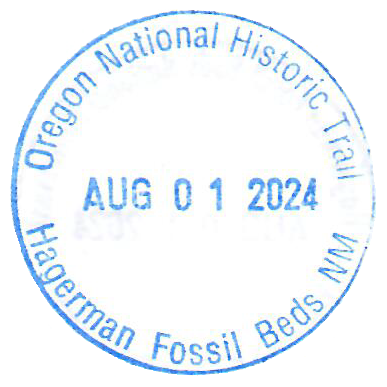

Marcus Whitman made the first wagon trek to Oregon Country in 1836 to found the Whitman Mission, followed by the Oregon Dragoons and Bartleson-Bidwell Party. Whitman led a wagon train of around 1,000 emigrants in 1843, with tens of thousands of families making the risky journey over the next few decades to reach a new life in the West. The trail's typical endpoints were Independence, Missouri to Oregon City, Oregon, via Fort Kearny, Scotts Bluff (pictured), South Pass, Shoshone Falls, the Blue Mountains, and Barlow Road. Emigrants came in mule- or oxen-pulled covered wagons filled with months of supplies, but they also faced disease and attacks by Native Americans upon whose land they intruded. The trail is 2,170 (3,490 km) miles long
Lowell
National Historical Park
National Historical Park
Massachusetts
6/5/1978


The city of Lowell, Massachusetts was at one time an important manufacturing center due to its proximity to the Merrimack River, Charles River, and Pawtucket Falls. Attempting to replicate England's mill communities, Lowell became one of the largest manufacturing hubs in the United States during the Industrial Revolution. The park now covers the history of Lowell's textile mills and the workers who worked and lived in the city.
American Memorial Park
Northern Mariana Islands
8/18/1978


The Japanese had mandate over the Northern Mariana Islands after World War I and used them as a base for their World War II Pacific offensive. The key summer 1944 Battles of Saipan and Tinian during the Mariana Islands campaign led to the US liberation of the islands. The Commonwealth-owned memorial commemorates the thousands of American and Chamorro casualties during the campaign with a flag monument, bell tower, and granite memorial near recreational park areas and a mangrove forest.
War in the Pacific Historical Park
Guam
8/18/1978


This park commemorates the bravery and sacrifice of those who participated in the Pacific Theater of World War II. Park units include the Asan and Agat Invasion Beaches where U.S. troops landed in 1944 after Japanese occupation, the Piti Guns and other Japanese defensive sites, and memorials.
Fort Scott
National Historic Site
National Historic Site
Kansas
10/19/1978


Established in 1842 as a midway point between Fort Leavenworth and Fort Gibson, Fort Scott provided protection to settlers migrating west from Native Americans in the Great Plains. The site saw little attention until the passage of the Kansas-Nebraska Act in 1854. Free-soilers and pro-slavery advocates occupied separate parts of the fort, leading to continued conflict. The Union Army took the fort during the American Civil War, holding it throughout the war.
Badlands National Park
South Dakota
11/10/1978


The ruins contain Pueblo structures from the 11th to 13th centuries with more than 400 masonry rooms which were misidentified by early American settlers as Aztec. It has been included in the Chaco Culture World Heritage Site, which also includes Chaco Culture National Historical Park.
Ebey's Landing
National Historical Reserve
National Historical Reserve
Washington
11/10/1978


Ebey's Landing National Historical Reserve is a unit of the National Park Service on Whidbey Island in the Puget Sound, near Coupeville in Island County, Washington, United States.
Kaloko-Honokohau Historical Park
Hawaii
11/10/1978


This coastal park includes two fishponds and a fish trap used in Ancient Hawaiian aquaculture and brackish anchialine pools with ‘?pae‘ula shrimp. Lava flows lead down to the Ala Kahakai National Historic Trail, running along the beach and by ruins of an ancient heiau.
Lewis and Clark
National Historic Trail
National Historic Trail
PA
WV
OH
KY
IN
IL
MO
KS
IA
NE
SD
ND
MT
ID
OR
WA
WV
OH
KY
IN
IL
MO
KS
IA
NE
SD
ND
MT
ID
OR
WA
11/10/1978
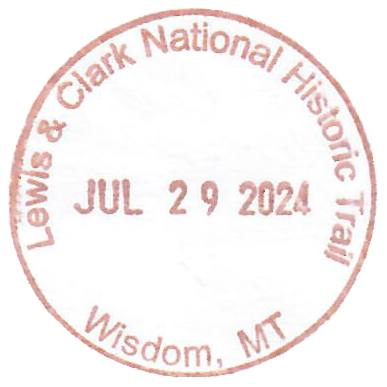

Meriwether Lewis and William Clark led the 1803-1806 Corps of Discovery Expedition to map and study the Louisiana Purchase for President Thomas Jefferson. On their round-trip up the Missouri River to the mouth of the Columbia River, they formed relationships with many Native American tribes and described dozens of species. Associated sites along the trail, extended in 2019 to encompass their preparation along the Ohio River, include their starting point Camp Dubois near Gateway Arch National Park, winter camp Fort Clatsop (replica pictured) at Lewis and Clark National Historical Park, Pompeys Pillar National Monument, and an NPS visitor center in Omaha. The trail is 4,900 (7,890 km) miles long
Maggie L. Walker
National Historic Site
National Historic Site
Virginia
11/10/1978


Maggie L. Walker was an African-American businesswoman who chartered the St. Luke Penny Savings Bank in Richmond, Virginia, making her both the first African-American woman to charter a bank and the first African-American woman to serve as a bank president. Later in life, Walker was bound to a wheelchair as a result of paralysis, also serving as an icon for people with disabilities. Walker lived in this house from 1904 until her death in 1934. The house also contains a preserved elevator, rare for private residences at the time, which Walker used to access the second floor after her paralysis.
Theodore Roosevelt
National Park
National Park
North Dakota
11/10/1978


Theodore Roosevelt National Park is an American national park of the badlands in western North Dakota comprising three geographically separated areas. Honoring U.S. President Theodore Roosevelt, it is the only American national park named directly after a single person.
Thomas Stone
National Historical Site
National Historical Site
Maryland
11/10/1978


Thomas Stone, member of the Maryland Senate and signer of the Declaration of Independence, lived in this house from 1770 until his death in 1787. Stone was buried on the property, as was most of his family. The Stone family owned the home, which was known as both the Thomas Stone House and Haberdeventure, until 1938. The Stones were active in Maryland politics for generations, with Stone's brothers Michael Jenifer Stone and John Hoskins Stone serving in Maryland's state government and Stone's grandson Frederick Stone representing Maryland's fifth district in the United States House of Representatives.
Admiralty Island
National Monument
National Monument
Alaska
12/1/1978


Re-discovered in 1991 during excavations for a new federal building, this former burial ground that contains the remains of more than 400 free and enslaved Africans buried during the 17th and 18th centuries was designated a National Historic Landmark memorial in 1993.
Cape Krusenstern
National Monument
National Monument
Alaska
12/1/1978


Co-located with the NHLD Cape Krusenstern Archeological District, this coastal plain contains large lagoons and rolling hills of limestone. The bluffs record thousands of years of change in the shorelines of the Chukchi Sea, as well as evidence of some 9,000 years of human habitation.
Misty Fjords
National Monument
National Monument
Alaska
12/1/1978


Called The Yosemite of the North for its similar geology, the monument has widespread light-colored granite, about 50 to 70 million years old (Eocene Epoch to Cretaceous Period), that has been sculpted by glaciers that gouged deep U-shaped troughs. Mountain goats live in the higher elevations, while brown and black bear are also common. Part of Tongass National Forest.
Frederick Law Olmsted
National Historic Site
National Historic Site
Massachusetts
10/12/1979


Frederick Law Olmsted was an influential landscape architect, responsible for such projects as Central Park in New York City and the Emerald Necklace around Boston. Olmsted moved to this site, called Fairsted, in 1883 and established the world's first full-scale professional office for the practice of landscape design. His sons and successors would continue the practice for the next century.
Ice Age
National Scenic Trail
National Scenic Trail
Wisconsin
1/1/1980


This trail traces Wisconsin's terminal moraine of the glacier covering much of North America in the last ice age. When it receded about 10,000 years ago, it left behind kettles, potholes, eskers, kames, drumlins, and glacial erratics, six sites of which are part of the Ice Age National Scientific Reserve (Kettle Moraine State Forest pictured). The trail is 1,000 (1,610 km) miles long.
North Country
National Scenic Trail
National Scenic Trail
ND
MN
WI
MI
OH
PA
NY
VT
MN
WI
MI
OH
PA
NY
VT
1/1/1980


This trail reaches from Lake Sakakawea State Park in North Dakota to a junction with the Appalachian Trail in Green Mountain National Forest in Vermont. Along its route, the trail passes through eight states and more than 150 parcels of land protected at the federal, state, or local levels. The trail is 4,800 (7,720 km) miles long
Overmountain Victory
National Historic Trail
National Historic Trail
Virginia
Tennessee
North Carolina
South Carolina
Tennessee
North Carolina
South Carolina
1/1/1980


In September 1780 during the Revolutionary War, the Overmountain Men militia mustered in Abingdon, Virginia (pictured) and Sycamore Shoals, Tennessee, for a two-week march across the Appalachian Mountains via Roan Mountain. Pursuing British Major Patrick Ferguson, they confronted his Loyalist force at the October 7 Battle of Kings Mountain in South Carolina, where the Patriots won a quick, decisive victory that would be a turning point in the war. The linked highways and walking trails visit several preserved encampment sites. The trail is 330 (530 km) miles long.
Channel Islands
National Park 🞼
National Park 🞼
California
3/5/1980


Five of the eight Channel Islands are protected, with half of the park's area underwater. The islands have a unique Mediterranean ecosystem originally settled by the Chumash people. They are home to over 2,000 species of land plants and animals, 145 endemic to them, including the island fox. Ferry services offer transportation to the islands from the mainland.
David Berger Memorial
Ohio
3/5/1980


David Berger was an American Israeli weightlifter who competed at the 1972 Summer Olympics. He and ten other Israeli competitors and coaches were kidnapped and killed by terrorists in the Munich massacre. Located at a Jewish Community Center, a steel sculpture of the five Olympic rings split in half sits on eleven supporting segments.
White House and President's Park
District of Columbia
5/6/1980


President's Park, located in Downtown Washington, D.C., encompasses the White House and includes the Eisenhower Executive Office Building, the Treasury Building, and grounds; the White House Visitor Center; Lafayette Square; and The Ellipse. President's Park was the original name of Lafayette Square.
Biscayne National Park
Florida
6/28/1980


The central part of Biscayne Bay, this mostly underwater park at the north end of the Florida Keys has four interrelated marine ecosystems: mangrove forest, the Bay, the Keys, and coral reefs. Threatened animals include the West Indian manatee, American crocodile, various sea turtles, and the peregrine falcon.
Boston African American
National Historical Site
National Historical Site
Massachusetts
10/10/1980


The Beacon Hill neighborhood was home to most of Boston's Black population before the Civil War, much of whom were slaves who escaped via the Underground Railroad. Sites on the Black Heritage Trail include the 1806 African Meeting House, the oldest standing black church in the United States; the Robert Gould Shaw Memorial; schools; and homes of several abolitionists.
Gates of the Arctic
National Park
National Park
Alaska
12/2/1980


The country's northernmost park protects an expanse of pure wilderness in Alaska's Brooks Range and has no park facilities. The land is home to Alaska Natives who have relied on the land and caribou for 11,000 years.
Glacier Bay
National Park 🞼 🞰
National Park 🞼 🞰
Alaska
12/2/1980


Glacier Bay contains tidewater glaciers, mountains, fjords, and a temperate rainforest, and is home to large populations of grizzly bears, mountain goats, whales, seals, and eagles. When discovered in 1794 by George Vancouver, the entire bay was covered by ice, but the glaciers have since receded more than 65 miles (105 km).
Katmai National Park
Alaska
12/2/1980


This park on the Alaska Peninsula protects the Valley of Ten Thousand Smokes, an ash flow formed by the 1912 eruption of Novarupta, and the stratovolcano Mount Katmai. Over 2,000 grizzly bears come here each year to catch spawning salmon. Other wildlife includes caribou, wolves, moose, and wolverines.
Kenai Fjords
National Park
National Park
Alaska
12/2/1980


Near Seward on the Kenai Peninsula, this park protects the Harding Icefield and at least 38 glaciers and fjords stemming from it. The only area accessible to the public by road is the rapidly shrinking Exit Glacier. Boat and kayak tours offer views of tidewater glaciers, whales, sea lions, and marine birds.
Kobuk Valley
National Park
National Park
Alaska
12/2/1980


Kobuk Valley protects 61 miles (98 km) of the Kobuk River and three regions of sand dunes. Created by glaciers, the Great Kobuk, Little Kobuk, and Hunt River Sand Dunes can reach 100 feet (30 m) high and 100 °F (38 °C), and they are the largest dunes in the Arctic. Twice a year, half a million caribou migrate through the dunes and across river bluffs that expose well-preserved ice age fossils.
Lake Clark National Park
Alaska
12/2/1980


The region around Lake Clark features four active volcanoes, including Mount Redoubt, as well as an abundance of rivers, glaciers, and waterfalls. Temperate rainforests, a tundra plateau, and three mountain ranges complete the landscape.
Wrangell-St. Elias
National Park 🞰
National Park 🞰
Alaska
12/2/1980


The largest national park in the system protects the convergence of the Alaska, Chugach, Wrangell, and Saint Elias Ranges, which include many of the continent's tallest mountains and volcanoes, including the 18,008-foot Mount Saint Elias. More than a quarter of the park is covered with glaciers, including the tidewater Hubbard Glacier, piedmont Malaspina Glacier, and valley Nabesna Glacier.
Chaco Culture
National Historical Park
National Historical Park
New Mexico
12/19/1980


This canyon site was inhabited from the 9th to 12th centuries by the Ancestral Puebloans, who built the largest pre-colonial buildings in the US, including the great houses Pueblo Bonito and Chetro Ketl. Their architecture, archaeological artifacts, and petroglyphs, show the sophistication of this former economic center.
Kalaupapa
National Historical Park
National Historical Park
Hawaii
12/22/1980


Kalaupapa National Historical Park is located in Kalaupapa, Hawai?i, on the island of Moloka?i, with the goal of preserving the settings of two leper colonies that operated from 1866 to 1969 with 8500 residents during its operation.
James A. Garfield
National Historic Site
National Historic Site
Ohio
12/28/1980


20th President of the United States James A. Garfield was assassinated less than a year into his term, yet lived an accomplished life as an attorney, member of the Ohio State Senate, and United States Representative. The site preserves Garfield's home from 1876 until his death, as well as his presidential library, as he was the first president to have one.
Lyndon B. Johnson
National Historical Park
National Historical Park
Texas
12/28/1980


President Lyndon B. Johnson spent much of his life here in the Hill Country, where visitors can tour his reconstructed birthplace, boyhood home, and ranch. The still-working ranch was Johnson's Little White House where he spent a fifth of his presidency working and hosting guests. It also has the plane used as Air Force One.
Women's Rights Historical Park
New York
12/28/1980


In 1848, the Seneca Falls Convention was held in Seneca Falls, New York. The convention was America's first women's rights convention, and suffrage advocates such as Elizabeth Cady Stanton, Lucretia Mott, and Frederick Douglass were in attendance. The Declaration of Sentiments was drafted and signed at the convention. The park preserves several sites associated with the convention, including the houses of Stanton and McClintock.
George Washington
Memorial Parkway
Memorial Parkway
Virginia
3/17/1981


The George Washington Memorial Parkway, colloquially the G.W. Parkway, is a 24.9-mile-long (40 km) limited-access parkway that runs along the south bank of the Potomac River from Mount Vernon, Virginia, northwest to McLean, Virginia, and is maintained by the National Park Service (NPS). It is located almost entirely in Northern Virginia, except for a short portion of the parkway northwest of the Arlington Memorial Bridge that passes over Columbia Island in Washington, D.C.
Mount St. Helens Volcanic
National Monument
National Monument
Washington
8/27/1982


Following the 1980 eruption of the now-8,363-foot-tall (2,549 m) Mount St. Helens, the environment was left to respond naturally to the disturbance. The volcanic crater is surrounded by a pumice plain with deposits from the landslide, preserved wind-blown trees, and the Ape Cave lava tube. Part of Gifford Pinchot National Forest.
Vietnam Veterans Memorial
District of Columbia
11/13/1982


Almost three million Americans were deployed to Vietnam during the Vietnam War from 1955 to 1975 as part of a campaign to stop communism in the region. Reflective black granite walls, sunken below ground level, bear the names of 58,320 servicemembers who died during the conflict. There are also statues representing women who served and the diversity of soldiers.
Florida Trail
Florida
1/1/1983


The Florida Trail runs from the swamplands of Big Cypress National Preserve to the beaches of Gulf Islands National Seashore, going around Lake Okeechobee and through Ocala, Osceola, and Apalachicola National Forests and many state forests and parks. The trail is 1,500 (2,410km) miles long.
Natchez Trace
National Scenic Trail
National Scenic Trail
Tennessee
Mississippi
Mississippi
1/1/1983


The Natchez Trace was used for centuries by Native Americans who followed animal migration paths as trade routes. It became a major road for settlers to the South in the 1800s and 1810s before falling out of use, and it is now preserved as the Natchez Trace Parkway. The full intended length has not been developed and the trail consists of five disconnected sections - from three to twenty-six miles long - through forests and prairies next to the 444 km (276 mi) parkway. The total length of the current trail is 64 (100 km) miles.
Potomac Heritage
National Scenic Trail
National Scenic Trail
Pennsylvania
Maryland
District of Columbia
Virginia
Maryland
District of Columbia
Virginia
1/1/1983


The Potomac River is a corridor connecting the country's capital with historic trade and transportation routes to the ocean and inland. This network of trails incorporates the Laurel Highlands Hiking Trail and Great Allegheny Passage in the Allegheny Mountains, the Chesapeake and Ohio Canal towpath (Great Falls pictured), the Mount Vernon Trail to George Washington's estate, cycling routes to the mouth of the river, and several other trails. The trails are 710 (1,140 km) miles in length.
San Antonio Missions
National Historical Park
National Historical Park
Texas
4/1/1983


The Spanish established several missions along the San Antonio River in the 17th and 18th centuries to colonize Texas and convert the Indigenous Americans. Mission Concepcion, Mission San José, Mission San Juan Capistrano, and Mission San Francisco de la Espada feature enclosed layouts with decorative elements representing Spanish and Coahuiltecan indigenous motifs. The park is a World Heritage Site.
Harry S. Truman
National Historical Site
National Historical Site
Missouri
5/23/1983


Harry Truman served as the 33rd President of the United States, overseeing the end of World War II. Though born in nearby Lamar, Missouri, Truman lived in this house after marrying his wife Bess Truman in 1919 until his death in 1972. The house itself was built by Bess Truman's maternal grandfather and stands across the street from her birthplace. Though Truman's legal name was Harry S. Truman, the site's name is officially styled without a period following S, his middle name.
Saint Croix Island
International Historic Site
International Historic Site
Maine
9/25/1984


Saint Croix Island was the site of an early attempt at French colonization by Pierre Dugua, Sieur de Mons in 1604. Nearly half the expedition's men died that winter before they moved to Nova Scotia and founded Acadia. Sited near the mouth of the Saint Croix River, both the NPS and Parks Canada have interpretive sites on the respective mainlands.
Nez Perce (Nee-Me-Poo)
National Historic Trail
National Historic Trail
Oregon
Idaho
Wyoming
Montana
Idaho
Wyoming
Montana
1/1/1986
nationalhistorictrail.png)
nationalhistorictrail.jpg)
In 1877 the Nez Perce (Nimíipuu) people were forced to relocate to a reservation, but a group of 750 people led by Chief Joseph fled to reach sanctuary. A U.S. Army unit of 2,000 soldiers pursued the band for four months as the Nez Perce warriors held them off at several battles until they were cornered and captured at the Battle of Bear Paw. Their route can be traced on an auto tour, visiting Big Hole National Battlefield (pictured), Camas Meadows Battle Sites, Yellowstone National Park, and other sites of Nez Perce National Historical Park. The total length of the drive is 1,170 (1,880 km) miles.
Red Hill Patrick Henry Memorial
Virginia
5/12/1986


Patrick Henry was the first governor of Virginia and was known for his oration for the cause of independence from Britain, including his ""Give me liberty, or give me death"" speech. He lived at his Red Hill estate the last five years of his life, which now has the original law office and reconstructed home.
Great Basin National Park
Nevada
10/27/1986


Based around Nevada's second tallest mountain, Wheeler Peak, Great Basin National Park protects 5,000-year-old bristlecone pines, a rock glacier, and the limestone Lehman Caves. Due to its remote location, the park is home to some of the country's darkest night skies. Wildlife includes the Townsend's big-eared bat, pronghorn, and Bonneville cutthroat trout.
Steamtown
National Historic Site
National Historic Site
Pennsylvania
10/30/1986


The Scranton yards of the Delaware, Lackawanna and Western Railroad in Scranton, Pennsylvania, were built between 1899 and 1902, with a working turntable and a roundhouse added sometime in the 1930s. The current site is mostly recreations of these structures used to house F. Nelson Blount's donated collection of steam engines and railroad cars. The site also illustrates the history of Scranton's Dickson Manufacturing Company, a railway steam locomotive manufacturer.
Santa Fe
National Historic Trail
National Historic Trail
Missouri
Kansas
Oklahoma
Colorado
New Mexico
Kansas
Oklahoma
Colorado
New Mexico
1/1/1987


William Becknell made the first trade trip from Missouri to Santa Fe in 1821, when newly independent Mexico welcomed commerce. It was a major exchange route between the two countries for the next 25 years when the Army of the West used it in the Mexican-American War. After the war ended in 1848, emigration and freight to the new southwest flourished. The Atchison, Topeka and Santa Fe Railway reached Santa Fe via Raton Pass in 1880, replacing the trade caravans. Significant sites include Fort Larned, Bent's Old Fort, and Fort Union (pictured), where wagon ruts can still be seen. The total length of the drive is 1,203 (1,940 km) miles.
Trail of Tears
National Historic Trail
National Historic Trail
GA
NC
TN
AL
KY
IL
MO
AR
OK
NC
TN
AL
KY
IL
MO
AR
OK
1/1/1987


The 1830 Indian Removal Act forced tens of thousands of Cherokee, Muscogee, Seminole, Chickasaw, and Choctaw people to leave their ancestral homelands in the Southeast and relocate to Indian Territory (now Oklahoma). Around ten thousand Indians died of disease or the elements on their journeys. This trail commemorates the routes taken by the Cherokee after they were evicted and detained in camps by the Army in 1838, making the four-month trek over the winter. Historic sites include the Cherokee capital New Echota in Georgia (pictured), Chief John Ross's log cabin, Red Clay State Park, Rattlesnake Springs, and several museums. The total drive is 5,045 (8,120 km) miles.
Disabled American Veterans
Vietnam Veterans Memorial
Vietnam Veterans Memorial
New Mexico
11/13/1987


The parents of a soldier killed in Vietnam built a sail-shaped chapel with the assistance of Disabled American Veterans to honor all veterans of the war. The site, a New Mexico Department of Veteran Services memorial, also has a helicopter damaged in Vietnam and sculptures of a soldier and nurses.
El Malpais
National Monument
National Monument
New Mexico
12/31/1987


An extremely rough, rugged lava flow covers much of the park, filling a large basin rimmed by higher sandstone that forms large, wind-carved bluffs. It has lava tube caves that stretch over 17 miles (27 km) and the Cebolla Wilderness, a forested rimrock area that features prehistoric rock art and the Zuni-Acoma Trail, an ancient Pueblo trade route.
Charles Pinckney
National Historic Site
National Historic Site
South Carolina
1/1/1988


Charles Pinckney was a South Carolinian governor, Founding Father, and signer of the United States Constitution. He served as South Carolina's governor for four terms; his first two terms ran consecutively from 1789 to 1792, his third from 1796 to 1798, and his fourth from 1806 to 1808. Pinckney used the site, which was then known as Snee Farm, as a plantation and country retreat.
Frederick Douglass
National Historic Site
National Historic Site
District of Columbia
2/12/1988


Frederick Douglass was a prominent abolitionist who gave speeches and wrote books about his time enslaved and social reform. He spent the last 17 years of his life at this home, called Cedar Hill, in the Anacostia neighborhood, where he wrote an autobiography and was a member of D.C. society. The house is restored with many of Douglass's original belongings.
San Francisco Maritime
National Historical Park
National Historical Park
California
6/27/1988


This maritime museum has a collection of historic vessels built from the 1880s to 1910s including the steam ferry Eureka, the world's largest wooden ship; the square rig sailing ship Balclutha; schooners; and tugboats.
Natchez
National Historical Park
National Historical Park
Mississippi
10/7/1988


Natchez National Historical Park commemorates the history of Natchez, Mississippi, and consists of four separate sites. Fort Rosalie is the 18th century site built by the French. It was later renamed Fort Panmure and controlled by Great Britain, Spain, and the United States. Forks of the Road marks what was the second-busiest slave trading market in the Deep South between 1832 and 1863. The other two sites, Melrose and the William Johnson House, contain furnishings related to life in antebellum Natchez and other exhibits.
Bluestone
National Scenic River
National Scenic River
West Virginia
10/26/1988


The Bluestone National Scenic River protects a 10.5-mile (16.9 km) section of the Bluestone River in Summers and Mercer counties of southern West Virginia. It was created 26 October 1988 under the Wild and Scenic Rivers Act and is protected by the National Park Service.
National Park of American Samoa
American Samoa
10/31/1988


The National Park of American Samoa is a national park in the United States territory of American Samoa, distributed across four islands: Tutuila, Ofu, Olosega, and Ta‘?. The park preserves and protects coral reefs, tropical rainforests, fruit bats, and the Samoan culture. Popular activities include hiking and snorkeling. Of the park's 8,257 acres (3,341 ha), 2,500 acres (1,000 ha) is coral reefs and ocean. The park is the only American National Park Service system unit south of the equator.
Poverty Point
National Monument
National Monument
Louisiana
10/31/1988


Poverty Point is a prehistoric archeological site that dates from between 1650 and 700 BC and consisting of six earthen rings and seven mounds. The diameter of the outside ridge is 0.75 miles (1.21 km), and the largest mound rises 51 feet (16 m). It was declared a World Heritage Site in 2014.
City of Rocks
National Reserve
National Reserve
Idaho
11/18/1988


The City of Rocks National Reserve, also known as the Silent City of Rocks, is a United States National Reserve and state park in south-central Idaho, approximately 2 miles (3.2 km) north of the border with Utah. It is widely known for its enormous granite rock formations and excellent rock climbing.
Hagerman Fossil Beds
National Monument
National Monument
Idaho
11/18/1988
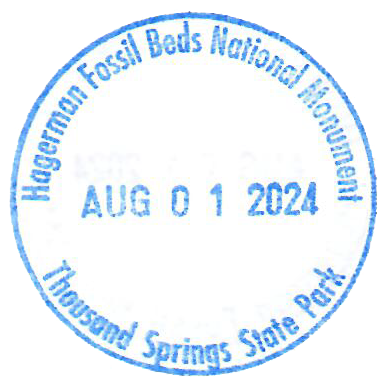

This monument contains the largest concentration of Hagerman horse fossils in North America. It protects the world's richest known fossil deposits from the late Pliocene epoch, 3.5 million years ago. These plants and animals represent the last glimpse of time that existed before the Ice Age, and the earliest appearances of modern flora and fauna.
Hamilton Grange
National Memorial
National Memorial
New York
11/19/1988


Alexander Hamilton was a Founding Father who promoted adoption of the Constitution and served as the first Secretary of the Treasury to establish the nation's economic and political system. He lived in this mansion in Harlem for the last two years of his life before being killed in a duel, and his widow lived there for 29 more years. It has been relocated in the vicinity twice for preservation and restoration and now hosts tours.
Ulysses S. Grant
National Historic Site
National Historic Site
Missouri
1/1/1989


Ulysses S. Grant, 16th President of the United States and Commanding General of the Union Army during the American Civil War, lived on this site from 1854 to 1859. The house, called White Haven, was owned by the family of Grant's wife, Julia Dent, and she remained here with the Grants' children while Grant was stationed elsewhere as part of his military service. Grant managed the site's farms and grounds for his father-in-law, including the use of slaves, though Grant, born to a strict abolitionist, was uncomfortable with the practice.
Juan Bautista de Anza
National Historic Trail
National Historic Trail
Arizona
California
California
1/1/1990

Juan Bautista de Anza led a 240-person expedition in 1775-1776 to colonize Las Californias, going from the Tubac Presidio near Tucson to San Francisco Bay, where he sited the Presidio of San Francisco and Mission San Francisco de Asís. Anza visited Missions San Gabriel Arcángel, San Luis Obispo, San Antonio, and San Carlos Borromeo (pictured), and his route became El Camino Real, which now has 21 missions. A full-length auto trail and several recreation trails connect these Hispanic heritage sites and other places they went through including Casa Grande Ruins and Anza-Borrego Desert State Park. The total length of the drive is 1,200 (1,930 km) miles.
Petroglyph
National Monument
National Monument
New Mexico
6/27/1990


This monument protects a variety of cultural and natural resources, including five volcanic cones, hundreds of archeological sites and an estimated 25,000 images carved by native peoples and early Spanish settlers. It lies on West Mesa, a volcanic basalt escarpment.
Tumacacori
National Historical Park
National Historical Park
Arizona
8/6/1990
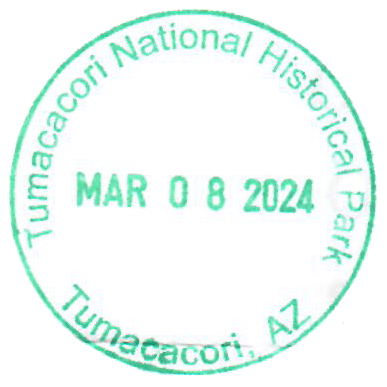

The park protects the ruins of three Spanish Jesuit mission communities: Mission San Cayetano de Tumacácori (at Tumacácori) and Mission Los Santos Ángeles de Guevavi (1691, the two oldest missions in southern Arizona) and Mission San Cayetano de Calabazas (1756).
National Fallen Firefighters Memorial
Maryland
8/9/1990


On the campus of the National Fire Academy, a sculpted St. Florian cross and eternal flame are surrounded by a Wall of Honor with the names of firefighters who died in the line of duty. It is maintained by the National Fallen Firefighters Foundation.
Newberry Volcanic
National Monument
National Monument
Oregon
11/5/1990


This monument protects the area around the Newberry Volcano and its geologic features including Lava Butte and the Lava River Cave. The volcanic site in the Cascades is still geothermally active and includes lakes and ancient lava flow fields. Part of Deschutes National Forest.
Astronauts Memorial
Florida
5/8/1991


The Space Mirror Memorial at NASA's Kennedy Space Center is a reflective black granite monument engraved with the names of 24 astronauts who have died in spaceflight missions or training. Major disasters include Apollo 1 and Space Shuttles Challenger and Columbia.
Pecos
National Historical Park
National Historical Park
New Mexico
7/2/1991


The Pueblo people lived in New Mexico as early as 1000 AD and have had an enormous impact on the culture and development of the state. Pecos Pueblo, also known as Cicuye Pueblo, a Native American community established in the Pueblo II Period, is preserved at the park. The park also encompasses thousands of acres of landscape infused with historical elements from prehistoric archaeological ruins to 19th century ranches and the Glorieta Pass Battlefield.
National Law Enforcement Officers Memorial
District of Columbia
10/15/1991


Honoring more than 23,000 law enforcement officers who have died in the line of duty, the memorial plaza has tree-lined pathways protected by twelve bronze lions.
California
National Historical Trail
National Historical Trail
MO
KS
NE
CO
WY
ID
UT
NV
CA
OR
KS
NE
CO
WY
ID
UT
NV
CA
OR
1/1/1992


The 1841 Bartleson-Bidwell Party, 1844 Stephens-Townsend-Murphy Party, and 1846 Donner Party (Donner Pass pictured) were among the few early overland emigrants to northern California, but the discovery of gold at Sutter's Mill in 1848 sparked the massive California Gold Rush. Some 140,000 ""Forty-Niners"" made the trip over the next five years via the overland emigrant trail starting in Missouri, going along the Platte River, around the Great Salt Lake, and over the Sierra Nevada (the same number came by sea). Several branching cutoffs and routes to the mines and supporting cities developed, the most popular being the Carson Trail to Sutter's Fort, Sacramento. While the population explosion led to California's statehood, it also resulted in the genocide of the state's Native Americans. The total length of the drive is 5,600 (9,010 km) miles.
Salt River Bay Historical Park
U.S. Virgin Islands
1/1/1992


Located on the island of St. Croix, the park contains the only known site where members of the Columbus expedition set foot on what is now United States territory. The park also preserves upland watersheds, mangrove forests, and estuarine and marine environments that support threatened and endangered species.
Manzanar
National Historic Site
National Historic Site
California
3/3/1992


Manzanar was one of ten concentration camps used to imprison Japanese-Americans during World War II following Executive Order 9066. Though one of the smaller camps, more than 120,000 Japanese Americans were incarcerated at the site, with over 10,000 inmates at its peak. The site preserves and interprets the legacy of Japanese-American incarceration in the United States, as it was identified by the National Park Service as the best-preserved of the ten former camp sites.
Buffalo National River
Arkansas
4/22/1992


The Buffalo National River, in Northern Arkansas, was the first National River to be designated in the United States. The Buffalo River is 153 miles (246 km) long. The lower 135 miles (217 km) flow within the boundaries of an area managed by the National Park Service, where the stream is designated the Buffalo National River. The river flows through Newton, Searcy, Marion, and Baxter Counties, from west to east. The river originates in the highest part of the Boston Mountains of the Ozarks, flows out onto the Springfield Plateau near the historic community of Erbie, and finally crosses a portion of the Salem Plateau just before joining the White River. The Park is home to the state's only elk herd. The upper section of the river in the Ozark National Forest is managed by the U.S. Forest Service and is designated as a National Scenic River and a National Wild River.
Pony Express
National Historic Trail
National Historic Trail
MO
KS
NE
WY
CO
UT
NV
CA
KS
NE
WY
CO
UT
NV
CA
8/3/1992


Lasting just 18 months in 1860-1861, the Pony Express delivered mail via horseback between St. Joseph, Missouri, and Sacramento, California. Riders relayed communications 1,800 mi (2,900 km) across the country in just ten days until the transcontinental telegraph put the service operated by Central Overland California and Pikes Peak Express Company out of business. While little of the trail itself remains, 50 stations or their ruins of the original 185 can still be visited, including Hollenberg Pony Express Station (pictured), Fort Caspar, Stagecoach Inn, the Pike's Peak Stables and Patee House at the eastern terminus, and B.F. Hastings Building at the western terminus. The total length of the drive is 2,000 (3,220 km) miles.
Marsh-Billings-Rockefeller
National Historical Park
National Historical Park
Vermont
8/26/1992


Early conservationist and author George Perkins Marsh was born in this house and lived in it for many years. Marsh was an early advocate of environmental conservation, and the park highlights his history of protecting the environment. The site also takes its name from influential lawyer Frederick H. Billings and businessman Laurance Rockefeller, both of whom also owned the main house on the property.
Dayton Aviation Heritage
National Historical Park
National Historical Park
Ohio
10/16/1992


Dayton, Ohio, was home to Orville and Wilbur Wright, who invented powered flight. This multi-site park includes their Wright Cycle Company shop, Huffman Prairie Flying Field, where they conducted test flights, the Wright Company airplane factory, Orville's home Hawthorn Hill, and the Wright Brothers Aviation Center, as well as the Paul Laurence Dunbar House, home of poet Paul Laurence Dunbar
Brown v. Board of Education
Historical Park
Historical Park
Kansas
10/26/1992


Monroe Elementary School in Topeka was one of the city's four racially segregated schools for African American students. Brown v. Board of Education, a Supreme Court case brought by a parent at the school, held that ""separate educational facilities are inherently unequal"" and segregation was unconstitutional. The park was expanded in 2022 to include two schools in South Carolina involved in the Briggs v. Elliott case that was combined with Brown.
Dry Tortugas
National Park 🞼
National Park 🞼
Florida
10/26/1992


The islands of the Dry Tortugas, at the westernmost end of the Florida Keys, are the site of Fort Jefferson, a Civil War-era fort that is the largest masonry structure in the Western Hemisphere. The park is home to undisturbed coral reefs and shipwrecks, and is only accessible by plane or boat.
Keweenaw Historical Park
Michigan
10/27/1992


This park shows the life and history of the Keweenaw Peninsula in the Upper Peninsula of the U.S. state of Michigan. It is the site of the oldest and largest lava flow known on Earth, which produced the only known place where 97 percent pure native copper is found in large amounts. This natural resource supported unique populations, where both prehistoric aboriginal mining of copper and more recent mining settlements occurred.
Port Chicago Naval Magazine
National Memorial
National Memorial
California
10/28/1992


In 1944, 430 tons of munition exploded while being loaded onto ships at the Port Chicago Naval Magazine, creating a three-mile-wide fireball that killed 320 people and seriously injured 390 more in the Port Chicago disaster. The majority of victims were Black, and a subsequent mutiny protesting unsafe conditions and segregation led to a court-martial of the mutineers and eventually integration of the armed forces.
USS Indianapolis Memorial
Indiana
11/30/1993


The heavy cruiser USS Indianapolis was torpedoed by a submarine after it delivered parts of the Little Boy atomic bomb to Tinian, killing 300 sailors when it sank. Another 600 perished during four days adrift and only 316 survived, making it the US Navy's greatest loss of life at sea due to its failure to monitor the ship's movement. The granite memorial resembles the shape of a ship and depicts the Indianapolis with the names of the crew.
Mary McLeod Bethune Council House
National Historic Site
National Historic Site
District of Columbia
1/1/1994


Mary McLeod Bethune was an important civil rights activist who Franklin D. Roosevelt appointed to his executive council to help create the Black Cabinet. The National Council of Negro Women, founded by Bethune, also occupied the house from its founding in 1935 until 1981. The house highlights the accomplishments of the organization and Bethune's lifelong work to advance the lives of African-Americans.
Saguaro National Park
Arizona
10/14/1994
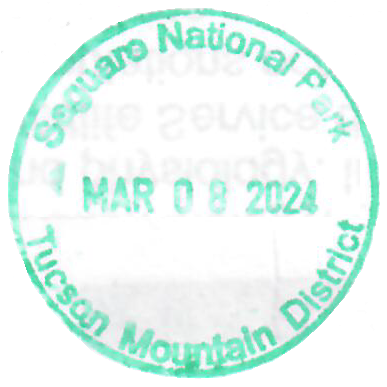

Split into the separate Rincon Mountain and Tucson Mountain districts, this park is evidence that the dry Sonoran Desert is still home to a great variety of life spanning six biotic communities. Beyond the namesake giant saguaro cacti, there are barrel cacti, chollas, and prickly pears, as well as lesser long-nosed bats, spotted owls, and javelinas.
Death Valley
National Park 🞼
National Park 🞼
California
Nevada
Nevada
10/31/1994


Death Valley is the hottest, lowest, and driest place in the United States, with daytime temperatures that have exceeded 130 °F (54 °C). The park protects Badwater Basin and its vast salt flats at the lowest elevation in North America, ?282 ft (?86 m), This geologic graben also protects numerous canyons, badlands, sand dunes, mountain ranges, historic mines, springs, and more than 1,000 species of plants that grow.
Joshua Tree
National Park 🞼
National Park 🞼
California
10/31/1994


Covering large areas of the Colorado and Mojave Deserts and the Little San Bernardino Mountains, this desert landscape is populated by vast stands of Joshua trees. Large changes in elevation reveal various contrasting environments including bleached sand dunes, dry lakes, rugged mountains, and maze-like clusters of monzogranite monoliths.
Cane River Creole
National Historical Park
National Historical Park
Louisiana
11/2/1994
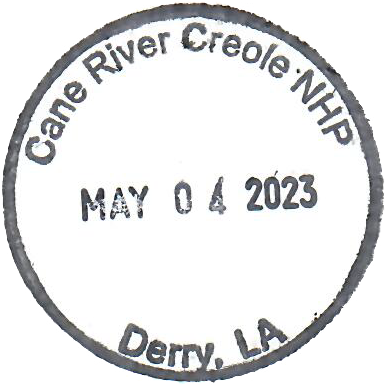

The Oakland and Magnolia Plantations represent the history of French Creole culture of Northern Louisiana. Generations of enslaved and tenant workers farmed cotton here, with 65 remaining buildings.
Korean War Veterans Memorial
District of Columbia
7/27/1995


The US led United Nations forces in the Korean War from 1950 to 1953 defending South Korea against North Korea as part of the Cold War. Of the over 300,000 US servicemembers, more than 36,000 died in the war that ended in a stalemate. The memorial includes a black granite wall etched with images of soldiers, 19 statues of a platoon on patrol, and the Pool of Remembrance that reflects the surrounding linden trees.
New Bedford Whaling
National Historical Park
National Historical Park
Massachusetts
1/1/1996


During the first half of the 19th century, New Bedford, Massachusetts, was one of the world's most important whaling ports; at its economic height, New Bedford was the wealthiest city in North America per capita. The park is a historic district administered under a partnership between the National Park Service, the City of New Bedford and private building owners to preserve the historic landscapes, structures, and collections and promote research and educational programming associated with the history of whaling.
Selma to Montgomery
National Historic Trail
National Historic Trail
Alabama
1/1/1996


The 1965 Selma to Montgomery marches were nonviolent demonstrations of the civil rights movement pushing for the Voting Rights Act. Led by John Lewis and Hosea Williams, 600 marchers were brutally attacked by state police at Selma's Edmund Pettus Bridge (pictured), rousing national support for the bill. Another march a month later saw the protestors complete the four-day walk from Brown Chapel A.M.E. Church to the Alabama State Capitol, where Martin Luther King Jr. spoke before a crowd of 25,000. The trail has historical markers and three interpretive centers. The trail is 54 (90 km) miles long.
Grand Staircase Escalante
National Monument
National Monument
Utah
9/18/1996


The Grand Staircase, the Kaiparowits Plateau, and the Canyons of the Escalante make up the three areas of the monument, home to unique dinosaur fossils, sandstone arches, and the sequence of layers of rock units spanning 400 million years. It is notable for its paleontological finds and geology, and it was the first monument to be maintained by the Bureau of Land Management.
AIDS Memorial Grove
California
11/12/1996


This seven-acre (0.028 km2) landscaped space in San Francisco's Golden Gate Park features redwood trees, meadows, and memorial spaces dedicated to victims and patients of HIV/AIDS and the continued fight against the disease.
Nicodemus
National Historic Site
National Historic Site
Kansas
11/12/1996


The town of Nicodemus, Kansas, was founded in 1877, and serves as the only remaining western town established by African-Americans during the Reconstruction Period following the American Civil War. The site contains several preserved buildings from the town's early history and illustrates westward expansion by African-Americans in post-war America.
Washita Battlefield
National Historic Site
National Historic Site
Oklahoma
11/12/1996


On November 27, 1868, the Battle of Washita River occurred at the Southern Cheyenne village of Chief Black Kettle. As part of the Comanche campaign, Lt. Col. George Custer led the 7th U.S. Cavalry to attack the village in the early morning hours, resulting in a large number of Cheyenne casualties. The historic site includes one of the largest and best-preserved tracts, including the village of the Cheyenne, which was the focal point of the battle
Franklin Delano Roosevelt Memorial
District of Columbia
5/2/1997


Franklin D. Roosevelt was the United States' longest-serving president, leading the country during a period of enormous national challenges. Four sections of waterfalls and pools represent Roosevelt's terms in office, when he instituted the New Deal to modernize the economy during the Great Depression and unified the country during World War II. Bronze statues of Roosevelt, his wife Eleanor, his dog Fala, and scenes of period Americans stand between stone walls engraved with notable quotations.
Agate Fossil Beds
National Monument
National Monument
Nebraska
6/14/1997


Agate Fossil Beds National Monument is a U.S. National Monument near Harrison, Nebraska. The main features of the monument are a valley of the Niobrara River and the fossils found on Carnegie Hill and University Hill. The area largely consists of grass-covered plains. Plants on the site include prairie sandreed, blue grama, little bluestem and needle and thread grass, and the wildflowers lupin, spiderwort, western wallflower and sunflowers.
Adams
National Historical Park
National Historical Park
Massachusetts
11/2/1998


The eleven buildings at this farm were home to United States presidents John Adams and John Quincy Adams and several generations of their family. They include the John Adams Birthplace and John Quincy Adams Birthplace, the Stone Library, Peacefield mansion, and United First Parish Church, where they are buried.
Little Rock Central High School
National Historic Site
National Historic Site
Arkansas
11/6/1998


When opened in 1927, Little Rock Central was the nation's largest and most expensive high school facility. In 1957, the school gained international attention during the Little Rock Integration Crisis, when nine African-American students were denied entry to the school by students, protestors, and the state's governor. As this was in defiance to the recent ruling of Brown v. Board of Education, President Dwight D. Eisenhower deployed the 101st Airborne Division and the Arkansas National Guard to escort the students to school and deter protestors. The school itself is not open to the public as part of the site, but nearby visitor centers tell the school's history and provides streetscape walking tours with park rangers.
MotorCities
National Heritage Area
National Heritage Area
Michigan
11/6/1998


MotorCities National Heritage Area or Motor Cities National Heritage Area is a federally designated National Heritage Area that commemorates and promotes the automobile industry in Metro Detroit, with portions of 16 counties in southern Michigan, United States.
Tuskegee Airmen
National Historic Site
National Historic Site
Alabama
11/6/1998


The 332d Fighter Group and the 477th Bombardment Group (Medium) of the United States Army Air Forces during World War II were an all-black group of service members also known as the Tuskegee Airmen, so named for being educated at Alabama's Tuskegee University. The site preserves Moton Field, the site of primary flight training for the airmen, and illustrates the airmen's accomplishments and role in desegregating the military.
Lower East Side Tenement
National Historical Site
National Historical Site
New York
11/12/1998


Built in 1863, the site is estimated to have housed 15,000 people from over 20 nations between 1863 and 2011. New York City was an epicenter for European immigration in the 19th and 20th centuries, with many immigrants arriving via Ellis Island to live in tenement houses similar to this one. The site promotes tolerance and historical perspective on the immigrant experience.
Black Canyon of the Gunnison
National Park
National Park
Colorado
10/21/1999


The park protects a quarter of the Gunnison River, which slices sheer canyon walls from dark Precambrian-era rock. The canyon features some of the steepest cliffs and oldest rock in North America, and is a popular site for river rafting and rock climbing. The deep, narrow canyon is composed of gneiss and schist, which appears black when in shadow.
Minuteman Missile
National Historic Site
National Historic Site
South Dakota
11/29/1999


During the Cold War, the United States established several missile-building sites in remote parts of the country, including this site near Wall, South Dakota, which the 66th Strategic Missile Squadron of the 44th Strategic Missile Wing operated. The facilities represent the only remaining intact components of a nuclear missile field that once consisted of 150 Minuteman II missiles and 15 launch-control centers which covered over 13,500 square miles of southwestern South Dakota.
Fallen Timbers Battlefield
and Fort Miamis
National Historical Site
and Fort Miamis
National Historical Site
Ohio
12/9/1999


The Battle of Fallen Timbers, a decisive American victory over Native American and British opponents which effectively ended the Northwest Indian War, was fought on this site on August 20, 1794. Originally, a site in nearby Maumee was incorrectly identified as the battle site, but this area has since been renamed the Fallen Timbers State Memorial and is now preserved as a part of this park.
Thomas Cole
National Historical Site
National Historical Site
New York
12/9/1999


Painter Thomas Cole, the founder of the Hudson River School, lived and painted at this house, which he called Cedar Grove, from 1833 until his death in 1848. Widely regarded as the first significant American landscape painter, Cole had a tremendous influence on American art and romanticism. While at Cedar Grove, Cole painted many pieces of the Catskill Mountains, as well as his famous series The Voyage of Life.
Aqua Frias
National Monument
National Monument
Arizona
1/11/2000


Located around the canyon of the Agua Fria River, it contains more than 450 distinct Native American structures, including large pueblos with more than 100 rooms.
California Coastal
National Monument
National Monument
California
1/11/2000


This monument ensures the protection of all of the more than 20,000 islets, reefs and rock outcroppings from the coast of California to a distance of 12 nautical miles (22 km), along the entire 840-mile (1,350 km) long California coastline.
Grand Canyon-Parashant
National Monument
National Monument
Arizona
1/11/2000


Located on the northern rim of the Grand Canyon on the Shivwits Plateau, this diverse landscape includes geologic resources including millennia of eroded formations forming canyons, cliffs and buttes; abundant fossils of ancient marine invertebrates; and desert volcanic peaks. Archaeological sites preserve artifacts of the Ancestral Puebloans, while abandoned ranches and mills were left behind by early pioneers. A fifth of the monument is also within Lake Mead National Recreation Area; Grand Canyon-Parashant is not considered an official unit of the park system. There are no paved roads or visitor services but offroad vehicles can reach scenic viewpoints.
Giant Sequoia
National Monument
National Monument
California
4/15/2000


The monument includes 38 of the 39 giant sequoia groves in the Sequoia National Forest, amounting to about half of the sequoia groves currently in existence. This includes one of the ten largest giant sequoias, the Boole Tree. Its two parts are around Kings Canyon and Sequoia National Parks in Sequoia National Forest.
Oklahoma City
National Memorial
National Memorial
Oklahoma
4/19/2000


Anti-government terrorists detonated a truck bomb that destroyed the Alfred P. Murrah Federal Building, killing 168 people, injuring another 680, and damaging hundreds of buildings. The memorial features a reflecting pool flanked by square bronze gates that represent the moments before and after the event at 9:01 am on April 19, 1995. A field of empty chairs and what is left of the building's walls symbolize the victims and survivors, mostly federal employees and children at a day care.
Hanford Reach
National Monument
National Monument
Washington
6/8/2000


Created from what used to be the security buffer surrounding the Hanford Nuclear Reservation, this area has been untouched by development or agriculture since 1943. The area is part of the Columbia River Plateau, formed by basalt lava flows and water erosion, and is named after the Hanford Reach, the last free flowing section of the Columbia River.
Canyons of the Ancients
National Monument
National Monument
Colorado
6/9/2000


Surrounding Hovenweep National Monument, it preserves and protects more than 6,000 archeological sites, the largest concentration in the U.S. These include Lowry Pueblo, dating to 1103 CE, and Painted Hand Pueblo built by the Ancestral Puebloans
Cascade-Siskiyou
National Monument
National Monument
Oregon
California
California
6/9/2000


One of the most diverse ecosystems found in the Cascade Range, it has more than 100 dwelling and root-gathering sites belonging to the Modoc, Klamath, and Shasta tribes.
Ironwood Forest
National Monument
National Monument
Arizona
6/9/2000


Located within the Sonoran Desert, significant concentrations of ironwood (Olneya tesota) trees and two endangered animal and plant species are found within the monument. More than 200 Hohokam and Paleoindian archeological sites have been identified from between 600 and 1450 AD
President Lincoln and Soldiers' Home
National Monument
National Monument
District of Columbia
7/7/2000


President Abraham Lincoln and his family resided seasonally on the grounds of the Armed Forces Retirement Home, which was founded in 1851 for homeless and disabled war veterans. The national monument and visitor center are preserved and operated by President Lincoln's Cottage at the Soldiers' Home on behalf of the Armed Forces Retirement Home.
Battle of Midway Memorial
Midway Atoll
9/13/2000


The Battle of Midway in June 1942 was the turning point of the Pacific War that put the US Navy on the offensive. The victory cost the lives of 307 sailors, a destroyer, and an aircraft carrier, but secured the vital base on the island and weakened the Japanese position. The Fish and Wildlife Service maintains a memorial park at the dual-named Midway Atoll National Wildlife Refuge and Battle of Midway National Memorial, a breeding ground for albatross, Hawaiian monk seals, and other marine life.
Cuyahoga Valley
National Park
National Park
Ohio
10/11/2000


This park along the Cuyahoga River has waterfalls, hills, trails, and exhibits on early rural living. The Ohio and Erie Canal Towpath Trail follows the Ohio and Erie Canal, where mules towed canal boats. The park has numerous historic homes, bridges, and structures, and also offers a scenic train ride.
First Ladies
National Historic Site
National Historic Site
Ohio
10/11/2000


Commemorating the accomplishment of First Ladies of the United States, this site holds exhibits on the evolving roles of first ladies in the American presidency and American society. The site also preserves the home of First Lady Ida McKinley.
El Camino Real de Tierra Adentro
National Historic Trail
National Historic Trail
New Mexico
Texas
Texas
10/13/2000


The Royal Road of the Interior was first routed by Juan de Oñate in 1598 to colonize the northern part of New Spain. It was used for hundreds of years for trade and communication between Mexico City and Santa Fe, mostly following the Rio Grande north of El Paso, including the Jornada del Muerto and Bajada Mesa sections. The Spanish developed the region with missions like the Presidio Chapel of San Elizario and Ysleta Mission (pictured), governed from the Palace of the Governors, later used by the Mexican and US administrations. Other historic sites include El Rancho de las Golondrinas, Mesilla Plaza, the Gutiérrez Hubbell House, and Fort Craig and Fort Selden used by the U.S. Army in the 1860s. The route is 404 miles (650 km) long.
Santa Rosa and San Jacinto Mountains
National Monument
National Monument
California
10/24/2000


This monument preserves large portions of the Santa Rosa and San Jacinto ranges, the northernmost of the Peninsular Ranges. Parts are within San Bernardino National Forest and the California Desert Conservation Area.
Rosie the Riveter
World War II Home Front
National Historical Park
World War II Home Front
National Historical Park
California
10/25/2000


The park preserves and interprets the legacy of the United States home front during World War II, including the Kaiser Richmond Shipyards, the Victory ship SS Red Oak Victory, a tank factory, and other facilities built to support America's entry into World War II. The park focuses on the roles of women and African-Americans in the war effort, and is named for Rosie the Riveter, a cultural icon representing the women who worked in factories and shipyards during the war.
Japanese American Memorial
to Patriotism During World War II
to Patriotism During World War II
District of Columbia
11/9/2000


The US government baselessly challenged the loyalty of 120,000 Japanese Americans during World War II, detaining them in a number of internment camps around the country. Despite that, 33,000 Japanese Americans served their country in the armed forces. This monument depicting cranes escaping barbed wire symbolizes their sacrifices during this injustice. It is part of the National Mall and Memorial Parks NPS unit.
Vermilion Cliffs
National Monument
National Monument
Arizona
11/9/2000


Steep eroded escarpments consisting primarily of sandstone, siltstone, limestone and shale rise as much as 3,000 feet (910 m) above their base. These sedimentary rocks have been deeply eroded for millions of years, exposing hundreds of layers of richly colored rock strata along Paria Canyon. The Coyote Buttes, across the Paria Plateau from the Canyon and Vermilion Cliffs, include undulating slopes like The Wave.
Ala Kahakai
National Historic Trail
National Historic Trail
Hawaii
11/14/2000


Trail segments on the west and south shores of Hawai?i island protect the ancient ala loa (long trail) used by Native Hawaiians for generations. This natural and cultural landscape crosses lava flows of Hawai?i Volcanoes National Park and sandy beaches with anchialine pools. Archaeological sites include Kaloko-Honok?hau (wetlands and fishponds) and Pu?uhonua o H?naunau National Historical Parks (place of refuge) and Pu?ukohol? Heiau National Historic Site (Kamehameha I's temple). The total length of the trails is 175 miles (280 km).
Carrizo Plain
National Monument
National Monument
California
1/12/2001


Carrizo Plain is the largest single native grassland remaining in California. It contains part of the San Andreas Fault and is surrounded by the Temblor Range and the Caliente Range. At the center of the plain is Soda Lake, which is near Painted Rock.
Kasha-Katuwe Tent Rocks
National Monument
National Monument
New Mexico
1/17/2001


Kasha-Katuwe is known for its geology of layers of volcanic rock and ash deposited by a volcanic explosion. Over time, weathering and erosion of these layers has created canyons and tent rocks. The tent rocks themselves are cones of soft pumice and tuff beneath harder caprocks.
Minidoka
National Historic Site
National Historic Site
Idaho
1/17/2001
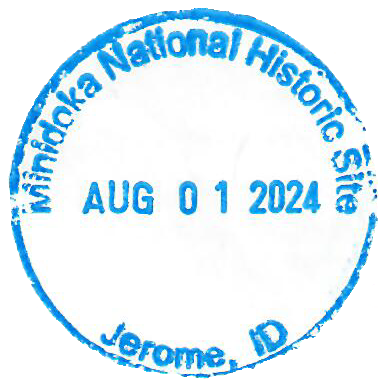

The Minidoka War Relocation Center was the first of ten camps where Japanese Americans were imprisoned during World War II. More than 13,000 incarcerees stayed here at hastily built barracks in the high desert, working on camp construction, at its farm, or on the Anderson Ranch Dam. The Bainbridge Island Japanese American Exclusion Memorial, commemorating where 276 residents were removed from their homes, is a unit of Minidoka NHS.
Pompeys Pillar
National Monument
National Monument
Montana
1/17/2001


Pompeys Pillar is a 150-foot (46 m) sandstone pillar from the late Cretaceous Hell Creek Formation next to the Yellowstone River. It has an abundance of Native American petroglyphs, as well as the signature of William Clark, who named the formation after Sacagawea's infant son.
Sonoran Desert
National Monument
National Monument
Arizona
1/17/2001


This monument protects a small portion of the Sonoran Desert. It is home to several federally listed endangered species and also has three wilderness areas, many significant archeological and historic sites, and remnants of several important historic trails.
Upper Missouri River Breaks
National Monument
National Monument
Montana
1/17/2001


A series of badland areas characterized by rock outcroppings, steep bluffs and grassy plains along the 149-mile (240 km) Upper Missouri National Wild and Scenic River in central Montana, The Breaks is home to at least 60 mammal species and hundreds of bird species. Charles Marion Russell often painted here, and Lewis and Clark traveled on this pathway.
Virgin Islands Coral Reef
National Monument
National Monument
US Virgin Islands
1/17/2001


These coral reefs, sandy sea bottoms, seagrass beds, and mangrove forests are in a 3-mile (4.8 km) marine belt that surrounds St John and Virgin Islands National Park.
Governors Island
National Monument
National Monument
New York
1/19/2001


From 1783 to 1966, Governors Island in New York Harbor was an Army post, and from 1966 to 1996 it was a Coast Guard installation. Located on Governors Island are Castle Williams and Fort Jay, which served as outposts to protect New York City from sea attack.
National D-Day Memorial
Virginia
6/6/2001


American troops joined Allied forces in the Invasion of Normandy on D-Day, June 6, 1944, to begin the liberation of France. More than 150,000 Allied troops landed in a sustained airborne and amphibious assault on five beaches that saw more than 10,000 casualties. The memorial includes a central pool, Operation Overlord arch, numerous statues of commandos in action and General Eisenhower, and flags of participating nations.
Adams Memorial
District of Columbia
11/5/2001


The Adams Memorial is a proposed United States presidential memorial on the National Mall to honor Founding Father and second President John Adams; his wife and prolific writer Abigail Adams; their son, the sixth U.S. President John Quincy Adams; his wife Louisa Catherine Adams; their son, American Civil War diplomat, politician, and editor Charles Francis Adams, Sr.; and Charles' two sons, noted historian and autobiographer Henry Adams and academician Brooks Adams. As of November 2023, eight of the twelve members of the Adams Memorial Commission had yet to be appointed, with vacancies to be filled by members of Congress.
White Cross World War I Memorial
California
1/10/2002


A white cross was originally erected by Veterans of Foreign Wars (VFW) in the Mojave Desert in 1934 as a memorial to American participation in World War I and those who served. Previously in Mojave National Preserve, the land around the cross was conveyed to the VFW due to separation of church and state concerns, the constitutionality of which transfer was upheld by the Supreme Court in 2010.
Old Spanish
National Historic Trail
National Historic Trail
New Mexico
Colorado
Utah
Arizona
Nevada
California
Colorado
Utah
Arizona
Nevada
California
12/1/2002


Mexican merchant Antonio Armijo led the first trade expedition from Abiquiú, New Mexico, to Los Angeles and back in 1829, crossing areas mapped on the 1776 Domínguez-Escalante expedition and by Jedediah Smith in 1826. Wolfskill and Yount traced an alternate northern route the next year, providing New Mexican trade caravans and emigrants access to California on mules until a wagon route was built by the 1850s. Little evidence of the trails remains, but landmarks include Mojave National Preserve, Great Sand Dunes National Park, and Lake Mead National Recreation Area. The total lenght is 2,700 miles (4,350 km).
Cedar Creek and Belle Grove
National Historical Park
National Historical Park
Virginia
12/19/2002


At the 1864 Battle of Cedar Creek, Union General Philip Sheridan's army fended off the last Confederate attempt to invade the North. The nearby Belle Grove Plantation served as Sheridan's headquarters and exhibits the history of farming and slavery in the Shenandoah Valley.
Congaree National Park 🞼
South Carolina
11/10/2003


On the Congaree River, this park is the largest portion of old-growth floodplain forest left in North America. Some of the trees are the tallest in the eastern United States. An elevated walkway called the Boardwalk Loop guides visitors through the swamp.
World War II Memorial
District of Columbia
5/29/2004


Over 16 million veterans served during World War II from 1941 to 1945 alongside the other Allies against the Axis powers. The memorial recognizes their service with two triumphal arches representing the Atlantic and Pacific theaters, surrounded by 56 pillars for the states and territories. At the center is a pool with an oval of fountains, on the east are walls engraved with scenes of war, and on the west is a wall with 4,048 gold stars representing the approximately 404,800 killed in action.
Great Sand Dunes
National Park
National Park
Colorado
9/24/2004


The tallest sand dunes in North America, up to 750 feet (230 m) tall, were formed by deposits of the ancient Rio Grande in the San Luis Valley. Abutting a variety of grasslands, shrublands, and wetlands, the park also features alpine lakes, six 13,000-foot mountains, and old-growth forests.
El Camino Real de los Tejas
National Historic Trail
National Historic Trail
Texas
Louisiana
Louisiana
10/1/2004
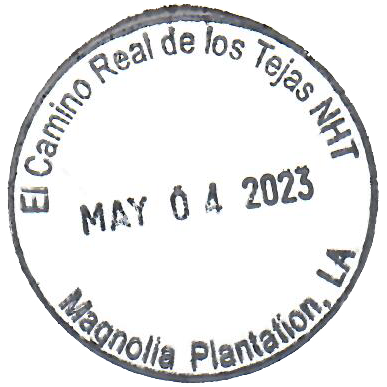

The Royal Road of the Tejas is the group of roads through Spanish Texas established by its first governors in the 1680s and 1690s. The Spanish initially attempted trade and proselytization at Mission Tejas in Eastern Texas and Los Adaes, Louisiana, before moving the capital to San Antonio and building a series of missions (Mission Espada pictured) in the early 18th century. Mexican and American ranchers settled along the corridor toward the Rio Grande, including the Old San Antonio Road, through Texas independence and annexation in 1845. The trail is 2,600 miles (4,180 km) in length.
Lewis and Clark
National Historical Park
National Historical Park
Oregon
Washington
Washington
11/12/2004


After crossing the continent to the Pacific Ocean, members of the Corps of Discovery Expedition spent the winter of 1805-1806 at Fort Clatsop, which was reconstructed from William Clark's journals. Lewis and Clark documented the nature and geography around the mouth of the Columbia River, including at the affiliated Ecola and Cape Disappointment State Parks.
Mt. Soledad Veterans Memorial
California
12/8/2004


A wooden cross was originally placed on Mount Soledad in San Diego by local residents in 1913. The current 29 ft (8.8 m)-tall concrete cross was built in 1954 by Christian groups and was designated a memorial to veterans in 1989. The Department of Defense took the site from the city by eminent domain in 2006 until it was sold to a private association in 2015 following a three-decade-long Establishment Clause legal battle. Six walls are covered in plaques commemorating veterans and military units.
Prisoner of War
Missing in Action Memorial
Missing in Action Memorial
California
12/10/2004


This memorial at Riverside National Cemetery (US Department of Veterans Affairs) depicts a man on his knees and bound by his captors, surrounded by pillars of black marble. It commemorates American servicemembers who have been taken prisoner of war or went missing in action.
African Burial Ground
National Monument
National Monument
New York
2/27/2006


The valley of the Niobrara River is known for its large number of well-preserved Miocene mammal fossils which date from about 20 million years ago.
Carter G. Woodson Home
National Historic Site
National Historic Site
District of Columbia
2/27/2006


Carter G. Woodson, the pioneering historian, author, and journalist who founded Black History Month, lived in this three-story rowhouse from 1922 until his death in 1950. There he operated the Association for the Study of Negro Life and History and published the Negro History Bulletin and the Journal of Negro History.
Papahanaumokuakea Marine
National Monument
National Monument
Hawaii
U.S. Minor Outlying Islands
U.S. Minor Outlying Islands
6/15/2006


The marine monument consists of ocean waters and 10 islands and atolls of the Northwestern Hawaiian Islands including Midway Atoll. The monument was created in 2006 with 139,797 square miles (362,070 km2), and its boundaries were expanded on August 26, 2016, more than quadrupling in size to be the largest protected area on Earth, almost as large as the Gulf of Mexico. The Northwestern Hawaiian Islands archipelago """"is the planet's largest seabird gathering site, with more than 14 million birds from 22 species, and is home to nearly all Laysan albatrosses and the remaining endangered Hawaiian monk seals."""" It was declared a World Heritage Site in 2010.
Captain John Smith Chesapeake
National Historic Trail
National Historic Trail
Virginia
Maryland
Delaware
District of Columbia
Maryland
Delaware
District of Columbia
12/19/2006


This is a water trail based on the routes John Smith, a founder of the Jamestown settlement, took to survey Chesapeake Bay in 1607-1609. On Smith's explorations he mapped (pictured) the Bay's tributaries and communities of Native Americans he met. The trail today includes a network of historical and natural partner sites, including maritime museums, wildlife refuges, state and local parks, and interpretive buoys, in addition to water trails for canoeing and kayaking. The trail is 3,000 miles (4,830 km) long.
Sand Creek Massacre
National Historic Site
National Historic Site
Colorado
4/27/2007


On November 29, 1864, the United States Army's 3rd Colorado Cavalry murdered an estimated 150 Cheyenne and Arapaho people during the American Indian Wars in what became known as the Sand Creek Massacre. While visitors can learn about the massacre, the Colorado War, and view the battlefield from a distance, the massacre site itself is off-limits to visitors.
Kate Mullany
National Historical Site
National Historical Site
New York
1/1/2008


Kate Mullany, leader of the Collar Laundry Union in Troy, New York, lived and worked in this house as she organized local women's labor movements. Mullany's union was one of the first women's unions that lasted longer than the resolution of a specific issue.
Star-Spangled Banner
National Historic Trail
National Historic Trail
Maryland
Virginia
District of Columbia
Virginia
District of Columbia
5/8/2008


This water and land trail highlights the history of the War of 1812 in the Chesapeake Bay Region. Major sites of this three-year war between the United States and United Kingdom include raided towns Havre de Grace and Saint Michaels; grounds of the Battle of Bladensburg and Battle of North Point; and Fort McHenry National Monument and Historic Shrine (pictured), where the flying of the American flag in the Battle of Baltimore inspired ""The Star-Spangled Banner"". The trail is 290 miles (470 km) long.
Aleutian Islands World War II
Alaska
12/5/2008


During World War II Japan briefly occupied Attu Island and Kiska Island in the Aleutian chain. The monument within the Alaska Maritime National Wildlife Refuge includes the site of the 19-day battle to reclaim Attu, artifacts of the occupation at Kiska, and the crash site of a U.S. B-24D Liberator on Atka Island. Originally designated as part of World War II Valor in the Pacific National Monument, which was divided and renamed March 12, 2019.
Tule Lake
National Monument
National Monument
California
12/5/2008


Tule Lake Segregation Center was the largest of ten concentration camps used for the internment of Japanese Americans during World War II. 29,800 US citizens and immigrants were held there, including those segregated from other camps for political reasons. The site includes the main segregation camp; Camp Tulelake, which was originally a Civilian Conservation Corps work site and later a prisoner-of-war camp and extension of the segregation center; and the Peninsula/Castle Rock bluff in Tule Lake National Wildlife Refuge. Originally designated as part of World War II Valor in the Pacific National Monument, which was divided and renamed March 12, 2019.
Arizona
National Scenic Trail
National Scenic Trail
Arizona
1/1/2009


Extending the entire length of the state from Coronado National Memorial (pictured) near the Mexican border to Utah, this trail covers the variety of Arizona's deserts, mountains, and canyons. Four scenic regions have distinct landscapes and biotic communities: the sky islands with Saguaro National Park and Coronado National Forest, the Sonoran uplands of Tonto National Forest, the volcano field crossing the San Francisco Peaks, and the plateaus divided by the Grand Canyon. The trail is 800 miles (1,290 km) long.
Ice Age Floods
National Geologic Trail
National Geologic Trail
Washington
Oregon
Idaho
Montana
Oregon
Idaho
Montana
1/1/2009


From around 18,000 to 15,000 years ago, the glacial Lake Missoula breached its ice dams 40 to 100 times, each time releasing the cataclysmic Missoula floods that carved coulees, lakes, cliffs, waterfalls, and giant current ripples along their path. They created the Channeled Scablands that form much of eastern Washington's landscape of irregular buttes and basins and the Columbia River Gorge past the Wallula Gap. An unmarked tour route connects a network of state parks and other featured sites formed in these erosive floods such as Steamboat Rock State Park, Dry Falls (pictured), Palouse Falls, and the Grand Coulee. The trail is 3,400 miles (5,470 km) long.
New England
National Scenic Trail
National Scenic Trail
Massachusetts
Connecticut
Connecticut
1/1/2009


This footpath incorporates the Metacomet-Monadnock Trail, Metacomet Trail (Ragged Mountain pictured), and Mattabesett Trail from Long Island Sound to the New Hampshire border. It crosses the mountains of the Metacomet Ridge, connecting small towns, farms, and forests with lakes and traprock ridges. The trail is 215 miles (350 km) long.
Pacific Northwest Trail
Montana
Idaho
Washington
Idaho
Washington
1/1/2009


Connecting the Continental Divide at Glacier National Park to the Pacific Ocean at Olympic National Park, this trail showcases the Rocky Mountains, Okanogan Highlands, North Cascades, Puget Sound (including a ferry ride), and the Olympic Peninsula (Olympic National Park pictured). The trail is 1,200 miles (1,930 km) long.
Washington-Rochambeau
National Historic Trail
National Historic Trail
RI
CT
NY
NJ
PA
DE
MD
VA
MA
District of Columbia
CT
NY
NJ
PA
DE
MD
VA
MA
District of Columbia
1/1/2009


Six years into the Revolutionary War, the French Expédition Particulière commanded by the comte de Rochambeau departed Newport, Rhode Island, to meet George Washington's Continental Army at Dobbs Ferry, New York, in June 1781. They marched to Williamsburg, Virginia, over the next few months, stopping at the Old Barracks in Trenton and Mount Vernon. In the three-week siege of Yorktown (now part of Colonial National Historical Park, reenactment pictured) they defeated General Cornwallis's army, soon clinching independence for the 13 colonies. Several campsites and homes on their route are preserved, including the Joseph Webb House where Washington and Rochambeau made plans for the campaign. The trail is 1,000 miles (1,610 km) long.
Marianas Trench Marine
National Monument
National Monument
Northern Mariana Islands
Guam
Guam
1/6/2009


This marine monument includes the waters and submerged lands of the three northernmost islands of the Mariana Archipelago, the submerged lands of 21 designated volcanic features, and the Mariana Trench, the deepest place on Earth.
Pacific Remote Islands Marine
National Monument
National Monument
US Minor Outlying Islands
1/6/2009


The marine monument consists of Baker Island, Howland Island, Jarvis Island, Johnston Atoll, Kingman Reef, Palmyra Atoll, and Wake Island, which are scattered across the Pacific Ocean southwest of Hawaii. It was expanded in 2014 to include the oceans 200 nmi (370 km) offshore, approximately a 16-fold increase in size, to conserve vast populations of unique corals, fish, marine mammals, birds, and plants.
Rose Atoll Marine
National Monument
National Monument
American Samoa
1/6/2009


This marine monument consists of the two small islands of Rose Atoll, its lagoon, and waters surrounding it. The atoll's coral reef is colored by distinct pink coralline algae and provides habitat to nesting hawksbill and green turtles, large predators including whitetip reef shark, and endangered fish like the humphead wrasse. Seventeen species of protected seabirds nest on the island. It is east of American Samoa and the southernmost point in the U.S.
Palo Alto Battlefield
National Historical Park
National Historical Park
Texas
3/30/2009
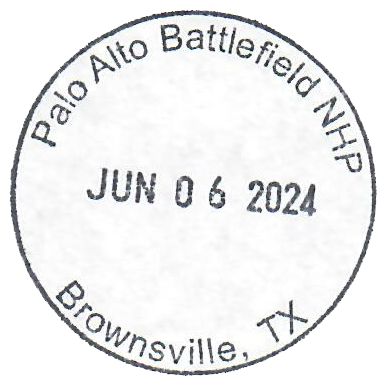

The Battle of Palo Alto was fought on May 8, 1846, as the first major conflict of the Mexican-American War. After Mexican troops under General Mariano Arista marched on Fort Texas, American General Zachary Taylor's infantry forced them to retreat with an efficient artillery attack.
Prehistoric Trackways
National Monument
National Monument
New Mexico
3/30/2009
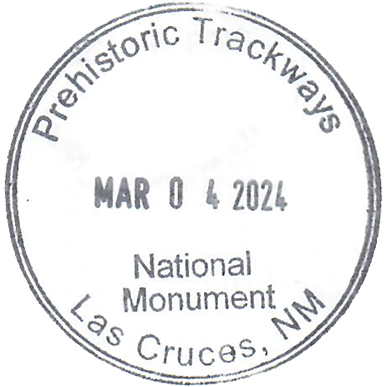

Prehistoric Trackways contains fossilized footprints of numerous Paleozoic amphibians, reptiles, and insects, as well as fossilized plants and petrified wood dating back approximately 280 million years.
Thomas Edison Historical Park
New Jersey
3/30/2009


Inventor and industrialist Thomas Edison moved to the Glenmont mansion in 1886 and opened his nearby laboratory complex the next year. His company developed phonographs, batteries, movie cameras, and numerous other products in over 40 years in operation in West Orange. The park has several early cars from Edison's collection and a reproduction of the Black Maria, the first movie studio.
River Raisin
National Battlefield Park
National Battlefield Park
Michigan
10/22/2010


War of 1812 Frenchtown
President William Jefferson Clinton
Birthplace Home
National Historic Site
Birthplace Home
National Historic Site
Arkansas
12/14/2010


William J. Clinton was the 42nd President of the United States. He was born in the town of Hope, Arkansas, and lived the first four years of his life in this house. While he lived there, the house was actually owed by Clinton's grandparents, who looked after him while his mother was working in New Orleans. As of 2023, Clinton is the most recently elected president to have an established National Park in their honor.
Martin Luther King, Jr. Memorial
District of Columbia
8/28/2011


Martin Luther King Jr. was the most significant leader of the Civil rights movement, organizing boycotts against segregated buses, solidarity marches for civil rights, and the March on Washington against inequality. He won the Nobel Peace Prize for nonviolent resistance but was assassinated in 1968. Notable quotations, including from his ""I Have a Dream"" speech and sermons, are etched on granite walls and a 30 ft (9.1 m) sculpture of King.
Flight 93
National Memorial
National Memorial
Pennsylvania
9/10/2011


The fourth airplane hijacked in the September 11, 2001, attacks, United Airlines Flight 93, crashed in a field in southwest Pennsylvania after the passengers fought back against the terrorists, preventing a further attack at the capital. The memorial on the site has a white granite wall engraved with the names of the 40 victims, a 93 ft (28 m)-tall Tower of Voices with 40 wind chimes, and a visitor center.
Fort Monroe
National Monument
National Monument
Virginia
11/1/2011


The six-sided star fort spans the American story from the 17th to the 21st centuries: Captain John Smith's journeys, a haven of freedom for the enslaved during the Civil War, and a bastion of defense for the Chesapeake Bay.
Fort Ord
National Monument
National Monument
California
4/20/2012


Fort Ord was an Army post from 1917 to 1994. It now has recreational trails and various wildlife in grassland, chaparral, and woodland ecosystems.
Chimney Rock
National Monument
National Monument
Colorado
9/21/2012


The jewel of San Juan National Forest, the site was once home to the ancestors of the modern Pueblos. Roughly 1,000 years ago, the Ancestral Pueblo People built more than 200 homes and ceremonial buildings high above the valley floor.
César E. Chávez
National Monument
National Monument
California
10/8/2012


This monument commemorates the life and work of labor leader and civil rights activist Cesar Chavez. Called La Paz, the site was Chavez's home for about 20 years, and his gravesite is on the premises. It is also the location of the headquarters of United Farm Workers, which was founded by Chavez.
Pinnacles National Park
California
1/10/2013


Named for the eroded leftovers of a portion of an extinct volcano, the park's massive black and gold monoliths of andesite and rhyolite are a popular destination for rock climbers. Hikers have access to trails crossing the Coast Range wilderness. The park is one of the few locations where the endangered California condor can be seen in the wild. Pinnacles also supports a dense population of prairie falcons and more than 13 species of bat that populate its talus caves.
Charles Young Buffalo Soldiers
National Monument
National Monument
Ohio
3/25/2013


Charles Young was the first African American to reach the rank of colonel in the US Army. He was also the first national park superintendent, of Sequoia and General Grant National Parks, and a professor at Wilberforce University. His home at Wilberforce is a museum commemorating his life.
First State
National Historical Park
National Historical Park
Delaware
Pennsylvania
Pennsylvania
3/25/2013


Delaware was the first state to ratify the Constitution of the United States, and this park features several sites dating to the colonial era. These include New Castle Court House, the first capitol of the state; Fort Christina and the Old Swedes Church, site of the first Swedish colony in America; Dover Green; the John Dickinson House, the plantation owned by founding father John Dickinson; and Brandywine Valley nature reserve.
Harriet Tubman
Underground Railroad
National Historical Park
Underground Railroad
National Historical Park
Maryland
3/25/2013


Harriet Tubman was a famed conductor on the Underground Railroad, leading dozens of slaves to freedom. This monument includes sites relating to Tubman's life, including the slave-built Stewart's Canal and the home of Jacob Jackson. The areas within the national monument that are managed by the NPS have been redesignated as a National Historical Park (NHP), and the FWS lands are in Blackwater National Wildlife Refuge.
Rio Grande del Norte
National Monument
National Monument
New Mexico
3/25/2013
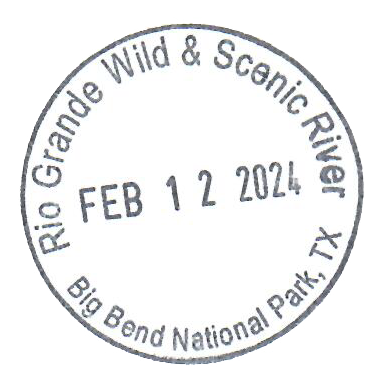

This site includes part of the Rio Grande Gorge and extinct volcanoes of the Taos Plateau volcanic field. There are a variety of archaeological and historical artifacts including petroglyphs and Hispanic settlement sites. It is home to an assortment of wildlife and recreation opportunities.
Military Working Dog Teams
National Monument
National Monument
Texas
10/28/2013


The memorial at Lackland Air Force Base, the home of the U.S. Department of Defense Military Working Dog Program, honors the efforts and sacrifices of military working dogs in the service of the United States.
Organ Mountains-Desert Peaks
National Monument
National Monument
New Mexico
5/21/2014
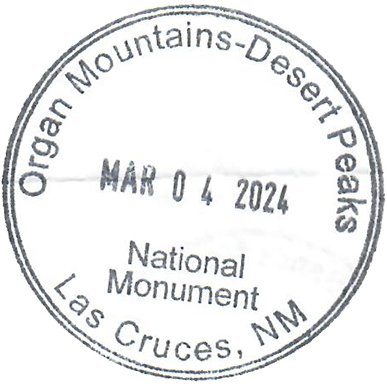

The protected area includes five mountain ranges that rise above the Chihuahua Desert: Robledo Mountains, Sierra de las Uvas, Doña Ana Mountains, Organ Mountains and Potrillo Mountains. There are approximately 870 vascular plant species, and the area is popular for hiking and climbing.
National Desert Storm and
Desert Shield Memorial
Desert Shield Memorial
District of Columbia
5/28/2014


Will commemorate the events and veterans of the Gulf War, a six-month troop buildup and conflict that ended the Iraqi invasion of Kuwait. There is a 2024 deadline to raise funds and finalize a proposed spiral-shaped wall design.
Distinguished Flying Cross Memorial
California
7/25/2014


The Distinguished Flying Cross has been awarded to more than 170,000 members of the US armed forces and some civilians who have shown ""heroism or extraordinary achievement while participating in an aerial flight"". The March Field Air Museum hosts this pyramidal monument in honor of their service.
San Gabriel Mountains
National Monument
National Monument
California
10/10/2014


The San Gabriel mountains in northern Los Angeles County and western San Bernardino County, California have peaks as high as 10,068 ft (3,069 m), providing a habitat for the endangered California condor and Nelson's bighorn sheep. It is an important watershed and recreation site for the Los Angeles area and contains more than 600 archaeological sites. Part of Angeles and San Bernardino National Forests.
Blackstone River Valley
National Historical Park
National Historical Park
Massachusetts
Rhode Island
Rhode Island
12/19/2014


Some of the earliest textile mills in America were built in the Blackstone Valley, developing the area into an industrial leader with several company towns connected by the Blackstone Canal. Five historic districts include preserved mill complexes.
Tule Springs Fossil Beds
National Monument
National Monument
Nevada
12/19/2014


A major archaeological site north of Las Vegas where thousands of prehistoric fossils, including mammoth, lion, and camel, have been found in an area that was once a wetland.
World War I Memorial
District of Columbia
12/19/2014


The US entered World War I in 1917 and the American Expeditionary Forces saw about 2.8 million servicemembers fight in Europe through the end of the following year, with 53,000 deaths. Originally called Pershing Park in honor of General John J. Pershing, as of 2019 the memorial is undergoing a conversion from a fountain and pond to a lawn and plaza with a wall of remembrance.
Browns Canyon
National Monument
National Monument
Colorado
2/19/2015


Steep granite cliffs and colorful rock outcroppings overlook the Arkansas River, where visitors can go whitewater rafting. Prehistoric campsites and shelters date back 11,000 years, while sites from gold mining remain from the late 1800s. About half is in San Isabel National Forest.
Berryessa Snow Mountain
National Monument
National Monument
California
7/10/2015


Less than 100 miles (160 km) from the San Francisco Bay Area, Berryessa Snow Mountain protects part of the California Coast Range, one of the most biodiverse regions in the state, home to elk, osprey, river otters, half the state's dragonfly species, and California's second-largest population of wintering bald eagles. Part is in Mendocino National Forest.
Waco Mammoth
National Monument
National Monument
Texas
7/10/2015
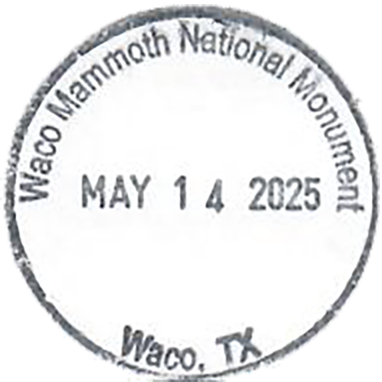

What a gem The display of bones in situ was fantastic.Displays are close and informative.
The Waco Mammoth National Monument is a paleontological site and museum in Waco, Texas, where fossils of twenty-four Columbian mammoths (Mammuthus columbi) and other mammals from the Pleistocene Epoch have been uncovered. The site is the largest known concentration of a single herd of mammoths dying from the same event, which is believed to have been a flash flood.
Manhattan Project Historical Park
New Mexico
Tennessee
Washington
Tennessee
Washington
11/10/2015


The Manhattan Project was a massive top secret project with the goal of producing an atomic weapon during World War II. Representing the multi-faceted nature of the project, the park consists of three units that were key to the development of the atomic bomb: Oak Ridge, Tennessee; Los Alamos, New Mexico; and Hanford, Washington.
Medicine Creek Treaty Memorial
Washington
12/18/2015


The 1854 Treaty of Medicine Creek established three reservations for nine south Puget Sound-area tribes, who ceded 2,240,000 acres (9,100 km2) to the US government; agreed-upon payments and hunting and fishing rights however were not respected, leading to further conflict. The signing site is managed by the Fish and Wildlife Service in the Billy Frank Jr. Nisqually National Wildlife Refuge, named for a Nisqually activist who successfully fought for the treaty rights.
Castle Mountains
National Monument
National Monument
California
2/12/2016


The Castle Mountains sit in the Mojave Desert between the Nevada state line and Mojave National Preserve. It protects desert grasslands home to Joshua tree forests, wildlife including golden eagles and bighorn sheep, and historic Native American sites.
Mojave Trails
National Monument
National Monument
California
2/12/2016


The Mojave Trails National Monument includes several rugged mountain ranges, ancient lava flows at the Amboy Crater, and the Cadiz Dunes. Human features are Native American trading routes, World War II-era training camps, and an undeveloped segment of Route 66.
Sand to Snow
National Monument
National Monument
California
2/12/2016


This monument extends from the Mojave and Sonoran Desert floors up to over 10,000 feet in the San Bernardino Mountains, including the San Gorgonio Wilderness. The site protects 1,700 Native American petroglyphs and other archaeological sites. Part is in San Bernardino National Forest.
Stonewall
National Monument
National Monument
New York
6/24/2016


The Stonewall Inn is a gay bar in New York City and the site of the Stonewall riots of 1969, which are widely considered to be the single most important event leading to the gay liberation movement and the modern fight for LGBT rights in the United States. Also included is Christopher Park across the street.
Katahdin Woods and Waters
National Monument
National Monument
Maine
8/24/2016


Katahdin Woods and Waters National Monument protects mountains and wilderness in the North Maine Woods, including a section of the East Branch Penobscot River. It borders the eastern side of Baxter State Park.
Northeast Canyons and
Seamounts Marine
National Monument
Seamounts Marine
National Monument
Atlantic Ocean
9/15/2016


The monument protects four underwater seamounts and three very deep canyons in the continental shelf 100 miles (160 km) off the coast of Massachusetts, home to deep-water corals, endangered whales, and migratory fish and birds.
Gold Butte
National Monument
National Monument
Nevada
12/28/2016


This Mojave Desert landscape of dramatic red sandstone and canyons has forested mountains, ancient rock art, rock shelters, and a mining ghost town. It is an important habitat of the Mojave Desert tortoise.
Harriet Tubman
National Historical Park
National Historical Park
New York
1/10/2017


Harriet Tubman, a leading abolitionist and conductor in the Underground Railroad, moved to Auburn, New York, in 1859, where she continued to shelter Blacks moving north. The park features her residence, the African Methodist Episcopal Zion Church she attended, and the Tubman Home for the Aged she founded for elderly African Americans.
Birmingham Civil Rights
National Monument
National Monument
Alabama
1/12/2017


This site preserves the A. G. Gaston Motel, which was bombed by the KKK after Martin Luther King Jr. and Birmingham campaign leaders had stayed there, inciting the Birmingham riot of 1963.
Freedom Riders
National Monument
National Monument
Alabama
1/12/2017


Preserves two sites in and near Anniston, Alabama during the civil rights movement—a former Greyhound bus station in the town where Freedom Riders were attacked by a racist mob and the site outside town where their bus was burned.
Reconstruction Era
National Historical Park
National Historical Park
South Carolina
1/12/2017


The Reconstruction era was a period in American history following the American Civil War and lasting until approximately the Compromise of 1877. During Reconstruction, attempts were made to rebuild the country after the bloody Civil War, bring the former Confederate states back into the United States, and to counteract the political, social, and economic legacies of slavery. The park includes several buildings related to the lives of emancipated slaves in Beaufort, South Carolina, as Beaufort was one of the first places in the United States where they ""voted, bought property and created churches, schools and businesses.""
National Global War
on Terrorism Memorial
on Terrorism Memorial
District of Columbia
8/18/2017


The Global War on Terrorism (GWOT) Memorial Foundation was formed in 2015 as a 501(c)(3) nonprofit corporation by a small group of like-minded veterans, military spouses, and supportive Americans to honor the service and sacrifice of all individuals - both uniformed and non-uniformed - who have contributed to global counterterrorism efforts since September 11th, 2001. A distinguished Board of Directors comprised of individuals from military and non-military backgrounds leads the Foundation, with former President George W. Bush serving as the Foundation's Honorary Chairman. Michael “Rod” Rodríguez, a former U.S. Army Green Beret who deployed ten times, is the Foundation's President and CEO.
Martin Luther King, Jr.
National Historical Park
National Historical Park
Georgia
1/8/2018


Civil rights leader Martin Luther King Jr. was born in 1929 in a home in Sweet Auburn, Atlanta, and succeeded his father as pastor of the Ebenezer Baptist Church down the street. After his 1968 assassination, the King Center for Nonviolent Social Change, the site of his and his widow's tombs, was founded next door to the church. The historic district also includes the Fire Station No. 6 and period shotgun houses.
Gateway Arch
National Park
National Park
Missouri
2/22/2018


The Gateway Arch is a 630-foot (192 m) (both high and wide) catenary arch built in the 1960s to commemorate the Lewis and Clark Expedition, initiated by Thomas Jefferson, and the subsequent westward expansion of the country. The nearby Old Courthouse, across a greenway to the west of the arch, was the original site of the landmark Dred Scott case about slavery. An underground museum describes the arch's construction and the country's westward expansion.
National Memorial
to Fallen Educators
to Fallen Educators
Kansas
4/30/2018


Located at the National Teachers Hall of Fame, this monument honors educators who died in the course of their roles, including victims of school shootings and school bus crashes.
Camp Nelson
National Monument
National Monument
Kentucky
10/26/2018


Established in 1863 as a depot for the Union Army during the Civil War, Camp Nelson became a large recruitment center for African American Union soldiers: a key site of emancipation for those soldiers and a refugee camp for their families.
National Veterans Memorial
and Museum
and Museum
Ohio
10/27/2018


This is the first museum dedicated to veterans and their families, focusing on their individual stories and sacrifices rather than the military and war. Exhibits show servicemembers' journeys throughout American history and how veterans are recognized in society. An elm-lined memorial grove with waterfalls into a reflecting pool offers space for remembrance.
National Emergency
Medical Services Memorial
Medical Services Memorial
District of Columbia
11/3/2018


The purpose of the National EMS Memorial Service is to remember and honor those emergency medical services personnel who have died in the line-of-duty and to recognize the ultimate sacrifice each made for his fellow man.
Indiana Dunes
National Park
National Park
Indiana
2/15/2019


Previously designated a national lakeshore, parts of this 20-mile (32 km) stretch of the southern shore of Lake Michigan have sandy beaches and tall dunes. The park includes grassy prairies, peat bogs, and marsh wetlands home to over 2,000 species.
Jurassic
National Monument
National Monument
Utah
3/12/2019


More than 12,000 bones from at least 74 dinosaurs have been found at the Cleveland-Lloyd Dinosaur Quarry so far, making it the paleontological site with the greatest concentration of bones from the Jurassic period. The bones come from a variety of mostly carnivorous species (more than half Allosaurus) and it is unknown why they are mixed together.
Pearl Harbor Memorial
Hawaii
3/12/2019


The attack on Pearl Harbor on December 7, 1941, led to the entry of the United States into World War II. Japanese bombers in a surprise attack damaged 21 ships, killing 2,403 Americans. Only the USS Arizona, Oklahoma, and Utah were total losses, and their memorials are the centerpieces of this site that also includes Battleship Row and a visitor center with boat rides to the USS Arizona Memorial at the site of the wreck.
Saint Francis Dam Disaster
National Monument
National Monument
California
3/12/2019


The St. Francis Dam was a 700 ft (210 m)-wide dam that supported a reservoir for Los Angeles's water supply. It catastrophically failed in 1928 and the flood killed at least 431 people. A memorial will be built within Angeles National Forest by the US Forest Service.
Saint-Gaudens
National Historical Park
National Historical Park
New Hampshire
3/12/2019


Irish sculptor Augustus Saint-Gaudens lived in this summer residence from 1885 to 1897, with the house becoming his permanent home from 1900 until his death in 1907. While here, Saint-Gaudens sculpted some of his most notable works, including the Robert Gould Shaw Memorial and Diana. Saint-Gaudens's influence in the art world attracted many artists to Cornish, New Hampshire, with his house serving as the center of the Cornish Art Colony.
White Sands National Park
New Mexico
12/20/2019

Located in the mountain-ringed Tularosa Basin, White Sands consists of the southern part of a 275-square-mile (710 km2) field of white sand dunes composed of gypsum crystals—the world's largest gypsum dunefield. The park is completely within the White Sands Missile Range and is subject to closure when tests are conducted.
Dwight D. Eisenhower Memorial
District of Columbia
9/17/2020


Dwight D. Eisenhower was the Supreme Commander of the Allied Forces in Europe during World War II and President of the United States in the 1950s. His accomplishments included enforcing school integration, creating NASA and the Interstate Highway System, and ending the Korean War. The memorial features stacked blocks showing quotations; sculptures depicting Eisenhower as a boy, general, and president; and a steel tapestry with an abstract depiction of Pointe du Hoc, a site of D-Day.
Mill Springs Battlefield
National Monument
National Monument
Kentucky
9/22/2020


The Battle of Mill Springs was fought at this site in January 1862 and was the first major victory for the Union Army. The one-day battle saw Union forces led by George Henry Thomas defeat Confederate regiments led by Felix Zollicoffer, who died in action. The site is now largely an open field with a visitor center adjacent to Mill Springs National Cemetery.
Ste. Genevieve Historical Park
Missouri
10/30/2020


The city of Ste. Genevieve, Missouri was the first organized European settlement west of the Mississippi River. The city was founded in 1735 by French Canadian colonists and settlers from east of the river. Notably, the city is home to a National Historic Landmark District which showcases a high concentration of Poteaux-sur-sol and Poteaux en terre buildings, exemplifying rare examples of well-preserved colonial-era French architecture.
National Native American
Veterans Memorial
Veterans Memorial
District of Columbia
11/11/2020


This memorial at the National Museum of the American Indian honors the military service of American Indian, Alaska Native, and Native Hawaiian veterans. A vertical steel circle stands on a stone drum from which water flows and a ceremonial fire burns.
Medgar and Myrlie Evers Home
National Monument
National Monument
Mississippi
12/10/2020


Medgar Evers was a civil rights activist who served as a field secretary for the NAACP to end segregation and promote voting rights in Mississippi. He was assassinated outside his home in Jackson by a white supremacist in 1963. His wife Myrlie moved away but owned the home until 1993 and later served as chairwoman of the NAACP.
Women's Suffrage
National Monument
National Monument
District of Columbia
12/17/2020


The Women's Suffrage National Monument is a planned memorial sculpture that will honor suffragists who organized and demonstrated for the women's right to vote in the United States.
New River Gorge
National Park
National Park
West Virginia
12/27/2020


The New River Gorge is the deepest river gorge east of the Mississippi River. The park primarily covers the lower gorge area around the New River Gorge Bridge, which features some of the country's best whitewater rafting. Smaller noncontiguous sections showcase the ghost town of Thurmond, the scenic Grandview vista, and Sandstone Falls. The other 65,165 acres (263.71 km2) of the redesignated national river is now a national preserve, spanning 53 mi (85 km) of the New River.
Jimmy Carter
National Historical Park
National Historical Park
Georgia
1/1/2021


President Jimmy Carter has spent much of his life in the small town of Plains, Georgia. Visitors can tour his boyhood home and farm, and the high school he and Rosalynn Carter attended is now the visitor center. Carter ran his 1976 presidential campaign out of the Plains Train Depot, built in 1888 and now a museum. The Carter compound within the park, which includes the Carter family home where President Carter still resides as well as Mrs. Carter's gravesite, is closed to visitors.
Weir Farm Historical Park
Connecticut
1/1/2021


J. Alden Weir was an impressionist painter and founding member of ""The Ten"" who lived and worked in this house and studio from 1882 until his death in 1919. The park also commemorates the lives of artists such as John Singer Sargent, Albert Pinkham Ryder, and several other notable artists who stayed with the Weirs family throughout their lives.
Homestead
National Historical Park
National Historical Park
Nebraska
1/13/2021


After passage of the Homestead Act of 1862, hundreds of thousands of families moved west to farm federally owned land, which they would receive after five years of cultivation. This site includes some of the first acres claimed. Over 10% of the country was homesteaded, allocating land of the Native Americans to settlers. The site includes a historic cabin and school, heritage center, and restored tallgrass prairie, which was largely eradicated by the settlers.
National Pulse Memorial
Florida
6/25/2021


Pulse, a gay nightclub in Orlando, Florida, was the scene of a mass shooting that killed 49 people on June 12, 2016. There are plans for a memorial with a reflecting pool around the building and a museum a few blocks away.
Hershel Woody Williams
National Medal of Honor Monument
National Medal of Honor Monument
Texas
12/27/2021


Chilkoot
National Historic Trail
National Historic Trail
Alaska
1/1/2022


Originally used as a trade route between the coast and the interior by Tlingit people, the Chilkoot Trail was a main access route to the Yukon during the Klondike Gold Rush. Between 1896 and 1899 around 22,000 prospectors made their way from Dyea, Alaska to Bennett Lake, British Columbia, carrying one ton of gear across Chilkoot Pass. It is part of the Skagway unit of Klondike Gold Rush National Historical Park, and continues as Chilkoot Trail National Historic Site in B.C. Together, they form parts of Klondike Gold Rush International Historical Park. Thousands of visitors now hike on the route each year, from the coastal rainforest to high alpine mountains. The trail is 16.5 miles (30 km) long.
New Philadelphia
National Historical Site
National Historical Site
Illinois
1/1/2022


Founded in 1836, New Philadelphia was the first town in the United States platted and registered by an African-American before the American Civil War. The founder, Free Frank McWorter, was a former slave who was able to save money from work and his own business to purchase the freedom of his wife, then himself, and over time, 13 members of his family from Kentucky. The town no longer exists, having been abandoned between the 1880s and 1920s.
Pullman
National Historical Park
National Historical Park
Illinois
1/1/2022


This district of Chicago was the first planned industrial community in the United States, built as a company town for the Pullman Company that manufactured railroad cars. The community was opened in the early 1880s and by 1883 had reached a population of 8,000 people, but the community was annexed by Chicago in 1889 after failing to meet expectations. This, in part, led to the American Railway Union forming and boycotting Pullman in the 1894 Pullman Strike over unfair wages and shaping the course of American labor policy. The park also highlights the accomplishments of the Brotherhood of Sleeping Car Porters, who successfully negotiated unionization for African-Americans with Pullman.
Camp Hale — Continental Divide
National Monument
National Monument
Colorado
10/12/2022


Soldiers in the US Army's 10th Mountain Division used Camp Hale to learn skiing, climbing, and snowshoeing to fight in the Italian Alps during World War II. Part of White River National Forest.
El Paso Community Healing Garden
Memorial
Memorial
Texas
12/29/2022


A right-wing terrorist targeted Latino Americans at a Walmart store in El Paso, killing 23 people and injuring 22 in a mass shooting. A memorial to these victims of white supremacy and gun violence consisting of 23 bronze plaques on a semicircular wall was installed at Ascarate Park in the Mission Valley neighborhood in August 2021.
Kol Israel Foundation
Holocaust Memorial
Holocaust Memorial
Ohio
12/29/2022


The Zion Memorial Park Cemetery donated land for the construction of a monument to victims of the Holocaust in 1961, the first in the United States. A ring of granite is engraved with names of 1,300 family members of Cleveland-area Holocaust survivors. It surrounds a central column that contains ashes of victims.
Butterfield Overland
National Historic Trail
National Historic Trail
MO
TN
AR
OK
TX
NM
AZ
CA
TN
AR
OK
TX
NM
AZ
CA
1/1/2023


The Butterfield Overland Mail Company operated a stagecoach route between 1858 and 1861 to transport mail and passengers along a southern route between St. Louis and Memphis and San Francisco. Founded by John Butterfield, the route had nine divisions traversed by higher-speed wagons until the Civil War broke out. The trail is 3,292 miles (5,300 km) long.
Avi Kwa Ame
National Monument
National Monument
Nevada
3/21/2023


Spirit Mountain (Avi Kwa Ame) is the site of creation for the Yuman tribes, who hold the area sacred. Consisting of the Eldorado Valley, Piute Valley, and surrounding mountain ranges of the Mojave Desert, the area is home to expansive Joshua tree forests and provides important habitat for species such as the desert bighorn sheep, desert tortoise and Gila monster.
Castner Range
National Monument
National Monument
Texas
3/21/2023


This portion of the Franklin Mountains of west Texas's Chihuahuan Desert includes 41 archaeological sites that show evidence of human presence dating to 6,000 BC. The site was used as a weapons testing range for Fort Bliss for 40 years and is still undergoing remediation of munitions. Castner Range is the only land conservation national monument within the Department of Defense.
Emmett Till and Mamie Till-Mobley
National Monument
National Monument
Illinois
Mississippi
Mississippi
7/25/2023


Three sites honor the memory of Emmett Till, an African American boy who was abducted, tortured, and lynched in Mississippi in 1955 at the age of 14, after being accused of offending a white woman, Carolyn Bryant, in her family's grocery store. The Roberts Temple Church of God in Christ, Bronzeville, Chicago, Illinois was the site of Till's memorial service in September 1955, hosted by his mother Mamie Till. Graball Landing on the Tallahatchie River in Mississippi is believed to be where Till's body was retrieved from the river and the Tallahatchie County Second District Courthouse in Sumner was where the trial of and acquittal of Roy Bryant and J. W. Milam for Till's murder took place.
Amache
National Historical Site
National Historical Site
Colorado
2/15/2024


Granada War Relocation Center, or Camp Amache, was a concentration camp where more than 10,000 Japanese Americans were interned during World War II.
Blackwell School
National Historical Site
National Historical Site
Texas
7/17/2024


The Blackwell School was a segregrated school that served Marfa, Texas's Hispanic population from its construction in 1909 until the end of school segration in 1965.
Springfield 1908 Race Riot
National Monument
National Monument
Illinois
8/16/2024


In 1908 a mob of 5,000 white residents attacked the Black community of Springfield, Illinois, destroyed several blocks of residences and business, and lynched two Black Americans. The mass racial violence was one of many such events of brutality and intimidation in that era, leading to the establishment of the NAACP. The monument includes the excavated foundations of several of the destroyed homes in the segregated neighborhood.
Grey Towers
National Historical Site
National Historical Site
Pennsylvania
12/8/2024


Also known as the Gifford Pinchot House or the Pinchot Institute, this house was the home of Gifford Pinchot, the first head of the United States Forest Service. The house was commissioned in 1884 by Pinchot's father, James Pinchot, and remained in the Pinchot family until 1960, when the property was donated to the Forest Service. It became a National Historic Landmark shortly thereafter, one of the first places in the country to be designated as such.
Honouliuli
National Historical Site
National Historical Site
Hawaii
2/24/2025


The Honouliuli Internment Camp, Hawai?i's largest and longest-operating internment camp, opened in 1943 and closed in 1946. The camp imprisoned prisoners of war during World War II, at its height imprisoning nearly 4,000 and making it the largest prisoner of war camp in Hawai?i. Japanese-Americans were also interned at the site following Executive Order 9066.