
Acadia National Park
Maine
2/26/1919


Covering most of Mount Desert Island and other coastal islands, Acadia features the tallest mountain on the Atlantic coast of the United States, granite peaks, ocean shoreline, woodlands, and lakes. There are freshwater, estuary, forest, and intertidal habitats.
Aqua Frias
National Monument
National Monument
Arizona
1/11/2000


Located around the canyon of the Agua Fria River, it contains more than 450 distinct Native American structures, including large pueblos with more than 100 rooms.
Benjamin Franklin Memorial
Pennsylvania
10/25/1972


Benjamin Franklin was a Founding Father who served in several political and diplomatic roles during the early republic, signing both the Declaration of Independence and the Constitution. He made a number of scientific inquiries and inventions including the lightning rod, bifocals, and the Franklin stove. The 20 ft (6.1 m) marble statue of a seated Franklin by James Earle Fraser sits in the Memorial Hall rotunda of the Franklin Institute in Philadelphia.
Big Bend National Park 🞼
Texas
6/12/1944
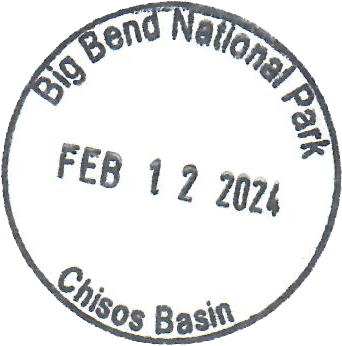

Named for the prominent bend in the Rio Grande along the U.S.-Mexico border, this park encompasses a large and remote part of the Chihuahuan Desert. Its main attraction is backcountry recreation in the arid Chisos Mountains and in canyons along the river. A wide variety of Cretaceous and Tertiary fossils as well as cultural artifacts of Native Americans also exist within its borders.
Big Hole
National Battlefield
National Battlefield
Montana
6/23/1910


Nez Perce War of the Indian Wars The Big Hole
Blue Ridge Parkway
North Carolina
Virginia
Virginia
6/30/1936


America's longest linear park; runs mostly along the Blue Ridge, a major mountain chain that is part of the Appalachian Mountains. Continues past northern terminus as Skyline Drive. The drive is 469.1 miles long.
Browns Canyon
National Monument
National Monument
Colorado
2/19/2015


Steep granite cliffs and colorful rock outcroppings overlook the Arkansas River, where visitors can go whitewater rafting. Prehistoric campsites and shelters date back 11,000 years, while sites from gold mining remain from the late 1800s. About half is in San Isabel National Forest.
Bryce Canyon
National Park
National Park
Utah
2/25/1928


Bryce Canyon is a geological amphitheater on southern Utah's Paunsaugunt Plateau with hundreds of tall, multicolored sandstone hoodoos formed by erosion. The region was originally settled by Native Americans and later by Mormon pioneers.
Capulin Volcano
National Monument
National Monument
New Mexico
8/9/1916
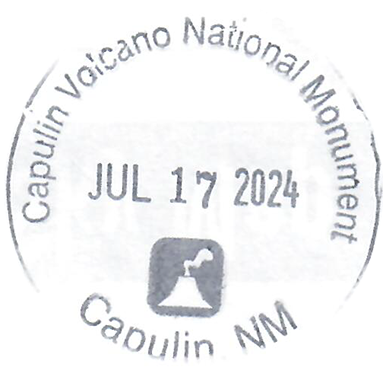

Capulin is an extinct cinder cone volcano that is approximately 59,000 years old and part of the Raton-Clayton Volcanic Field. The crater is 400 feet (120 m) deep and its rim is more than 1,500 feet (460 m) in diameter.
Carlsbad Caverns
National Park 🞰
National Park 🞰
New Mexico
5/14/1930


Carlsbad Caverns has 117 caves, the longest of which is over 120 miles (190 km) long. The Big Room is almost 4,000 feet (1,200 m) long, and the caves are home to over 400,000 Mexican free-tailed bats and sixteen other species. Above ground are the Chihuahuan Desert and Rattlesnake Springs.
Casa Grande Ruins
National Monument
National Monument
Arizona
8/3/1918
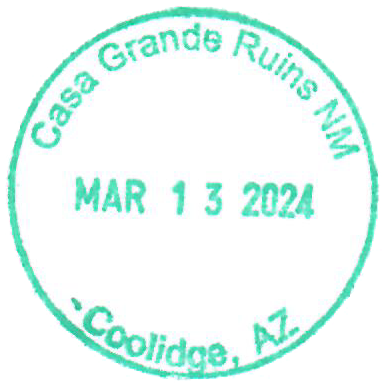

This monument preserves a group of structures surrounded by a compound wall in the Gila Valley that were built in the early 13th century. They were inhabited by the Hohokam people until they were abandoned in the mid-15th century.
Chamizal
National Memorial
National Memorial
Texas
2/4/1973
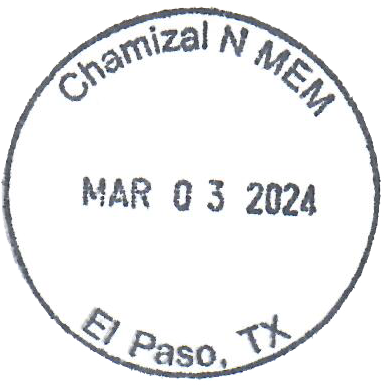

Chamizal National Memorial, located in El Paso, Texas, along the United States-Mexico international border, is a National Park Service site commemorating the peaceful settlement of the Chamizal boundary dispute.
Chiricahua
National Monument
National Monument
Arizona
4/18/1924

These pillars of rhyolite tuff are the eroded remains of an immense volcanic eruption that shook the region some 27 million years ago. It was called the Land of the Standing-Up Rocks by the Apache.
Coronado
National Memorial
National Memorial
Arizona
11/5/1952


The Coronado National Memorial commemorates the first organized expedition into the Southwest by conquistador Francisco Vásquez de Coronado in 1540. The memorial is located in a natural setting on the Mexico-United States border on the southeast flank of the Huachuca Mountains south of Sierra Vista, Arizona and is bordered to the north and west by Coronado National Forest. Within the memorial is an overlook at Montezuma Pass where the Coronado expedition entered modern Arizona. The memorial confirms the ties that bind the United States and Mexico.
Craters of the Moon
National Monument
National Monument
Idaho
5/2/1924

One of the best preserved flood basalt areas in the continental U.S. contains three lava fields along the Great Rift of Idaho. Among the volcanic cinder cones, lava tubes, and fissures created 15,000 to 2,000 years ago is the world's deepest open rift crack. The adjoining National Preserve protects an additional 410,000 acres.
Dinosaur
National Monument
National Monument
Colorado
Utah
Utah
10/4/1915

This sandstone and conglomerate bed at the confluence of the Green and Yampa Rivers was formed in the Jurassic Period and contains fossils of dinosaurs including Allosaurus and various long-neck and long-tail sauropods.
El Camino Real de los Tejas
National Historic Trail
National Historic Trail
Texas
Louisiana
Louisiana
10/1/2004

The Royal Road of the Tejas is the group of roads through Spanish Texas established by its first governors in the 1680s and 1690s. The Spanish initially attempted trade and proselytization at Mission Tejas in Eastern Texas and Los Adaes, Louisiana, before moving the capital to San Antonio and building a series of missions (Mission Espada pictured) in the early 18th century. Mexican and American ranchers settled along the corridor toward the Rio Grande, including the Old San Antonio Road, through Texas independence and annexation in 1845. The trail is 2,600 miles (4,180 km) in length.
El Camino Real de Tierra Adentro
National Historic Trail
National Historic Trail
New Mexico
Texas
Texas
10/13/2000


The Royal Road of the Interior was first routed by Juan de Oñate in 1598 to colonize the northern part of New Spain. It was used for hundreds of years for trade and communication between Mexico City and Santa Fe, mostly following the Rio Grande north of El Paso, including the Jornada del Muerto and Bajada Mesa sections. The Spanish developed the region with missions like the Presidio Chapel of San Elizario and Ysleta Mission (pictured), governed from the Palace of the Governors, later used by the Mexican and US administrations. Other historic sites include El Rancho de las Golondrinas, Mesilla Plaza, the Gutiérrez Hubbell House, and Fort Craig and Fort Selden used by the U.S. Army in the 1860s. The route is 404 miles (650 km) long.
Experimental Breeder Reactor I
National Historic Landmark
National Historic Landmark
Idaho
12/21/1965


Experimental Breeder Reactor I (EBR-I) is a decommissioned research reactor and U.S. National Historic Landmark located in the desert about 18 miles (29 km) southeast of Arco, Idaho. It was the world's first breeder reactor. At 1:50 p.m. on December 20, 1951, it became one of the world's first electricity-generating nuclear power plants when it produced sufficient electricity to illuminate four 200-watt light bulbs. EBR-I subsequently generated sufficient electricity to power its building, and continued to be used for experimental purposes until it was decommissioned in 1964. The museum is open for visitors from late May until early September.
Florissant Fossil Beds
National Monument
National Monument
Colorado
8/20/1969
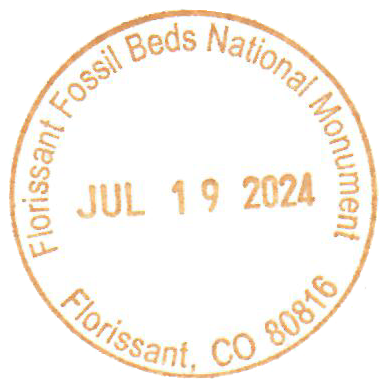

Huge petrified redwoods and incredibly detailed fossils of ancient insects and plants reveal a very different landscape in Colorado of almost 35 million years ago in the Eocene age.
Fossil Butte
National Monument
National Monument
Wyoming
10/23/1972

Fossil Butte preserves the 50-million-year-old Green River lake beds, the best paleontological record of tertiary aquatic communities in North America. Fossils including fish, alligators, bats, turtles, dog-sized horses, insects, and many other species of plants and animals suggest that the region was a low, subtropical, freshwater basin when the sediments accumulated, over about a 2-million-year period.
Gateway Arch
National Park
National Park
Missouri
2/22/2018


The Gateway Arch is a 630-foot (192 m) (both high and wide) catenary arch built in the 1960s to commemorate the Lewis and Clark Expedition, initiated by Thomas Jefferson, and the subsequent westward expansion of the country. The nearby Old Courthouse, across a greenway to the west of the arch, was the original site of the landmark Dred Scott case about slavery. An underground museum describes the arch's construction and the country's westward expansion.
Gila Cliff Dwellings
National Monument
National Monument
New Mexico
11/16/1907
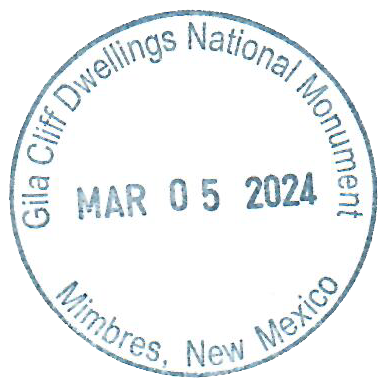

Located within the Gila Wilderness, the people of the Mogollon culture lived in these cliff dwellings 180 feet (55 m) above the canyon floor from the 1280s through the early 14th century. They lived in five caves with 46 rooms.
Glacier National Park 🞼 🞰
Montana
5/11/1910


The U.S. half of Waterton-Glacier International Peace Park, this park includes 26 rapidly receding glaciers and 130 named lakes surrounded by Rocky Mountain peaks. Historic hotels and the landmark Going-to-the-Sun Road accommodate visitors. The local mountains, formed by an overthrust, expose Paleozoic fossils including trilobites, mollusks, giant ferns and dinosaurs. The park is also home to Triple Divide Peak, which forms the boundary between the watersheds of the Atlantic, Pacific, and Arctic Oceans.
Grand Canyon
National Park 🞰
National Park 🞰
Arizona
2/26/1919


The Grand Canyon, carved by the mighty Colorado River, is 277 miles (446 km) long, up to 1 mile (1.6 km) deep, and up to 15 miles (24 km) wide. Millions of years of erosion have resulted in a massive three-tiered canyon, exposing the multicolored layers of the Colorado Plateau in mesas and canyon walls, visible from trails that descend into the canyon from the north and south rims.
Grand Teton
National Park 🞼
National Park 🞼
Wyoming
2/26/1929
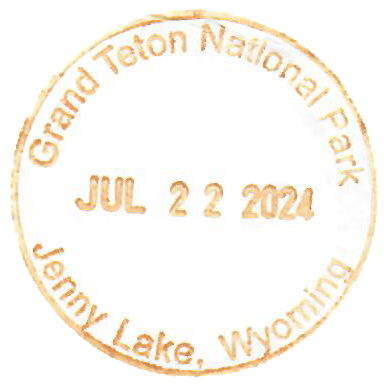

Grand Teton is the tallest mountain in the scenic Teton Range. The park's historic Jackson Hole and reflective piedmont lakes teem with endemic wildlife, with a backdrop of craggy mountains that rise abruptly from the sage-covered valley below.
Great Sand Dunes
National Park
National Park
Colorado
9/24/2004


The tallest sand dunes in North America, up to 750 feet (230 m) tall, were formed by deposits of the ancient Rio Grande in the San Luis Valley. Abutting a variety of grasslands, shrublands, and wetlands, the park also features alpine lakes, six 13,000-foot mountains, and old-growth forests.
Guadalupe Mountains
National Park
National Park
Texas
9/30/1972


This park contains Guadalupe Peak, the highest point in Texas, as well as the scenic McKittrick Canyon filled with bigtooth maples, a corner of the arid Chihuahuan Desert, and a fossilized coral reef from the Permian era.
Hagerman Fossil Beds
National Monument
National Monument
Idaho
11/18/1988
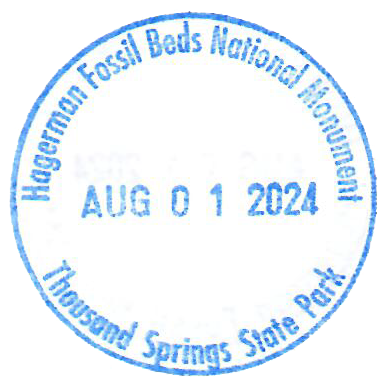

This monument contains the largest concentration of Hagerman horse fossils in North America. It protects the world's richest known fossil deposits from the late Pliocene epoch, 3.5 million years ago. These plants and animals represent the last glimpse of time that existed before the Ice Age, and the earliest appearances of modern flora and fauna.
Hohokam Pima
National Monument
National Monument
Arizona
10/21/1972


Hohokam Pima is part of the Gila River Indian Community and not open to the public. The monument includes the site of the Snaketown settlement, archeological remains of the Hohokam culture, which lived in the area until 1200. Excavations of pit houses, fields, and irrigation canals were refilled in the 1960s, leaving nothing above ground.
Ironwood Forest
National Monument
National Monument
Arizona
6/9/2000


Located within the Sonoran Desert, significant concentrations of ironwood (Olneya tesota) trees and two endangered animal and plant species are found within the monument. More than 200 Hohokam and Paleoindian archeological sites have been identified from between 600 and 1450 AD
Mount Rushmore
National Memorial
National Memorial
South Dakota
7/1/1939


Gutzon Borglum led the sculpting of Presidents George Washington, Thomas Jefferson, Theodore Roosevelt, and Abraham Lincoln into a mountain in the Black Hills. Limited funding resulted in carving only 60 ft (18 m) heads without their torsos. Mountain goats, mule deer, and yellow-bellied marmots are among the wildlife living in the hills near the visitor center and walking path.
Mount Vernon
National Historical Landmark
National Historical Landmark
Virginia
12/19/1960


Mount Vernon is the former residence and plantation of George Washington, a Founding Father, commander of the Continental Army in the Revolutionary War, and the first president of the United States, and his wife, Martha. An American landmark, the estate lies on the banks of the Potomac River in Fairfax County, Virginia, approximately 15 miles south of Washington, D.C..
Natchez
National Historical Park
National Historical Park
Mississippi
10/7/1988


Natchez National Historical Park commemorates the history of Natchez, Mississippi, and consists of four separate sites. Fort Rosalie is the 18th century site built by the French. It was later renamed Fort Panmure and controlled by Great Britain, Spain, and the United States. Forks of the Road marks what was the second-busiest slave trading market in the Deep South between 1832 and 1863. The other two sites, Melrose and the William Johnson House, contain furnishings related to life in antebellum Natchez and other exhibits.
Natchez Trace Parkway
Alabama
Mississippi
Tennessee
Mississippi
Tennessee
5/8/1938


Commemorates the historic Old Natchez Trace and preserves sections of the original trail; also passes through Alabama. The Parkway is 444 miles in length.
National Mall and Memorial Parks
District of Columbia
1/1/1965


National Mall and Memorial Parks (formerly known as National Capital Parks-Central) is an administrative unit of the National Park Service (NPS) encompassing many national memorials and other areas in Washington, D.C. Federally owned and administered parks in the capital area date back to 1790, some of the oldest in the United States. In 1933, they were transferred to the control of the National Park Service. These parks were known as the National Capital Parks from their inception until 1965. The NPS now operates multiple park groupings in the D.C. area, including National Capital Parks-East, Rock Creek Park, President's Park, and George Washington Memorial Parkway. National Mall and Memorial Parks also provides technical assistance for the United States Navy Memorial.
Organ Mountains-Desert Peaks
National Monument
National Monument
New Mexico
5/21/2014
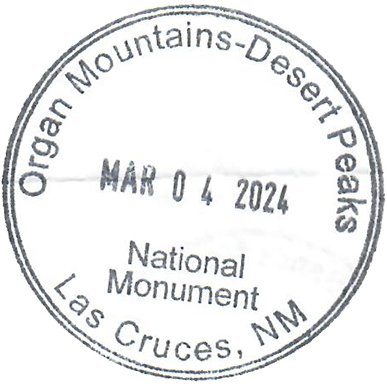

The protected area includes five mountain ranges that rise above the Chihuahua Desert: Robledo Mountains, Sierra de las Uvas, Doña Ana Mountains, Organ Mountains and Potrillo Mountains. There are approximately 870 vascular plant species, and the area is popular for hiking and climbing.
Organ Pipe Cactus
National Monument
National Monument
Arizona
4/13/1937


This monument is the only place in the United States where the organ pipe cactus grows wild. There are many other types of cacti and desert flora native to the Sonoran Desert. The Bates Well Ranch and Dos Lomitas Ranch are also within the monument.
Petrified Forest
National Park
National Park
Arizona
12/9/1962
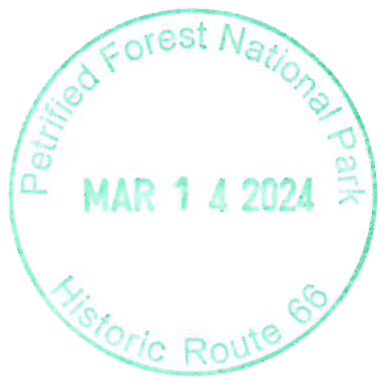

This portion of the Chinle Formation has a large concentration of 225-million-year-old petrified wood. The surrounding Painted Desert features eroded cliffs of red-hued volcanic rock called bentonite. Dinosaur fossils and over 350 Native American sites are also protected in this park.
Poverty Point
National Monument
National Monument
Louisiana
10/31/1988


Poverty Point is a prehistoric archeological site that dates from between 1650 and 700 BC and consisting of six earthen rings and seven mounds. The diameter of the outside ridge is 0.75 miles (1.21 km), and the largest mound rises 51 feet (16 m). It was declared a World Heritage Site in 2014.
Prehistoric Trackways
National Monument
National Monument
New Mexico
3/30/2009
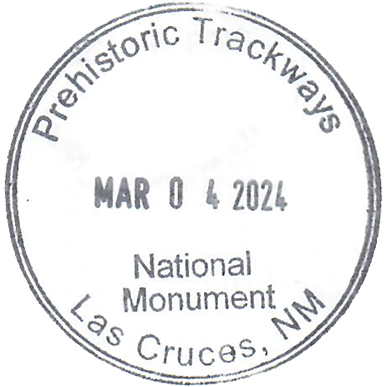

Prehistoric Trackways contains fossilized footprints of numerous Paleozoic amphibians, reptiles, and insects, as well as fossilized plants and petrified wood dating back approximately 280 million years.
Rio Grande del Norte
National Monument
National Monument
New Mexico
3/25/2013

This site includes part of the Rio Grande Gorge and extinct volcanoes of the Taos Plateau volcanic field. There are a variety of archaeological and historical artifacts including petroglyphs and Hispanic settlement sites. It is home to an assortment of wildlife and recreation opportunities.
Rocky Mountain
National Park 🞼
National Park 🞼
Colorado
1/26/1915


Bisected north to south by the Continental Divide, this portion of the Rockies has ecosystems varying from over 150 riparian lakes to montane and subalpine forests to treeless alpine tundra. Wildlife including elk, moose, mule deer, bighorn sheep, black bears, and cougars inhabit its igneous mountains and glacial valleys. Longs Peak, a classic Colorado fourteener, and the scenic Bear Lake are popular destinations, as well as the historic Trail Ridge Road, which reaches an elevation of more than 12,000 feet (3,700 m).
Saguaro National Park
Arizona
10/14/1994

Split into the separate Rincon Mountain and Tucson Mountain districts, this park is evidence that the dry Sonoran Desert is still home to a great variety of life spanning six biotic communities. Beyond the namesake giant saguaro cacti, there are barrel cacti, chollas, and prickly pears, as well as lesser long-nosed bats, spotted owls, and javelinas.
Sonoran Desert
National Monument
National Monument
Arizona
1/17/2001


This monument protects a small portion of the Sonoran Desert. It is home to several federally listed endangered species and also has three wilderness areas, many significant archeological and historic sites, and remnants of several important historic trails.
Statue of Liberty
National Monument
National Monument
New York
New Jersey
New Jersey
10/15/1924


This iconic statue, built in 1886 on Liberty Island and 151 feet (46 m) tall, commemorates the centennial of the signing of the United States Declaration of Independence and is a gesture of friendship from France to the U.S. Liberty Enlightening the World is a symbol of welcoming immigrants to the U.S. and is listed as a World Heritage Site. Ellis Island, where 12 million immigrants entering the U.S. passed through, is included in the monument.
Theodore Roosevelt
National Park
National Park
North Dakota
11/10/1978


Theodore Roosevelt National Park is an American national park of the badlands in western North Dakota comprising three geographically separated areas. Honoring U.S. President Theodore Roosevelt, it is the only American national park named directly after a single person.
Tonto National Monument
Arizona
10/21/1907

Lying on the northeastern edge of the Sonoran Desert along the Salt River, Tonto preserves two cliff dwellings that were occupied by the Salado culture during the 13th to 15th centuries. The monument is surrounded by Tonto National Forest.
Vicksburg
National Military Park
National Military Park
Mississippi
Louisiana
Louisiana
2/21/1899


Civil War Vicksburg campaign
Vietnam Veterans Memorial
District of Columbia
11/13/1982


Almost three million Americans were deployed to Vietnam during the Vietnam War from 1955 to 1975 as part of a campaign to stop communism in the region. Reflective black granite walls, sunken below ground level, bear the names of 58,320 servicemembers who died during the conflict. There are also statues representing women who served and the diversity of soldiers.
Waco Mammoth
National Monument
National Monument
Texas
7/10/2015

What a gem The display of bones in situ was fantastic.Displays are close and informative.
The Waco Mammoth National Monument is a paleontological site and museum in Waco, Texas, where fossils of twenty-four Columbian mammoths (Mammuthus columbi) and other mammals from the Pleistocene Epoch have been uncovered. The site is the largest known concentration of a single herd of mammoths dying from the same event, which is believed to have been a flash flood.
Washington Monument
District of Columbia
2/21/1885


As commanding general of the Continental Army, George Washington was instrumental in securing victory in the Revolutionary War, leading him to serve as the first president of the United States. His presidency laid the foundations for the politics of the republic with policies on banking, taxes, the judiciary, and foreign affairs. The Monument, the centerpiece of the National Mall, is a 555 ft (169 m) tall obelisk of marble, granite, and gneiss topped with a small aluminum pyramid. A variety of interior memorial stones are visible from the elevator to the observation deck.
White Sands National Park
New Mexico
12/20/2019
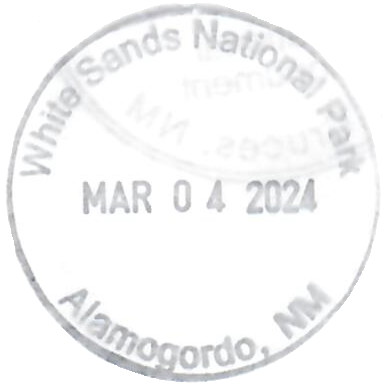

Located in the mountain-ringed Tularosa Basin, White Sands consists of the southern part of a 275-square-mile (710 km2) field of white sand dunes composed of gypsum crystals—the world's largest gypsum dunefield. The park is completely within the White Sands Missile Range and is subject to closure when tests are conducted.
World War I Memorial
District of Columbia
12/19/2014


The US entered World War I in 1917 and the American Expeditionary Forces saw about 2.8 million servicemembers fight in Europe through the end of the following year, with 53,000 deaths. Originally called Pershing Park in honor of General John J. Pershing, as of 2019 the memorial is undergoing a conversion from a fountain and pond to a lawn and plaza with a wall of remembrance.
World War II Memorial
District of Columbia
5/29/2004


Over 16 million veterans served during World War II from 1941 to 1945 alongside the other Allies against the Axis powers. The memorial recognizes their service with two triumphal arches representing the Atlantic and Pacific theaters, surrounded by 56 pillars for the states and territories. At the center is a pool with an oval of fountains, on the east are walls engraved with scenes of war, and on the west is a wall with 4,048 gold stars representing the approximately 404,800 killed in action.
Yellowstone
National Park 🞼 🞰
National Park 🞼 🞰
Idaho
Montana
Wyoming
Montana
Wyoming
3/1/1872
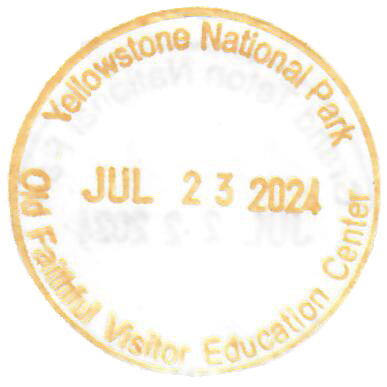

We spent five days in Yellowstone, and spent the first night in a cabin at Old Faithful Lodge. Being close to the Upper Geyser Basin for an extended period of time was great because we were able to see almost all the features in that area at their best (don't miss the Anemone Geyser). We also enjoyed West Thumb Geyser basin, Mammoth Hot Springs, the Norris Geyser Basin, the Paint Pots, The Grand Canyon of the Yellowstone, and the waterfalls.
Situated on the Yellowstone Caldera, the park has an expansive network of geothermal areas including boiling mud pots, vividly colored hot springs such as Grand Prismatic Spring, and regularly erupting geysers, the best-known being Old Faithful. The yellow-hued Grand Canyon of the Yellowstone River contains several high waterfalls, and four mountain ranges traverse the park. More than 60 mammal species including timber wolves, grizzly bears, black bears, lynxes, bison, and elk make this park one of the best wildlife viewing spots in the country.